Phenol → 4-n-Octylphenol
반응식

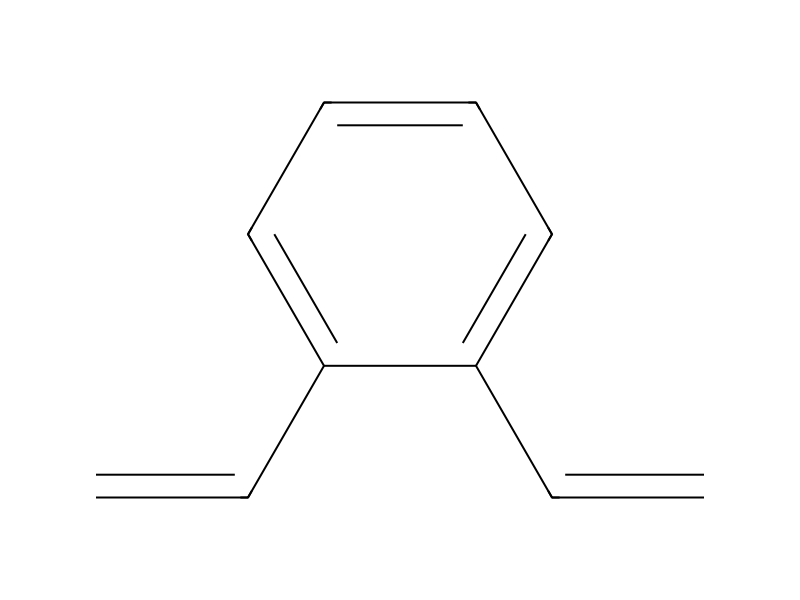
[CH:1]([C:3]1[CH:8]=[CH:7][CH:6]=[CH:5][C:4]=1C=C)=[CH2:2].[C:11]1([OH:17])[CH:16]=[CH:15][CH:14]=[CH:13][CH:12]=1.CC(CC(C)(C)C)=C.C1(O)C=CC=CC=1.CC(CC(C)(C)C)=C>O>[CH2:2]([C:14]1[CH:15]=[CH:16][C:11]([OH:17])=[CH:12][CH:13]=1)[CH2:1][CH2:3][CH2:4][CH2:5][CH2:6][CH2:7][CH3:8]참가 물질
6





실험 절차
The reaction is performed discontinuously in a stirred flask equipped with contact thermometer and reflux condenser, under the conditions indicated in Table 1. The flask is charged with 90 g of a sulfonated polystyrene ion exchange resin in the H-form, crosslinked with divinylbenzene to an extent of 8% by weight and having an activity of 4.6 meg/g catalyst, and 282 g of phenol and 168 g of diisobutene (molar ratio phenol: diisobutene=2:1) and 9 g of water (2% by weight, based on the mixture of phenol-diisobutene) is added thereto. After a reaction period of 15 minutes, the crude product is separated from the catalyst by filtration and worked up by distillation in a manner known per se without any pretreatment, thus obtaining a p-octyl phenol having a very high degree of purity (setting point 80.2° C.).