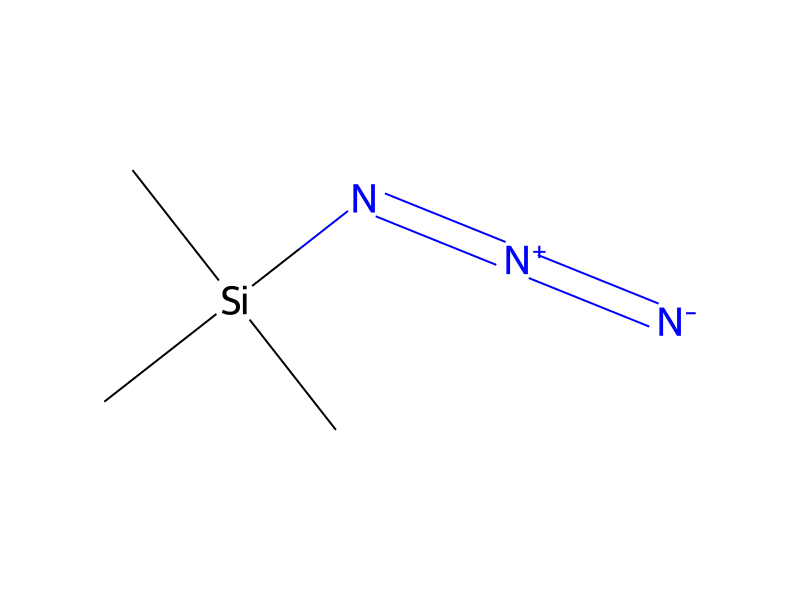
A 3-neck RBF equipped with an addition funnel and reflux condenser was charged with zinc dust (37.9 g, 580 mmol) and diethyl ether (300 ml). Bromine (1.544 ml, 29.0 mmol) was added drop wise to the stirring suspension at RT. After 5 minutes, ethyl 2-bromoacetate (32.3 ml, 290 mmol) was added drop wise via addition funnel over the time period of 1 hour. The reaction mixture was heated to reflux for one hour. 7-Bromo-3-chloro-5H-chromeno[2,3-c]pyridin-5-one (30 g, 97 mmol) was added in one portion followed by THF (200 ml). After stirring at 40° C. for 10 minutes, the reaction mixture was cooled to RT and quenched with saturated aqueous ammonium chloride solution (250 mL). The reaction mixture was stirred for 1 hour before diluting with EtOAc and filtering through a pad of celite. The organic layer was separated, washed with brine and dried over MgSO4. The solution was concentrated under reduced pressure to afford ethyl 2-(7-bromo-3-chloro-5-hydroxy-5H-chromeno[2,3-c]pyridin-5-yl)acetate (40.3 g) which was used in the next step without further purification. Step 2: To a solution of ethyl 2-(7-bromo-3-chloro-5-hydroxy-5H-chromeno[2,3-c]pyridin-5-yl)acetate (38.5 g, 97 mmol) in toluene (400 ml) was added azidotrimethylsilane (38.4 ml, 290 mmol) followed by (diethyloxonio)trifluoroborate (24.48 ml, 193 mmol) under an atmosphere of nitrogen. The reaction mixture was stirred at RT for 16 hours. The reaction mixture was quenched with MeOH (200 mL) and diluted with EtOAc. The organic phase was separated, washed with saturated aqueous sodium bicarbonate solution and brine. The organic layer was dried over magnesium sulfate and concentrated under reduced pressure to afford ethyl 2-(5-azido-7-bromo-3-chloro-5H-chromeno[2,3-c]pyridin-5-yl)acetate (40.82 g) which was used in the next step without further purification. Step 3: A solution of ethyl 2-(5-azido-7-bromo-3-chloro-5H-chromeno[2,3-c]pyridin-5-yl)acetate (40.82 g, 96 mmol) in THF (400 ml) was cooled to 0° C. under nitrogen atmosphere. A solution of LAH (1.0M solution in THF; 116 ml, 116 mmol) was added drop wise at 0° C. over a time period of 90 minutes. Upon complete addition, the reaction mixture was warmed to RT and stirred for additional 10 minutes. The reaction mixture was quenched with sodium sulfate decahydrate (50 g) and stirred for 20 minutes at RT. Celite was added to the reaction mixture and the suspension was filtered. The filtrate was concentrated under reduced pressure and the crude residue was purified by chromatography [1-2% (2M ammonia in MeOH)/DCM] to afford 2-(5-amino-7-bromo-3-chloro-5H-chromeno[2,3-c]pyridin-5-yl)ethanol (17.3 g, 48.6 mmol, 50.5% yield). Step 4: To a solution of 2-(5-amino-7-bromo-3-chloro-5H-chromeno[2,3-c]pyridin-5-yl)ethanol (0.782 g, 2.199 mmol) in THF (15.27 ml) was added benzoyl isothiocyanate (0.325 ml, 2.419 mmol) at RT. The reaction mixture was stirred for 30 minutes after which the reaction was concentrated to dryness under reduced pressure. The residue was dissolved in ACN (15.27 ml) and triethylamine (0.031 ml, 0.220 mmol) and dicyclohexylcarbodiimide (0.476 g, 2.309 mmol) were added consecutively. The reaction mixture was heated to 80° C. for 2 hours. The reaction mixture was cooled to RT and concentrated to dryness under reduced pressure. The resulting residue was suspended in MeOH (15.27 ml) and THF (3.05 ml). A solution of NaOH (1.0M in water; 10.67 ml, 11.0 mmol) was added and the reaction mixture was heated to 70° C. for 3 hours. The reaction mixture was cooled to RT and concentrated under reduced pressure. The resulting residue was dissolved in EtOAc and washed with water and brine. The organic layer was dried over magnesium sulfate and concentrated under reduced pressure. The residue was purified chromatography [1-5% (2M ammonia in MeOH)/DCM] to afford 7-bromo-3-chloro-5′,6′-dihydrospiro[chromeno[2,3-c]pyridine-5,4′-[1,3]oxazin]-2′-amine (Intermediate 10, 0.492 g, 1.293 mmol, 58.8% yield). Step 5: Intermediates (R)-7-bromo-3-chloro-5′,6′-dihydrospiro[chromeno[2,3-c]pyridine-5,4′-[1,3]oxazin]-2′-amine (18A) and (S)-7-bromo-3-chloro-5′,6′-dihydrospiro[chromeno[2,3-c]pyridine-5,4′-[1,3]oxazin]-2′-amine (18B) were obtained from racemic 7-bromo-3-chloro-5′,6′-dihydrospiro[chromeno[2,3-c]pyridine-5,4′-[1,3]oxazin]-2′-amine using similar chiral separation conditions as described herein for intermediate 10.