아지도트리메틸실란
Azidotrimethylsilane
기본 정보
- CAS
4648-54-8- 표준 SMILES
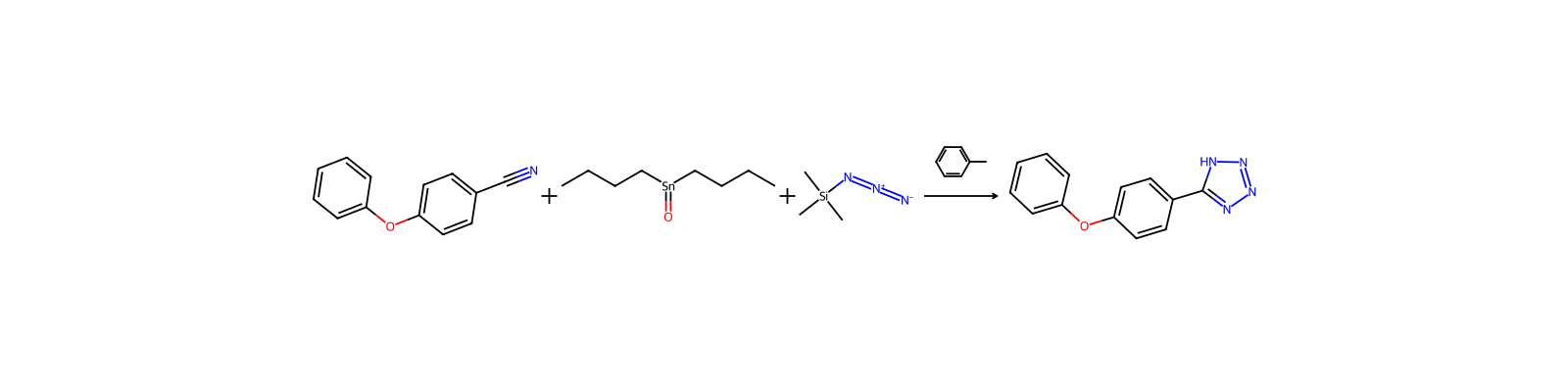
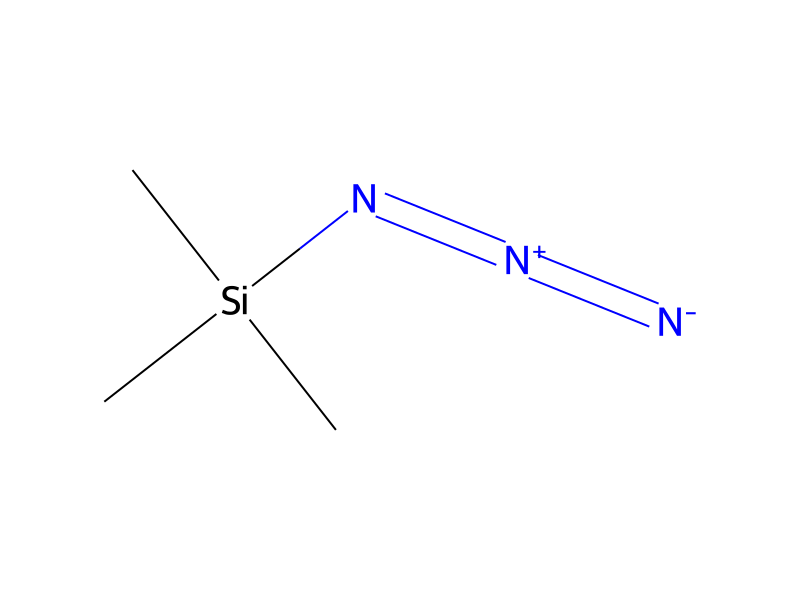
C[Si](C)(C)N=[N+]=[N-]- InChIKey
SEDZOYHHAIAQIW-UHFFFAOYSA-N- 분자식
- C3H9N3Si
- 평균 분자량
- 115.21 g/mol
개요
structure in first source
이름 및 식별자
- 우선 이름
- Azidotrimethylsilane
- IUPAC
- azido(trimethyl)silane
- 현지명
- 아지도트리메틸실란
- 영어명
- Azidotrimethylsilane
- 분자식
- C3H9N3Si
- 분자량
- 115.21
이름 및 동의어
azidotrimethylsilaneTrimethylsilyl azide4648-54-8Silane, azidotrimethyl-EM57JSM2Y9Me3SiN3DTXSID3063542RefChem:116112DTXCID7040493225-078-5Trimethylsilylazideazido(trimethyl)silane
이름 더 보기
아지도트라이메틸실레인아지도트리메틸실란TMSN3TMSiAdecomposes(CH3)3SiN3AzidotrimethyLThree methyl azide silaneCFS-548Co-Formula CFS-548
MFCD00001986Trimethylazidosilane; Trimethylsilicon azide; Trimethylsilyl azideC3H9N3SitrimethylazidosilaneCCRIS 8048TMS azideTMS-azidetrimethyl silylazide
데이터베이스 식별자
- CAS
4648-54-8- PubChem CID
- 78378
- DTXSID
DTXSID3063542- UNII
- EM57JSM2Y9
- EC Number
- 225-078-5
- Nikkaji
- J80.870I
물성
구조 계산 물성
- 극성 표면적
- 14.4 Ų
- 수소 결합 공여자 수
- 0
- 수소 결합 수용자 수
- 2
- 회전 가능 결합 수
- 1
- 무거운 원자 수
- 7
- 형식 전하
- 0
- 복잡도
- 97.2
실험 및 물리화학적 성질
Chemical ClassesMetals -> Metalloid Compounds (Silicon)
Physical DescriptionColorless liquid; [Alfa Aesar MSDS]
물리화학적 성질
- 녹는점
- -95 °C · -95°C
- 끓는 점
- 92 · 92-95 °C(lit.)
- 밀도
- 0.876 g/mL · 0.876 g/mL at 20 °C(lit.)
- 굴절률
- 20 · n20/D 1.415(lit.)
- 인화점
- 74 °F · 74 °F
- 저장 조건
- 2 · 2-8°C
- 용해도
- 톨루엔, 디클로로메탄, 디에틸 에테르 및 대부분의 유기 용매와 혼합 가능합니다.
- 물리적 상태
- 액체
- Specific Gravity
- 0.868 · 0.868
- 색상
- 무색투명~미황색
- 수용성
- 물에서 분해되다
- BRN
- 1903730 · 1903730
- InChI
- 1S/C3H9N3Si/c1-7(2,3)6-5-4/h1-3H3
- InChIKey
- SEDZOYHHAIAQIW-UHFFFAOYSA-N
- SMILES
- C[Si](C)(C)N=[N+]=[N-]
- NIST
- Azidotrimethylsilane(4648-54-8)
안전 및 규제
안전 정보는 참고용이며, 공급업체의 물질안전보건자료(SDS), 관련 법규 및 전문가 평가를 대체하지 않습니다.
GHS 분류
GHS Classification
Danger
H225 (100%): Highly Flammable liquid and vapor [Danger Flammable liquids]
P210, P233, P240, P241, P242, P243, P261, P262, P264, P270, P271, P273, P280, P301+P316, P302+P352, P303+P361+P353, P304+P340, P316, P321, P330, P361+P364, P370+P378, P391, P403+P233, P403+P235, P405, and P501 (click each P-code to see the statement)
Aggregated GHS information provided per 52 reports by companies from 7 notifications to the ECHA C&L Inventory. Each notification may be associated with multiple companies.
유해성 정보
Regulatory Information
Chemical: Silane, azidotrimethyl-
Status: Active Update: 09-04-2018 https://echa.europa.eu/registration-dossier/-/registered-dossier/23688
Trimethylsilyl azide: Does not have an individual approval but may be used under an appropriate group standard
Hazards SummaryReacts with water evolving toxic gases; May cause irritation; Toxic by ingestion, inhalation, and skin absorption; [Alfa Aesar MSDS] See Hexamethyldisilazane. See Sodium azide.
Hazard Classes and CategoriesFlam. Liq. 2 (100%)
CSL Reaction Information
CSL00010
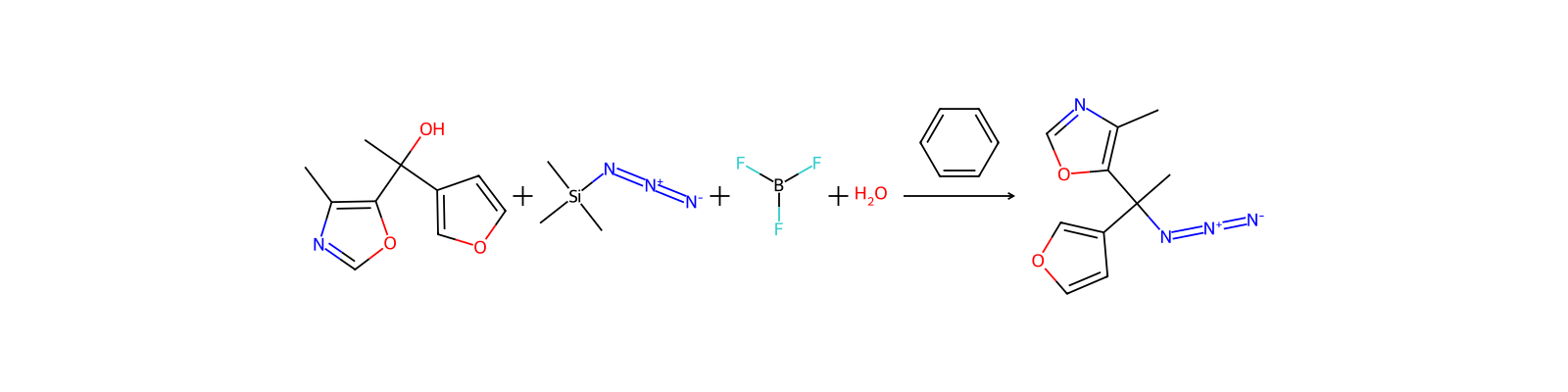
BORON TRIFLUORIDE + AZIDOTRIMETHYLSILANE
Combinations of TMSN3 and Lewis acids can detonate, presumably due to formation of HN3 from residual water. Avoid Lewis acids.
Explosive
Cycloaddition
User-Reported
안전 데이터
- wgk
- 3
- tsca
- TSCA listed
- ridadr
- UN 1992 3/PG 2
- HS 번호
- 29310095
화학 및 산업
용도 및 제조
General Manufacturing InformationSilane, azidotrimethyl-: ACTIVE
응용 분야
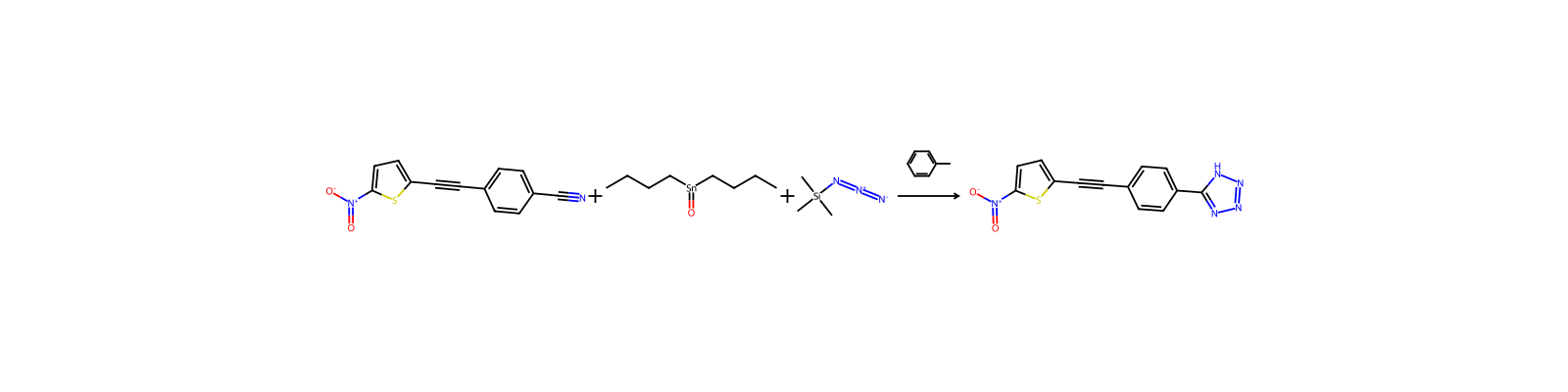
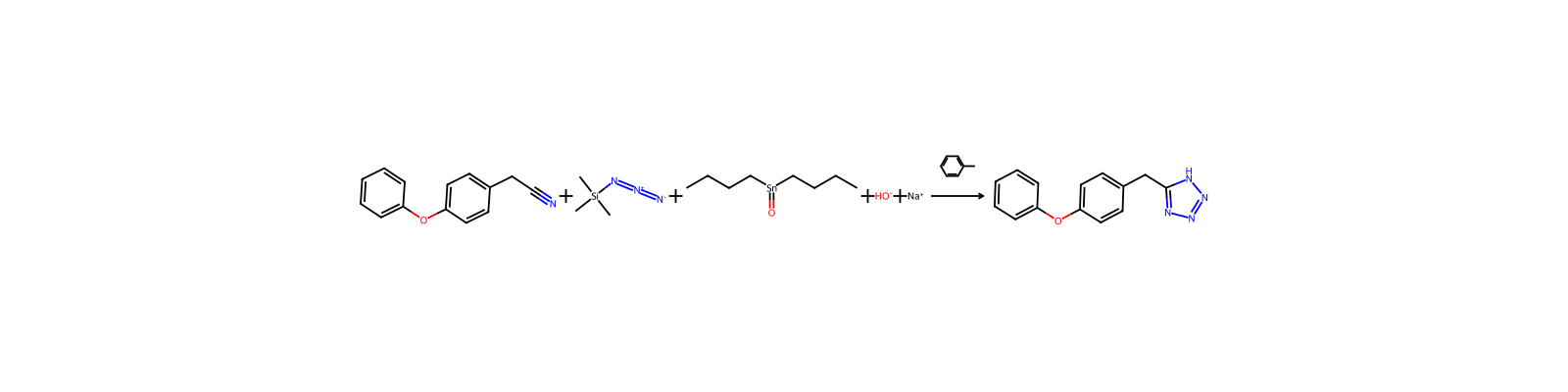
용도Many applications of TMSA in organic synthesis have been reported but only representative examples are described herein.Substitution Reactions. Benzyl,allyl,and substituted alkyl halides are converted to the corresponding azides in 60–100% yields via reactions with TMSA under neutral conditions in a nonaqueous solvent (eq 1).By using tin(IV) chloride as a catalyst, secondary and tertiary cyclic and polycyclic halides are similarly transformed into the corresponding azides in 50–92% yields (eq 1).
제조 방법
Azidotrimethylsilane may be synthesised by reacting trimethylchlorosilane with sodium azide in hexamethylphosphoramidic triamide. several methods for the synthesis of this azide have been reported.The procedure involving aluminum chloride is not recommended, since an explosive product is formed.Azidotrimethylsilane is now commercially available, and a representative synthetic procedure is as follows. A mixture of sodium azide and chlorotrimethylsilane is refluxed in di-n-butyl ether for 2 days and the azide is safely distilled directly from the reaction vessel. Purer compound (99% content) is obtained by redistillation of the product. Several improved conditions have been reported for the preparation of this azide.In these procedures, trimethylsilyl chloride is reacted with sodium azide either neat or in a high boiling point solvent, such as a mixture of silicone oil and polyethylene glycol. Distillation of the crude product usually provides trimethylsilyl azide (TMSA) in high purity (97.9%) and yield (97%).
상·하류 제품 정보
상류 원료
관련 반응
772건



화합물 노트
불러오는 중…