홈MCP워크벤치Skills
홈워크벤치알림마이페이지
llms.txt · MCP 가이드개인정보처리방침 · 이용약관 · 지원v1.8.0
  1. 홈
  2. /반응

Dimethylformamide → HCID 89692967, 화합물

HRID 1481876
노트
인쇄 미리보기

반응식

HRID 1481876 반응식
[NH2:1][C:2]1[C:3]([N:23]2[CH2:28][CH2:27][N:26]([C:29]3[CH:34]=[C:33]([CH3:35])[CH:32]=[CH:31][C:30]=3[CH3:36])[CH2:25][CH2:24]2)=[CH:4][C:5]([Cl:22])=[C:6]([CH:21]=1)[C:7]([NH:9][CH2:10][C:11]1[CH:16]=[CH:15][CH:14]=[C:13]([CH2:17][N:18]([CH3:20])[CH3:19])[CH:12]=1)=[O:8].CN(C)C=O.CN(C(ON1N=NC2C=CC=NC1=2)=[N+](C)C)C.F[P-](F)(F)(F)(F)F.C(N(CC)C(C)C)(C)C.[CH:75]1([C:78]2[O:79][CH:80]=[C:81]([C:83](O)=[O:84])[N:82]=2)[CH2:77][CH2:76]1>O.C(OCC)(=O)C>[Cl:22][C:5]1[C:6]([C:7](=[O:8])[NH:9][CH2:10][C:11]2[CH:16]=[CH:15][CH:14]=[C:13]([CH2:17][N:18]([CH3:20])[CH3:19])[CH:12]=2)=[CH:21][C:2]([NH:1][C:83]([C:81]2[N:82]=[C:78]([CH:75]3[CH2:77][CH2:76]3)[O:79][CH:80]=2)=[O:84])=[C:3]([N:23]2[CH2:24][CH2:25][N:26]([C:29]3[CH:34]=[C:33]([CH3:35])[CH:32]=[CH:31][C:30]=3[CH3:36])[CH2:27][CH2:28]2)[CH:4]=1
참가 물질실험 절차후처리출처 및 근거반응 노트

참가 물질

8

반응물 5

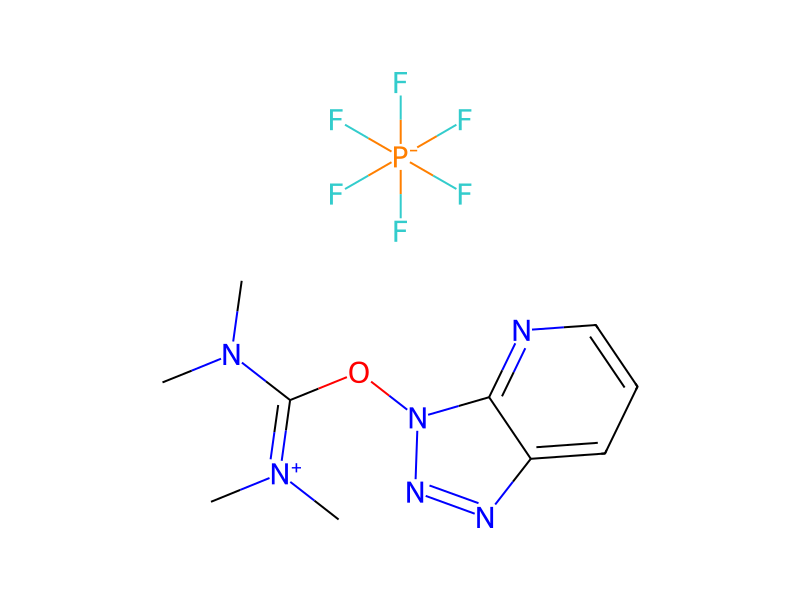
HCID 6228DimethylformamideHCID 81531DiisopropylethylamineHCID 9886157Methanaminium, N-((dimethylamino)(3H-1,2,3-triazolo(4,5-b)pyridin-3-yloxy)methylene)-N-methyl-, hexafluorophosphate(1-) (1:1)HCID 252192732-Cyclopropyl-1,3-oxazole-4-carboxylic acidHCID 89690562HCID 89690562, 화합물

생성물 1

HCID 89692967
HCID 89692967, 화합물
수율 17.9%

시약·촉매·용매 2

HCID 962Water용매HCID 8857Ethyl Acetate용매

실험 절차

In a 40 ml scintillation vial equipped with a magnetic stir bar and fitted with a nitrogen inlet, the 5-amino-2-chloro-N-(3-dimethylaminomethyl-benzyl)-4-[4-(2,5-dimethyl-phenyl)-piperazin-1-yl]-benzamide 13b (142.50 mg, 0.28 mmol) was taken up in clean, dry N,N-dimethylformamide (3.00 ml, 38.74 mmol) and the mixture was stirred at room temperature under nitrogen until all solids were in solution. To this stirred solution was added the HATU (159.70 mg, 0.42 mmol) followed by the N,N-diisopropylethylamine (0.15 ml, 0.86 mmol) and the mixture was again stirred at room temperature until all solids were in solution. The 2-cyclopropyl-oxazole-4-carboxylic acid 1h (55.70 mg, 0.36 mmol) was added to the mixture and the reaction was allowed to stir over night at room temperature. The reaction was diluted with 15 ml of water and 15 ml of ethyl acetate. The layers were separated and the product was extracted from the aqueous using ethyl acetate (3×20 ml). The organic phases were combined and the solution was washed with brine (1×25 ml) and with saturated aqueous lithium chloride solution (2×25 ml). The solution was then dried over Na2SO4; the solution was decanted and the solvent was removed under reduced pressure. The resultant brown oil was then purified using silica gel column chromatography, eluting a gradient of 100% dichloromethane to 90% dichloromethane/9% MeOH/1% NH4OH. The desired product, 2-cyclopropyl-oxazole-4-carboxylic acid {4-chloro-5-(3-dimethylaminomethyl-benzylcarbamoyl)-2-[4-(2,5-dimethyl-phenyl)-piperazin-1-yl]-phenyl}-amide 13c (33.60 mg, 0.05 mmol), was isolated as a white solid.


후처리

  1. customIn a 40 ml scintillation vial equipped with a magnetic stir bar
  2. customfitted with a nitrogen inlet
  3. stirringthe mixture was again stirred at room temperature until all solids
  4. stirringto stir over night at room temperature
  5. customThe layers were separated
  6. extractionthe product was extracted from the
  7. washthe solution was washed with brine (1×25 ml) and with saturated aqueous lithium chloride solution (2×25 ml)
  8. dry with materialThe solution was then dried over Na2SO4
  9. customthe solution was decanted
  10. customthe solvent was removed under reduced pressure
  11. customThe resultant brown oil was then purified
  12. washeluting a gradient of 100% dichloromethane to 90% dichloromethane/9% MeOH/1% NH4OH

출처 및 근거

ORD 기록
ord-e79030acf778440092c0be14915b63d5
출처 데이터셋
uspto-grants-2016_08
DOI
10.6084/m9.figshare.5104873.v1
특허 번호
US09409897B2

반응 노트

불러오는 중…

이 페이지에서참가 물질실험 절차후처리출처 및 근거반응 노트