Triphenylphosphine → 1-[2-(4-Bromo-3,5-dimethyl-phenoxy)-ethyl]-pyrrolidine
HRID 1514881
반응식

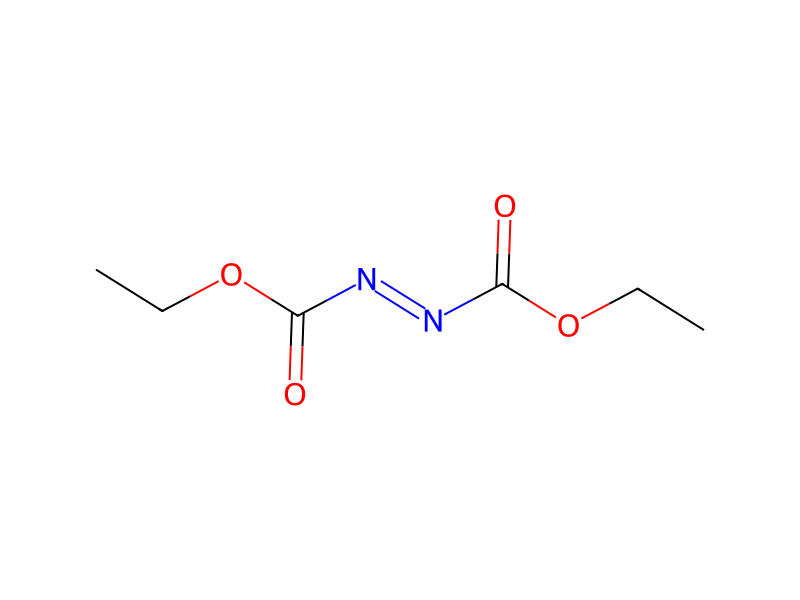
[Br:1][C:2]1[C:7]([CH3:8])=[CH:6][C:5]([OH:9])=[CH:4][C:3]=1[CH3:10].[N:11]1([CH2:16][CH2:17]O)[CH2:15][CH2:14][CH2:13][CH2:12]1.C1C=CC(P(C2C=CC=CC=2)C2C=CC=CC=2)=CC=1.CCOC(/N=N/C(OCC)=O)=O>>[Br:1][C:2]1[C:7]([CH3:8])=[CH:6][C:5]([O:9][CH2:17][CH2:16][N:11]2[CH2:15][CH2:14][CH2:13][CH2:12]2)=[CH:4][C:3]=1[CH3:10]참가 물질
5




실험 절차
To a solution of 4-bromo-3,5-dimethylphenol (555 mg) were added 2-pyrrolidine-1-yl-ethanol (0.3 mL), PPh3 (721 mg), and DEAD (0.43 mL). The mixture was stirred room temperature for 16 h. The reaction mixture was concentrated. The residue was treated with Et2O, filtered and the filtrated was concentrated under reduced pressure. The crude product was purified by column chromatography (SiO2, EtOAc:Hexane=10:80 to 80:20) to give 1-[2-(4-bromo-3,5-dimethyl-phenoxy)-ethyl]-pyrrolidine as a white solid: MS (m/z) 300 (M+1).