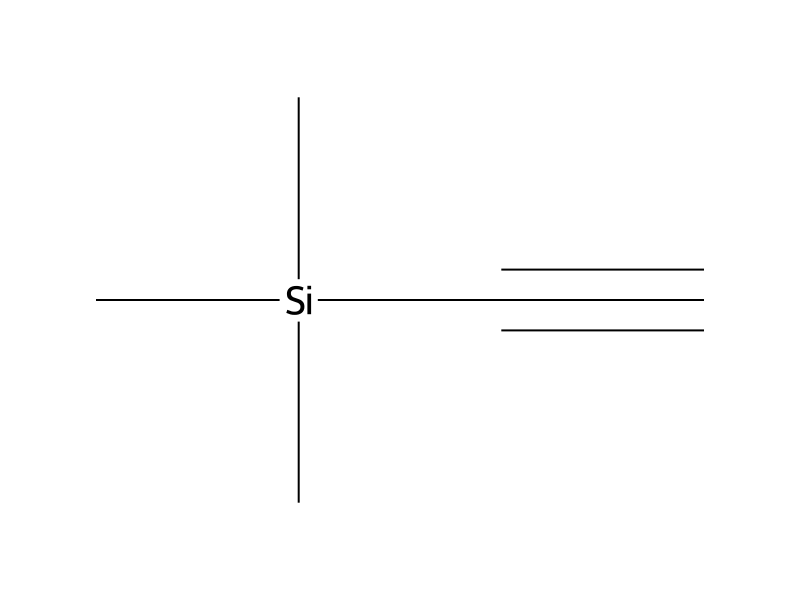
Trimethylsilylacetylene → 2-(4-Trimethylsilylethynylphenyl)pyridine
HRID 1522721
반응식

[C:1]1([C:7]2[CH:12]=[CH:11][C:10](Br)=[CH:9][N:8]=2)[CH:6]=[CH:5][CH:4]=[CH:3][CH:2]=1.[CH3:14][Si:15]([C:18]#[CH:19])([CH3:17])[CH3:16]>>[CH3:14][Si:15]([C:18]#[C:19][C:4]1[CH:5]=[CH:6][C:1]([C:7]2[CH:12]=[CH:11][CH:10]=[CH:9][N:8]=2)=[CH:2][CH:3]=1)([CH3:17])[CH3:16]참가 물질
3


실험 절차
To explain the synthesis in more detail, the Suzuki reaction between phenylboronic acid and 2,5-dibromopyridine gave 2-phenyl-5-bromopyridine in an 86% yield (see scheme 1 above). The reaction occurred preferentially on the 2 position on the pyridine ring, which is activated by the adjacent nitrogen. Reaction of 2-phenyl-5-bromopyridine with trimethylsilylacetylene under Sonogashira conditions gave the 2-phenyl-5-(trimethylsilylethynyl)pyridine (2) in an 88% yield, which could be deprotected to 2-phenyl-5-ethynylpyridine (3) in a yield of 93% using tetra-n-butylammonium hydroxide. The Diels-Alder reaction between (3) and the difluorenylcyclopentadienone (10) gave the dendronised ligand in a 48% yield, after purification by precipitation of the ligand from a dichloromethane solution by pouring the solution into ethanol. The complex was formed by the two-step procedure via the bis(chloro)-bis(iridium) dimer in a yield of 50%. This yield is no lower than those obtained from the complexation of ligands dendronised only on the phenyl ring, showing that the presence of the bulky dendron on the pyridine ring does not inhibit complexation.