홈MCP워크벤치Skills
홈워크벤치알림마이페이지
llms.txt · MCP 가이드개인정보처리방침 · 이용약관 · 지원v1.8.0
  1. 홈
  2. /반응

Potassium Carbonate → 2-(4-Cyclopropyl-3-oxo-1-oxa-4,9-diazaspiro[5.5]undecan-9-yl)-2-(2-fluoro-4-(2-hydroxyquinolin-7-yl)phenyl)acetamide

HRID 1525897
노트
인쇄 미리보기

반응식

HRID 1525897 반응식
Br[C:2]1[CH:7]=[CH:6][C:5]([CH:8]([N:12]2[CH2:26][CH2:25][C:15]3([O:20][CH2:19][C:18](=[O:21])[N:17]([CH:22]4[CH2:24][CH2:23]4)[CH2:16]3)[CH2:14][CH2:13]2)[C:9]([NH2:11])=[O:10])=[C:4]([F:27])[CH:3]=1.B1(B2OC(C)(C)C(C)(C)O2)OC(C)(C)C(C)(C)O1.C([O-])(=O)C.[K+].Cl[C:52]1[CH:61]=[C:60]2[C:55]([CH:56]=[CH:57][C:58]([OH:62])=[N:59]2)=[CH:54][CH:53]=1.C(=O)([O-])[O-].[K+].[K+]>O1CCOCC1.C1C=CC(P(C2C=CC=CC=2)[C-]2C=CC=C2)=CC=1.C1C=CC(P(C2C=CC=CC=2)[C-]2C=CC=C2)=CC=1.Cl[Pd]Cl.[Fe+2].C(Cl)Cl.C(#N)C.O>[CH:22]1([N:17]2[CH2:16][C:15]3([CH2:25][CH2:26][N:12]([CH:8]([C:5]4[CH:6]=[CH:7][C:2]([C:52]5[CH:61]=[C:60]6[C:55]([CH:56]=[CH:57][C:58]([OH:62])=[N:59]6)=[CH:54][CH:53]=5)=[CH:3][C:4]=4[F:27])[C:9]([NH2:11])=[O:10])[CH2:13][CH2:14]3)[O:20][CH2:19][C:18]2=[O:21])[CH2:24][CH2:23]1
참가 물질반응 조건실험 절차후처리출처 및 근거반응 노트

참가 물질

10

반응물 5

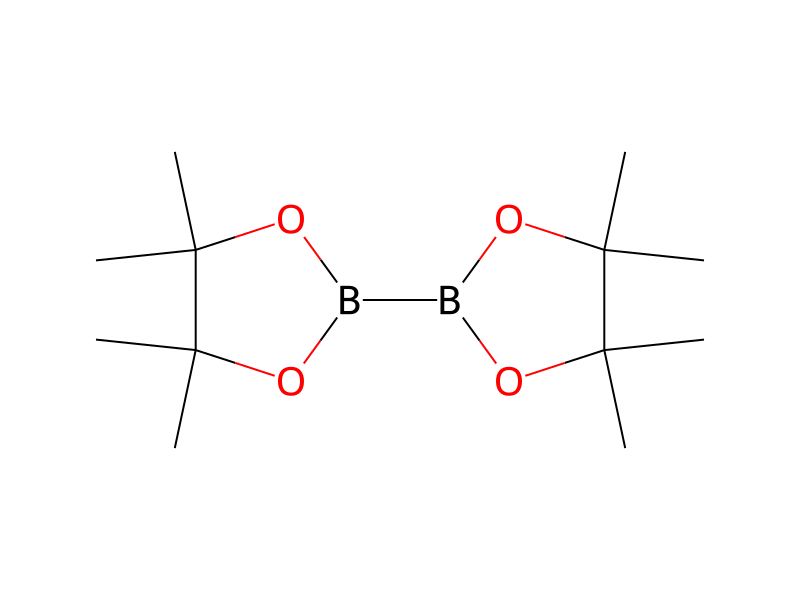
HCID 11430Potassium CarbonateHCID 517044Potassium AcetateHCID 2733548Bis(pinacolato)diboraneHCID 71271075HCID 71271075, 화합물HCID 178515603HCID 178515603, 화합물

생성물 1

HCID 1785138702-(4-Cyclopropyl-3-oxo-1-oxa-4,9-diazaspiro[5.5]undecan-9-yl)-2-(2-fluoro-4-(2-hydroxyquinolin-7-yl)phenyl)acetamide
수율 8.7%

시약·촉매·용매 4

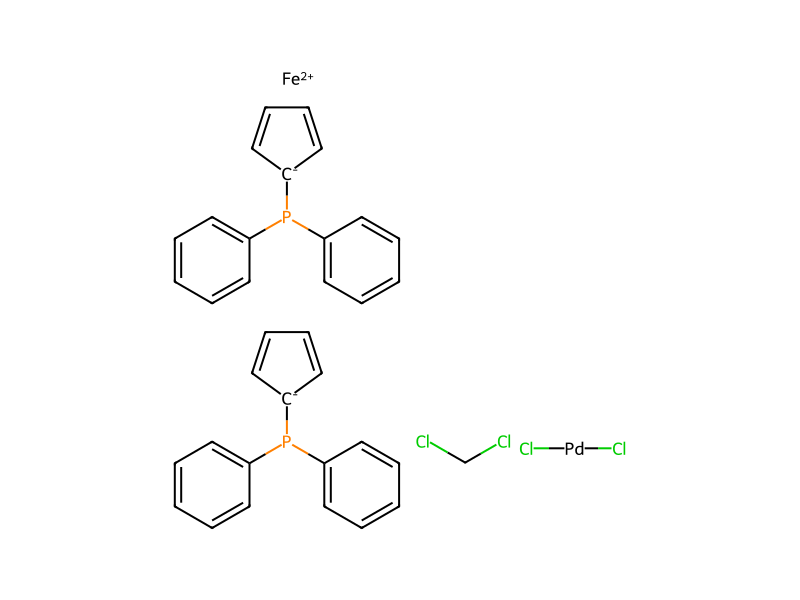
HCID 178418807HCID 178418807, 화합물촉매4회HCID 962Water용매HCID 6342Acetonitrile용매HCID 312751,4-Dioxane용매

반응 조건

온도
100 °C

실험 절차

A solution of 2-(4-bromo-2-fluorophenyl)-2-(4-cyclopropyl-3-oxo-1-oxa-4,9-diazaspiro[5.5]undecan-9-yl)acetamide (0.341 mmol) in dry 1,4-dioxane (1.5 mL) was treated with bis(pinacolato)diboron (0.409 mmol), potassium acetate (0.499 mmol) and PdCl2(dppf)-CH2Cl2 adduct (0.017 mmol). The solution was degassed with a stream of nitrogen for three minutes, at which point the reaction vessel was purged with nitrogen and sealed, and the mixture heated in an oil bath at 100° C. overnight. The black solution was allowed to cool to room temperature, at which point 7-chloroquinolin-2-ol (0.341 mmol), PdCl2(dppf)-CH2Cl2 adduct (0.017 mmol), and 2M aq potassium carbonate (1.022 mmol) were added. The reaction vessel was purged with nitrogen and sealed, and the mixture irradiated in a Biotage Initiator Microwave at 120° C. for 15 min. Due to incomplete conversion of the starting material, the reaction solution was treated with an additional portion of PdCl2(dppf)-CH2Cl2 adduct (0.017 mmol), at which point the reaction vessel was purged with nitrogen and sealed, and the mixture stirred in an oil bath at 100° C. for 60 h. At this point the reaction was cooled to room temperature before it was treated again with PdCl2(dppf)-CH2Cl2 adduct (0.017 mmol), purged with nitrogen, sealed and stirred in an oil bath at 120° C. overnight. The reaction was cooled to room temperature and was diluted with water (50 mL) and brine (10 mL). The mixture was extracted five times with ethyl acetate. The combined organic layers were treated with Si-Thiol (100 mg), dried over sodium sulfate, filtered and concentrated in vacuo. The crude material was purified by silica gel chromatography (0-9% methanol/dichloromethane), by reverse phase HPLC (20-60% acetonitrile/water with 0.1% NH4OH), and by reverse phase HPLC (5-35% acetonitrile with 0.1% TFA/water with 0.1% TFA). Fractions containing the desired product were combined and the pH of the resulting mixture was adjusted to ˜10 with 30% w/v aq ammonium hydroxide. This mixture was concentrated to a minimal volume in vacuo and was then extracted with ethyl acetate three times. The combined organic layers were dried over sodium sulfate, filtered and concentrated in vacuo. Lyophilization of the product from water (w/25% acetonitrile) afforded the title compound as a white solid (15 mg, 8% yield). MS(ES)+ m/e 505.3 [M+H]+.


후처리

  1. customThe solution was degassed with a stream of nitrogen for three minutes, at which
  2. customwas purged with nitrogen
  3. customsealed
  4. additionwere added
  5. customThe reaction vessel was purged with nitrogen
  6. customsealed
  7. customthe mixture irradiated in a Biotage Initiator Microwave at 120° C. for 15 min
  8. customwas purged with nitrogen
  9. customsealed
  10. temperatureAt this point the reaction was cooled to room temperature before it
  11. custompurged with nitrogen
  12. customsealed
  13. stirringstirred in an oil bath at 120° C. overnight
  14. temperatureThe reaction was cooled to room temperature
  15. additionwas diluted with water (50 mL) and brine (10 mL)
  16. extractionThe mixture was extracted five times with ethyl acetate
  17. additionThe combined organic layers were treated with Si-Thiol (100 mg)
  18. dry with materialdried over sodium sulfate
  19. filtrationfiltered
  20. concentrationconcentrated in vacuo
  21. customThe crude material was purified by silica gel chromatography (0-9% methanol/dichloromethane), by reverse phase HPLC (20-60% acetonitrile/water with 0.1% NH4OH)
  22. additionFractions containing the desired product
  23. concentrationThis mixture was concentrated to a minimal volume in vacuo
  24. extractionwas then extracted with ethyl acetate three times
  25. dry with materialThe combined organic layers were dried over sodium sulfate
  26. filtrationfiltered
  27. concentrationconcentrated in vacuo

출처 및 근거

ORD 기록
ord-aa4aef27005544adb727afcf7e1622b7
출처 데이터셋
uspto-grants-2015_07
DOI
10.6084/m9.figshare.5104873.v1
특허 번호
US09084794B2

반응 노트

불러오는 중…

이 페이지에서참가 물질반응 조건실험 절차후처리출처 및 근거반응 노트