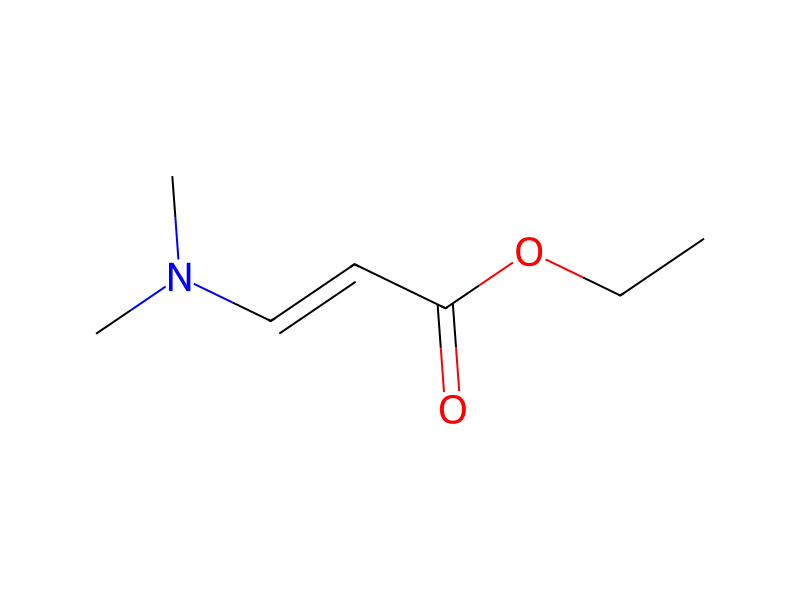
p-Toluenesulfonic acid → Ethyl 3-(N,N-dimethylamino)acrylate
반응식

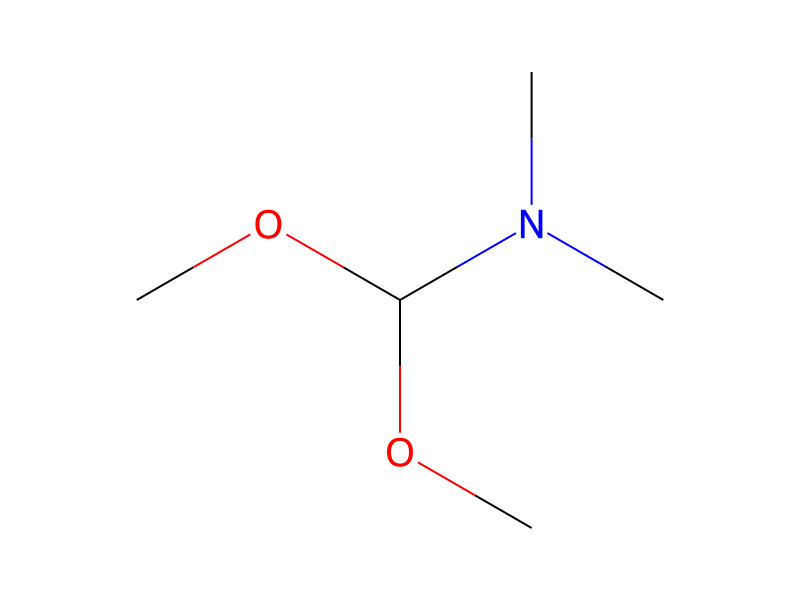
FC(F)(F)C([C:5](=[CH:11][N:12]([CH3:14])[CH3:13])[C:6]([O:8][CH2:9][CH3:10])=[O:7])=O.FC(F)(F)C(=O)CC(OCC)=O.CN(C(OC)OC)C.C1(C)C=CC(S(O)(=O)=O)=CC=1>>[CH3:13][N:12]([CH:11]=[CH:5][C:6]([O:8][CH2:9][CH3:10])=[O:7])[CH3:14]참가 물질
5



실험 절차
My result is especially surprising in view of the results reported by Beck et al., vide supra, who attempted to prepare (2) by reacting ethyl trifluoroacetoacetate with DMF dimethyl acetal in the presence of a catalytic quantity of p-toluenesulfonic acid. The reaction resulted in the formation of ethyl 3-(N,N-dimethylamino)-2-propenoate (4) in 75% yield. Presumably, the methanol by-product further reacted with the target compound (2) to give the unexpected product and methyl trifluoroacetate.
후처리
- customMy result
출처 및 근거
- ORD 기록
- ord-d9087534728c4894a67931609e177ef0
- 출처 데이터셋
- uspto-grants-2001_03
- 특허 번호
- US06207828B1
반응 노트
불러오는 중…