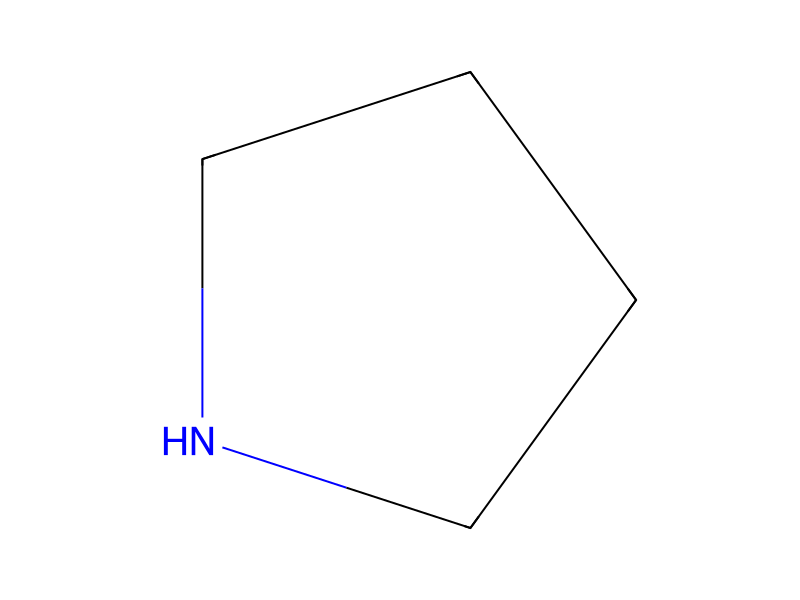
Pyrrolidine → diethyl 3,4-dihydro-4-oxo-7-hydroxy-8-propyl-2H-1-benzopyran-2,2-dipropanoate
HRID 1587811
반응식

[O:1]=[C:2]([CH2:10][CH2:11][C:12]([O:14][CH2:15][CH3:16])=[O:13])[CH2:3][CH2:4][C:5]([O:7][CH2:8][CH3:9])=[O:6].[CH3:17][CH2:18][CH2:19][C:20]1[C:25](O)=[C:24]([C:27]([CH3:29])=[O:28])[CH:23]=[CH:22][C:21]=1[OH:30].N1CCCC1>C1(C)C=CC=CC=1>[O:28]=[C:27]1[C:24]2[CH:23]=[CH:22][C:21]([OH:30])=[C:20]([CH2:19][CH2:18][CH3:17])[C:25]=2[O:1][C:2]([CH2:3][CH2:4][C:5]([O:7][CH2:8][CH3:9])=[O:6])([CH2:10][CH2:11][C:12]([O:14][CH2:15][CH3:16])=[O:13])[CH2:29]1참가 물질
5



실험 절차
A stirred solution of 12.3 g (53.5 mmol) of diethyl 4-oxopimelate, 10.4 g (53.5 mmol) of 2,4-dihydroxy-3-propylacetophenone, and 3.8 g (55 mmol) of pyrrolidine in 62 ml of toluene was refluxed under a water separator. After 4 hours, the mixture was allowed to cool. The solvent was removed under reduced pressure and the resultant oil was chromatographed on silica gel using ethyl acetate-hexane as eluent. The titled diester (4.98 g) was found to be homogeneous by thin-layer chromatography (20% by volume ethyl acetate/hexane on silica gel plates) and was used in subsequent reactions without further purification.