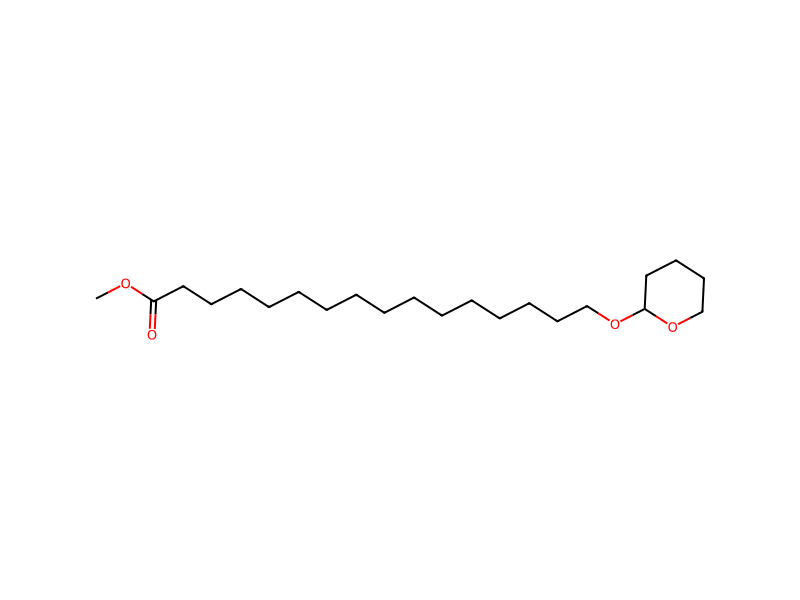
[OH:1][CH2:2][CH2:3][CH2:4][CH2:5][CH2:6][CH2:7][CH2:8][CH2:9][CH2:10][CH2:11][CH2:12][CH2:13][CH2:14][CH2:15][CH2:16][C:17]([O:19][CH3:20])=[O:18].C1(C)C=CC(S(O)(=O)=O)=CC=1.[O:32]1[CH:37]=[CH:36][CH2:35][CH2:34][CH2:33]1.C([O-])(O)=O.[Na+]>ClCCl>[O:32]1[CH2:37][CH2:36][CH2:35][CH2:34][CH:33]1[O:1][CH2:2][CH2:3][CH2:4][CH2:5][CH2:6][CH2:7][CH2:8][CH2:9][CH2:10][CH2:11][CH2:12][CH2:13][CH2:14][CH2:15][CH2:16][C:17]([O:19][CH3:20])=[O:18]100.26 g (0.35 mol) of methyl 16-hydroxyhexadecanoate, 0.60 g (3.5 mmol) of p-toluenesulfonic acid and 350 ml of dichloromethane were introduced into a 1-l flask equipped with a stirrer and a dropping funnel. 32.39 g (0.385 mol) of dihydropyran was added dropwise thereto while stirring at 0° C. After the completion of the addition, the mixture was stirred at room temperature for an hour to thereby complete the reaction. Next, the reaction mixture was neutralized by adding 0.59 g (7 mmol) of NaHCO3. After filtering and removing solvent under reduced pressure; a crude product of methyl 16-(2-tetrahydropyranyloxy)hexadecanoate was obtained.