Benzene → 1,1-Diphenylethane
반응식

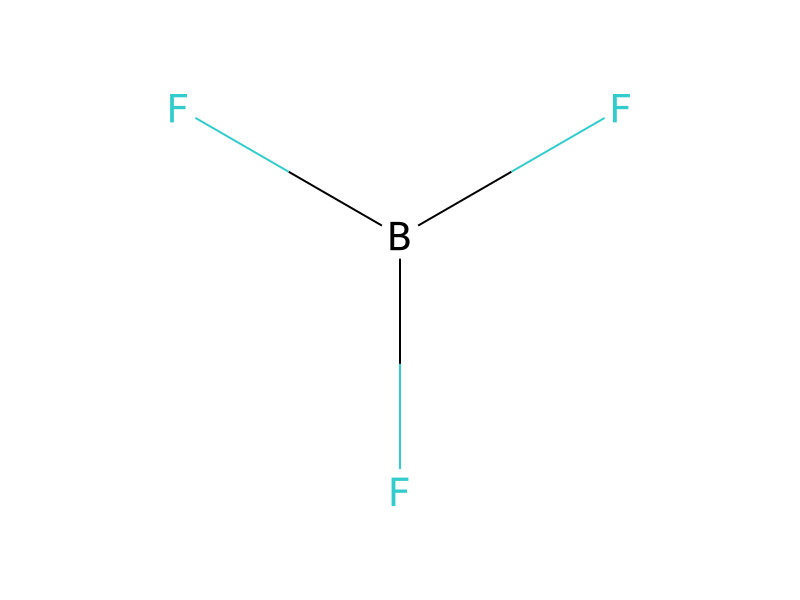
[CH:1]1[CH:6]=[CH:5][CH:4]=[CH:3][CH:2]=1.[CH:7]#[CH:8].P(=O)(O)(O)O.B(F)(F)F>S(=O)(=O)(O)O.[Hg]>[C:1]1([CH:7]([C:1]2[CH:6]=[CH:5][CH:4]=[CH:3][CH:2]=2)[CH3:8])[CH:6]=[CH:5][CH:4]=[CH:3][CH:2]=1참가 물질






실험 절차
1,1-Diphenylethane (DPE) is a valuable hydrocarbon for conversion to benzophenone, which, in turn, can be converted to the corresponding nitro and amine derivatives. Unfortunately, there are no simple methods known for its preparation in high yield. Thus, Baeyer, Ber., VI, 223 (1873) attempted to prepare 1,1-diphenylethane by reacting paraldehyde with benzene in the presence of sulfuric acid, but obtained only a resinous material. Later, in Ber. VII, 1190 (1874), he isolated some 1,1-diphenylethane from a tarry reaction product in disappointingly low yield. Spilker et al., Ber., 65B, 1686 (1932), condensed benzene with styrene in the presence of sulfuric acid and obtained a 25 percent yield of 1,1-diphenylethane. Higher yields of the same product, from 40 to 50 percent, were obtained by Reichert et al., J. Am. Chem. Soc., 45, 3090 (1923) in the mercury-catalyzed condensation of benzene with acetylene in sulfuric acid. More recently, Baeyer et al. in Ber., 94, 1717 (1961) and Ber., 95, 1989, ( 1962), reacted benzene with acetylene in the presence of phosphoric acid which has been saturated with boron trifluoride to obtain 1,1-diphenylethane in 65 percent yield, as well as some polymeric substances.
후처리
- customHigher yields of the same product, from 40 to 50 percent
- customwere obtained by Reichert et al., J
출처 및 근거
- ORD 기록
- ord-800fc7a1e6f04f218452254bb0753b26
- 출처 데이터셋
- uspto-grants-1984_10
- 특허 번호
- US04474989
반응 노트
불러오는 중…