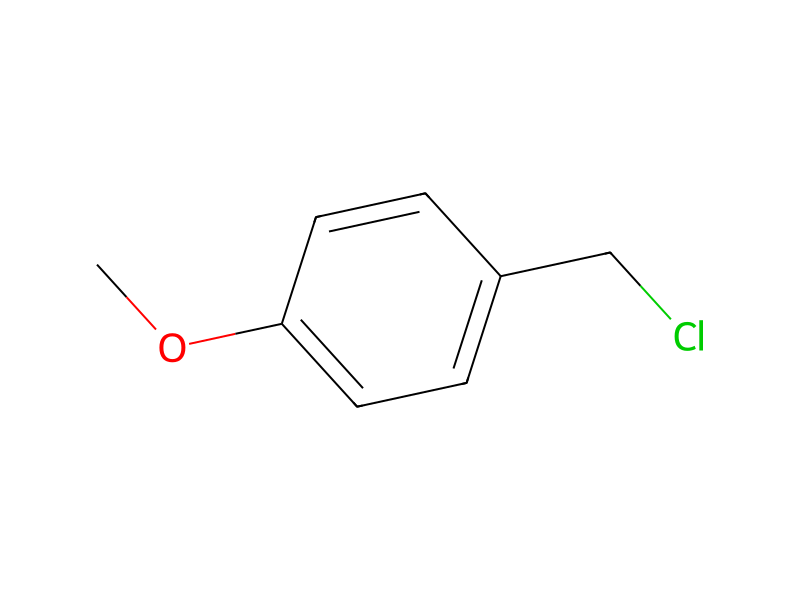
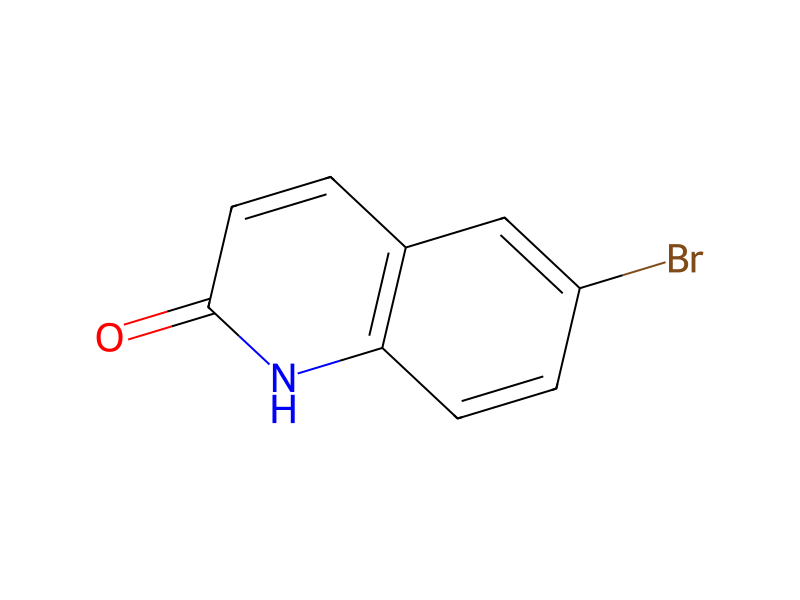
[Br:1][C:2]1[CH:3]=[C:4]2[C:9](=[CH:10][CH:11]=1)[NH:8][C:7](=[O:12])[CH:6]=[CH:5]2.[CH3:13][O:14][C:15]1[CH:22]=[CH:21][C:18]([CH2:19]Cl)=[CH:17][CH:16]=1.[OH-].[K+].O>[Br-].C([N+](CCCC)(CCCC)CCCC)CCC.C1(C)C=CC=CC=1>[CH3:13][O:14][C:15]1[CH:22]=[CH:21][C:18]([CH2:19][N:8]2[C:9]3[C:4](=[CH:3][C:2]([Br:1])=[CH:11][CH:10]=3)[CH:5]=[CH:6][C:7]2=[O:12])=[CH:17][CH:16]=16-Bromoquinolin-2(1H)-one (4.0 g, 18 mmol), 4-methoxybenzyl chloride (3.6 g, 23 mmol), and tetrabutylammonium bromide (1.2 g, 3.6 mmol) were dissolved in PhMe (200 mL) and then KOH (powder, 1.8 g, 32 mmol) was added into the reaction mixture. The reaction mixture was stirred at RT for 4 h, then poured into H2O and extracted with EtOAc (3×50 mL). The organic layer was washed with H2O, dried (Na2SO4), and concentrated. Trituration with hexane, followed by collection of the solids yielded 1-(4-methoxybenzyl)-6-bromoquinolin-2(1H)-one (5.4 g, 87% yield) as a yellow solid. 1H NMR (400 MHz, CDCl3): δ 7.70 (d, J=2.4 Hz, 1H), 7.66 (d, J=9.6 Hz, 1H), 7.52 (dd, J=2.0, and 8.8 Hz, 1H), 7.19 (d, J=9.2 Hz, 1H), 7.16 (d, J=8.8 Hz, 2H), 6.85 (d, J=8.8 Hz, 2H), 6.83 (d, J=9.4 Hz, 1H), 5.48 (brs, 2H), 3.78 (s, 3H), 1.36 (s, 12H); LC-MS (EI) m/z: 344.0 (M+H+).