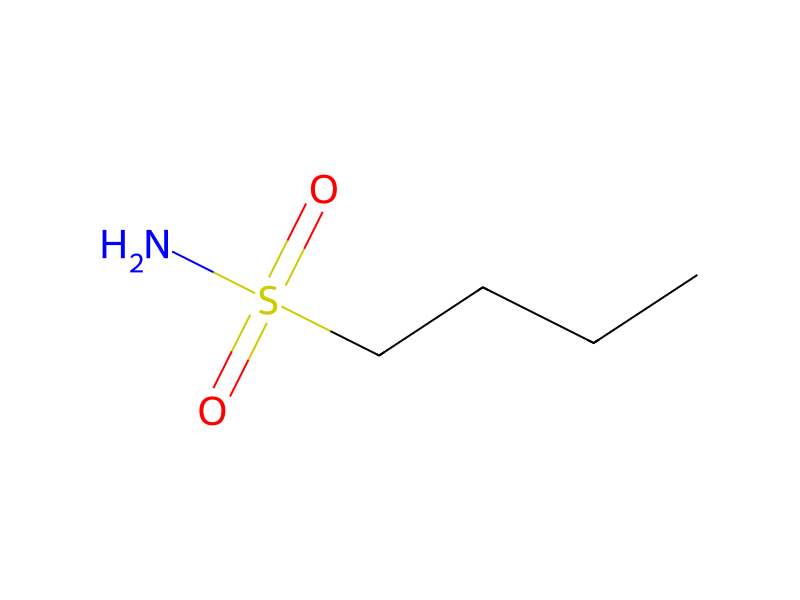
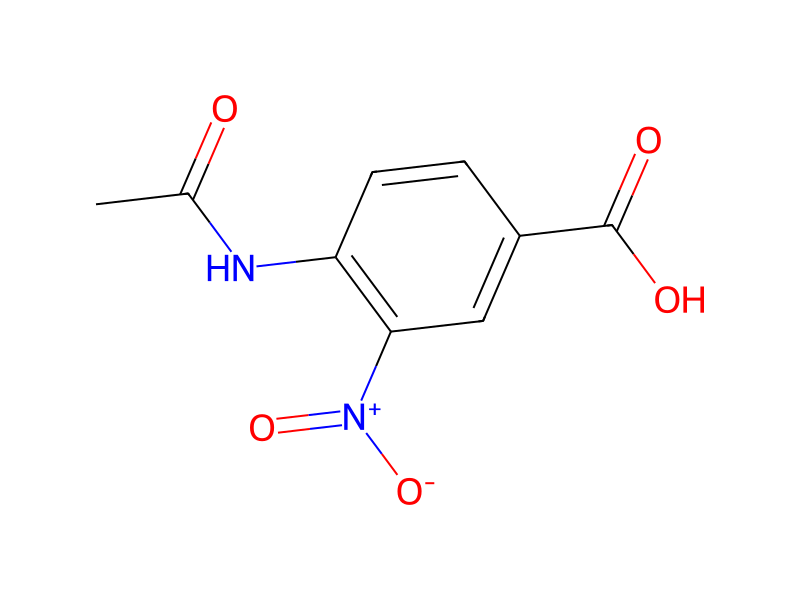
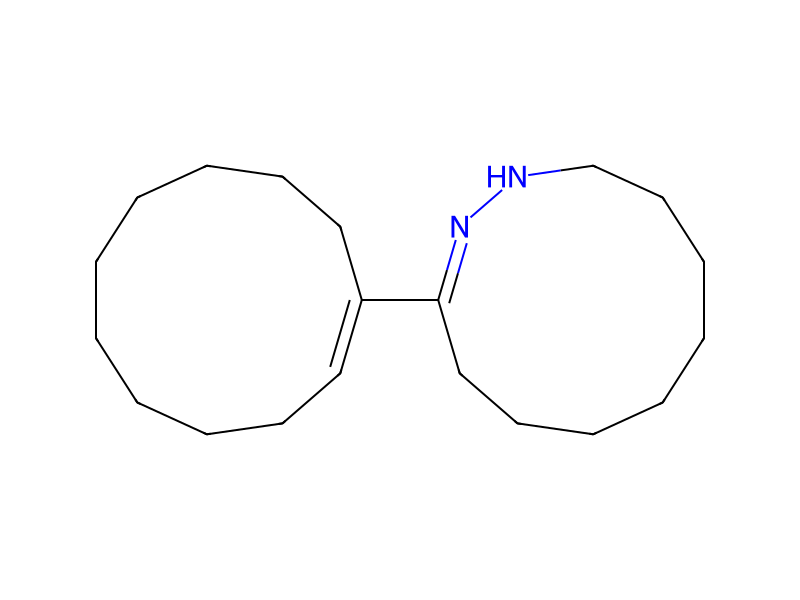
CN(C)C=O.[C:6]([NH:9][C:10]1[CH:18]=[CH:17][C:13]([C:14]([OH:16])=O)=[CH:12][C:11]=1[N+:19]([O-:21])=[O:20])(=[O:8])[CH3:7].[CH2:22]([S:26]([NH2:29])(=[O:28])=[O:27])[CH2:23][CH2:24][CH3:25].C1(C2CCCCCCCCCC=2)CCCCCCCCNN=1>O.C(Cl)(Cl)Cl>[CH2:22]([S:26]([NH:29][C:14](=[O:16])[C:13]1[CH:17]=[CH:18][C:10]([NH:9][C:6](=[O:8])[CH3:7])=[C:11]([N+:19]([O-:21])=[O:20])[CH:12]=1)(=[O:28])=[O:27])[CH2:23][CH2:24][CH3:25]N,N′-carbonyldiimidazole (9.40 g) is added to an N,N-dimethylformamide (300 ml) solution of 4-acetylamino-3-nitro-benzoic acid (10.0 g), and the solution is stirred for 1 hour at room temperature. Then, 1-butanesulfonamide (7.92 g) and diazabicycloundecene (8.83 g) are added into the solution, and the solution is stirred for 72 hours at 100° C. After chloroform and water are added into the solution and the solution is separated into layers, the residue, which is obtained by concentrating the organic layer, is purified using silica gel column chromatography (eluate: ethyl acetate/methanol=4/1), and thus, N-(1-butanesulfonyl)-4-acetylamino-3-nitrobenzamide (10.75 g) is obtained. 1H-NMR (DMSO-d6, δ): 0.87 (3H, t, J=7.4 Hz), 1.37-1.44 (2H, m), 1.64-1.71 (2H, m), 2.12 (3H, s), 3.52 (2H, t, J=7.7 Hz), 7.83 (1H, d, J=8.6 Hz), 8.21 (1H, dd, J=8.6 and 2.1 Hz), 8.54 (1H, d, J=2.2 Hz), 10.56 (1H, s), 12.32 (1H, s).