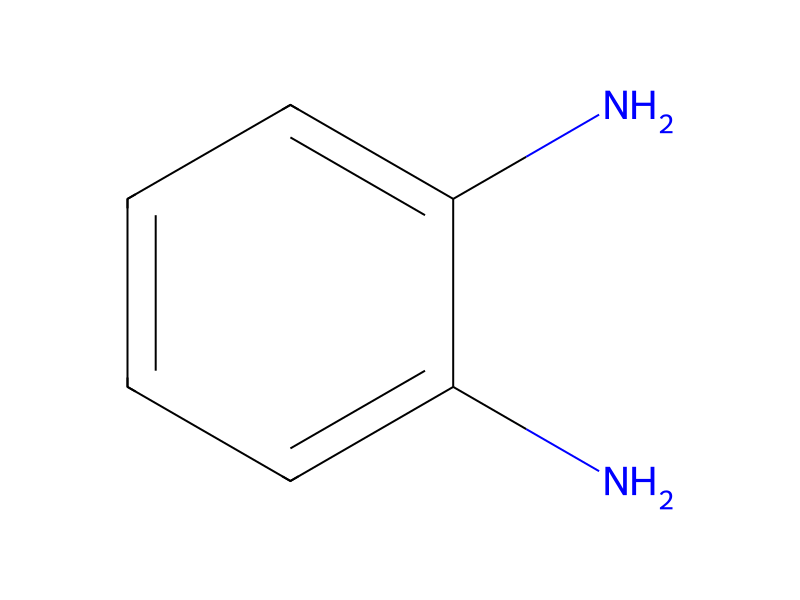
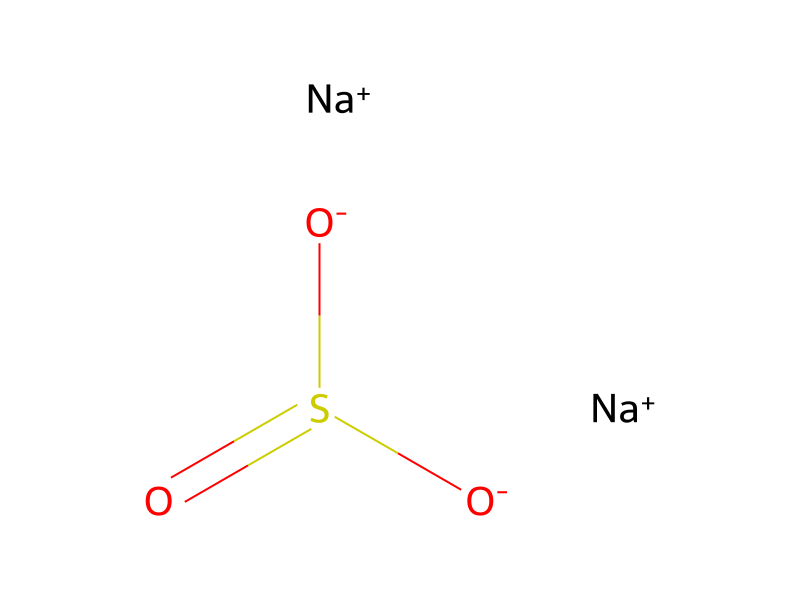
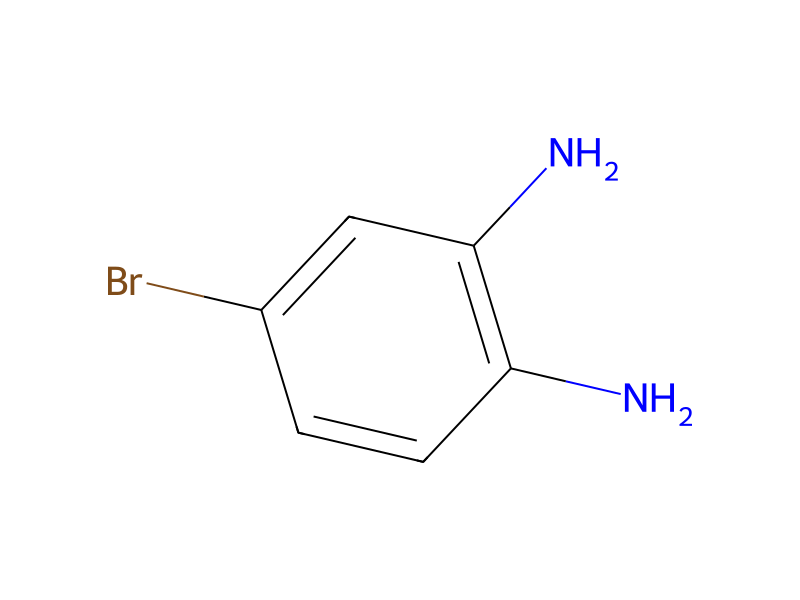
A method for synthesizing a deoxyribofuranose compound having a structure represented by the above-mentioned formula (12) will be explained. The compound can be synthesized according to the scheme shown in FIG. 2. First, 4-bromo-phenylene diamine (compound 13) is synthesized. The synthesis can be conducted by a method disclosed in Japanese Laid-Open Patent Application Nos. 63-22091 and 63-179870. Specifically, o-phenylene diamine is added to acetic acid, and further mixed with acetic anhydride under cooling, and the resultant reaction mixture is heated. After cooling, a bromine solution in acetic acid is slowly added to the reaction mixture. Then, an acidic sodium sulfite solution dissolved in ice water is added into the reaction mixture. The resultant white precipitate is collected to obtain compound 13, 4-bromo-o-phenylene diamine. By reacting compound 13 and 1,2-bis(chlorodimethylsilyl)ethane, compound 14 of which two amino groups attached to the benzene ring are protected, can be obtained. By lithiating compound 14 by reacting with butyl lithium (n-BuLi), compound 15 can be obtained. Then, 2,3,5-tri-o-benzyl ribonolactone (compound 16) dissolved in THF (20 ml) is reacted with compound 15. The protecting groups of the amino groups on the benzene ring are removed by using trifluoroborane and triethylsilane to obtain compound 17. Compound 18 can be obtained by treating compound 17 with benzoyl chloride. Treatment of compound 18 with boron tribromide in dichloroethane to convert all benzyloxy groups at 2′, 3′ and 5′ positions of compound 18 to hydroxyl groups gives ribofuranose compound 11. Then compound 11 is reacted with 1,3-dichloro-1,1,3,3-tetraisopropyldisiloxane so as to obtain compound 19 where 3′ and 5′ hydroxyl groups of the ribofuranose compound 11 are protected. The hydroxyl group at the 2′ position of compound 19 is reacted with p-trichlorothinoformate so as to obtain compound 20. Compound 20 is reacted with tributyltin hydride in the presence of a catalytic amount of azoisobutylonitrile (AIBN) to obtain compound 21. By reacting compound 21 with tetrabutyl ammonium fluoride in THF at room temperature to remove the protection group, a deoxyribonucleoside having a deoxyribofuranose ring represented by the above-mentioned formula 12, which does not have a hydroxyl group at the 2′ position, can be obtained.