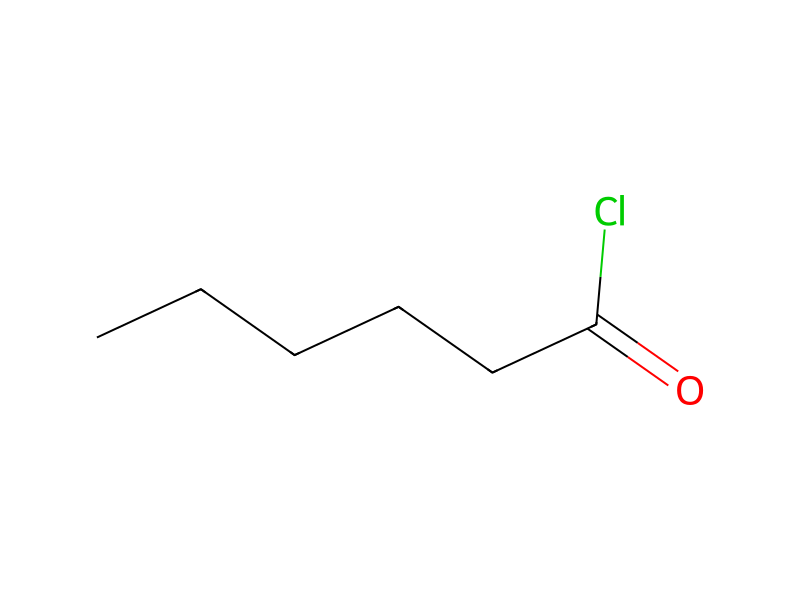
[CH2:1]([O:8][C:9]1[CH:10]=[N:11][C:12]([NH2:15])=[N:13][CH:14]=1)[C:2]1[CH:7]=[CH:6][CH:5]=[CH:4][CH:3]=1.[C:16](Cl)(=[O:22])[CH2:17][CH2:18][CH2:19][CH2:20][CH3:21].Cl>ClCCl.N1C=CC=CC=1>[CH2:1]([O:8][C:9]1[CH:14]=[N:13][C:12]([NH:15][C:16](=[O:22])[CH2:17][CH2:18][CH2:19][CH2:20][CH3:21])=[N:11][CH:10]=1)[C:2]1[CH:7]=[CH:6][CH:5]=[CH:4][CH:3]=1A solution of 5-(benzyloxy)pyrimidin-2-amine (60.0 g, 0.30 mmol) in dichloromethane (400 mL) was added with pyridine (30 mL, 0.37 mmol), the mixture was added dropwise with a solution of hexanoyl chloride (46 g, 0.34 mmol) in dichloromethane (100 mL) with stirring on an ice bath, and the mixture was stirred at the same temperature for 1 hour. The reaction mixture was added with 1 M hydrochloric acid (500 mL), and extracted with chloroform, and the organic layer was successively washed with water and saturated brine, dried over anhydrous sodium sulfate, and then concentrated under reduced pressure. The resulting residue was recrystallized from chloroform-hexane to obtain N-[5-(benzyloxy)pyrimidin-2-yl]hexanamide (87.1 g, 98%) as colorless acicular crystals.