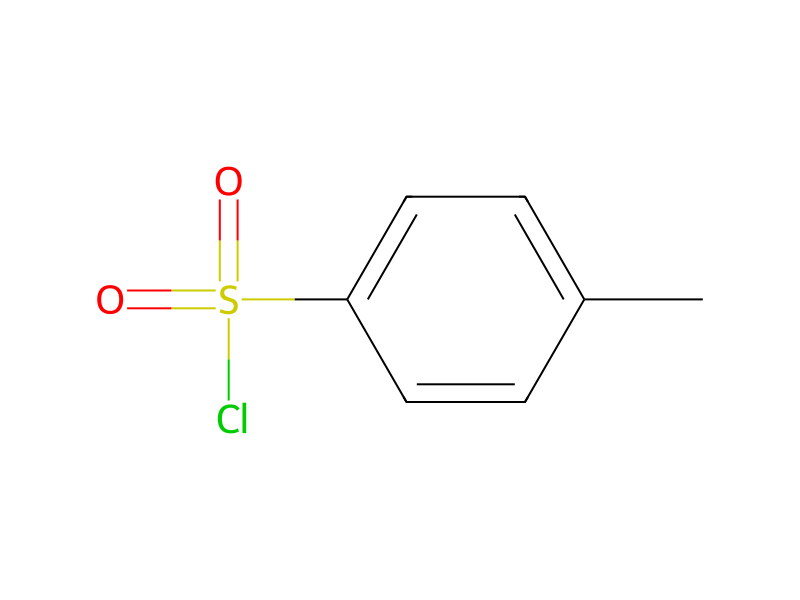
4-Toluenesulfonyl chloride → HCID 13749135, 화합물
HRID 1732052
반응식

[CH3:1][C:2]1[C:10]2[C:5](=[CH:6][CH:7]=[CH:8][CH:9]=2)[N:4]2[CH2:11][CH2:12][CH2:13][CH:14](O)[C:3]=12.C1(C)C=CC(S([Cl:25])(=O)=O)=CC=1.[NH:27]1[CH2:31][CH2:30][CH2:29][CH2:28]1>N1C=CC=CC=1>[ClH:25].[CH3:1][C:2]1[C:10]2[C:5](=[CH:6][CH:7]=[CH:8][CH:9]=2)[N:4]2[CH2:11][CH2:12][CH2:13][CH:14]([N:27]3[CH2:31][CH2:30][CH2:29][CH2:28]3)[C:3]=12참가 물질
5




실험 절차
To a solution of 6,7,8,9-tetrahydro-10-methylpyrido[1,2-a]indol-9-ol (2.01 g, 10 mmol) in dry pyridine (100 mL) was added a solution of p-toluenesulfonyl chloride (7.6 g, 10 mmol) in the same solvent (50 mL) at 5°-10° C. Maintaining this temperature, stirring was continued for 60 minutes, and then, the reaction mixture was treated with distilled pyrrolidine (7.1 g, 100 mmol), and stirred at room temperature for 8 hours. The resultant solution was poured into ice-water, and the product was extracted with methylene chloride. The combined extracts were washed with water, dried (MgSO4), filtered, and evaporated. The residue was chromatographed using methylene chloride/methanol 99:1. The title base 1.8 g (70%) was converted to the hydrochloride salt in acetonitrile with ethereal HCl, and recrystallized from ethanol, m.p. 179°-181° C. (analytical specimen m.p. 182° C.).