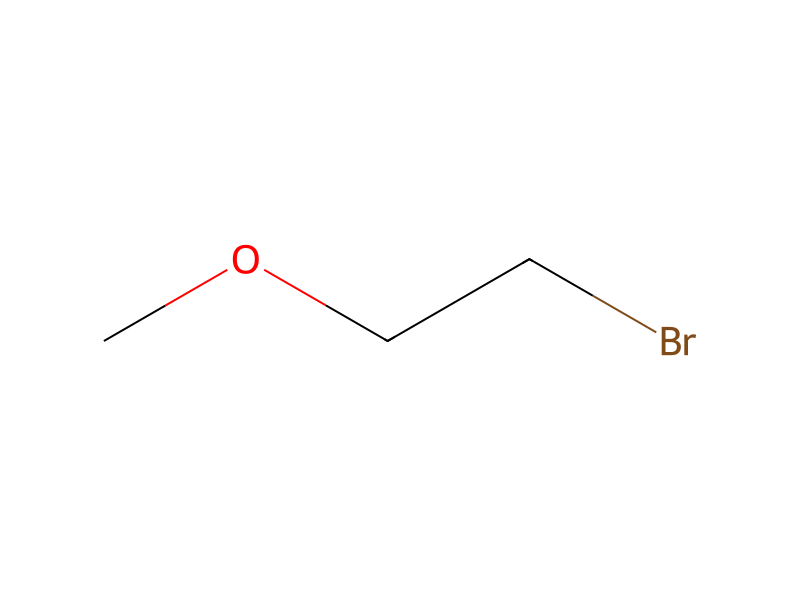
Under a nitrogen atmosphere, 60% sodium hydride (705 mg, 16.2 mmol) was suspended in anhydrous toluene (21 mL), and the suspension was cooled to 0° C. in an ice bath. In a different flask, tert-butyl 1,3-dithiane-2-carboxylate (3.235 g, 14.7 mmol) and 1-bromo-2-methoxyethane (1.52 mL, 16.15 mmol) were dissolved in N,N-dimethylformamide (7.0 mL), and the solution was added dropwise to the first flask over 15 minutes. After completion of the dropwise addition, the mixture was stirred at the same temperature for 5 minutes, and successively at room temperature for further 2 hours. The progress of the reaction was stopped by adding a saturated aqueous solution of ammonium chloride. The mixture was extracted with a mixture (1:1 v/v) of n-hexane and ethyl acetate. The separated organic layer was washed twice with water, dried over anhydrous sodium sulfate, and filtered. The filtrate was concentrated. The residue was purified by silica gel column chromatography (n-hexane/ethyl acetate) to obtain the target compound at a yield of 90% (GC m/z 278 (M+); Rt 5.3 min.).