Triphenylphosphine → 7-(1-Tert-butoxycarbonylpiperidin-4-ylmethoxy)-4-(2-methylindol-5-yloxy)quinazoline
HRID 1791621
반응식

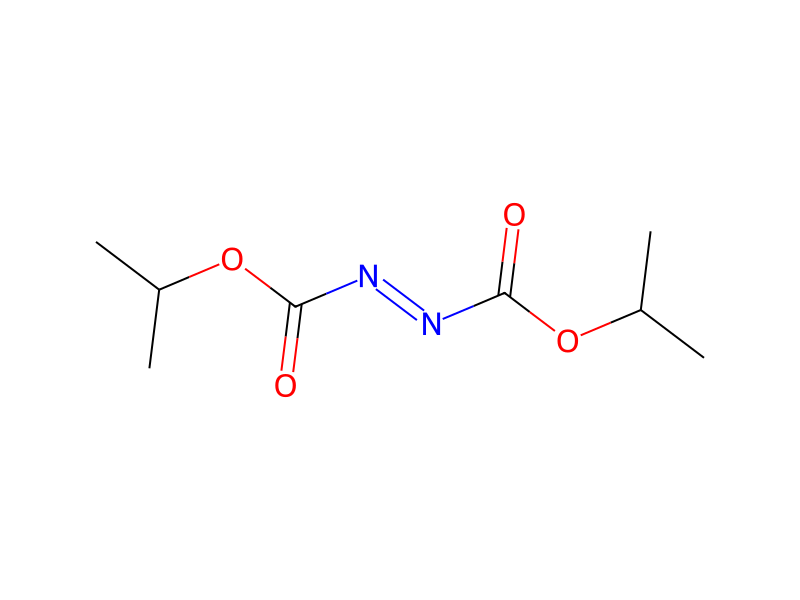
[OH:1][C:2]1[CH:11]=[C:10]2[C:5]([C:6]([O:12][C:13]3[CH:14]=[C:15]4[C:19](=[CH:20][CH:21]=3)[NH:18][C:17]([CH3:22])=[CH:16]4)=[N:7][CH:8]=[N:9]2)=[CH:4][CH:3]=1.C1(P(C2C=CC=CC=2)C2C=CC=CC=2)C=CC=CC=1.O[CH2:43][CH:44]1[CH2:49][CH2:48][N:47]([C:50]([O:52][C:53]([CH3:56])([CH3:55])[CH3:54])=[O:51])[CH2:46][CH2:45]1.N(C(OC(C)C)=O)=NC(OC(C)C)=O>C(Cl)Cl>[C:53]([O:52][C:50]([N:47]1[CH2:48][CH2:49][CH:44]([CH2:43][O:1][C:2]2[CH:11]=[C:10]3[C:5]([C:6]([O:12][C:13]4[CH:14]=[C:15]5[C:19](=[CH:20][CH:21]=4)[NH:18][C:17]([CH3:22])=[CH:16]5)=[N:7][CH:8]=[N:9]3)=[CH:4][CH:3]=2)[CH2:45][CH2:46]1)=[O:51])([CH3:56])([CH3:54])[CH3:55]참가 물질
6