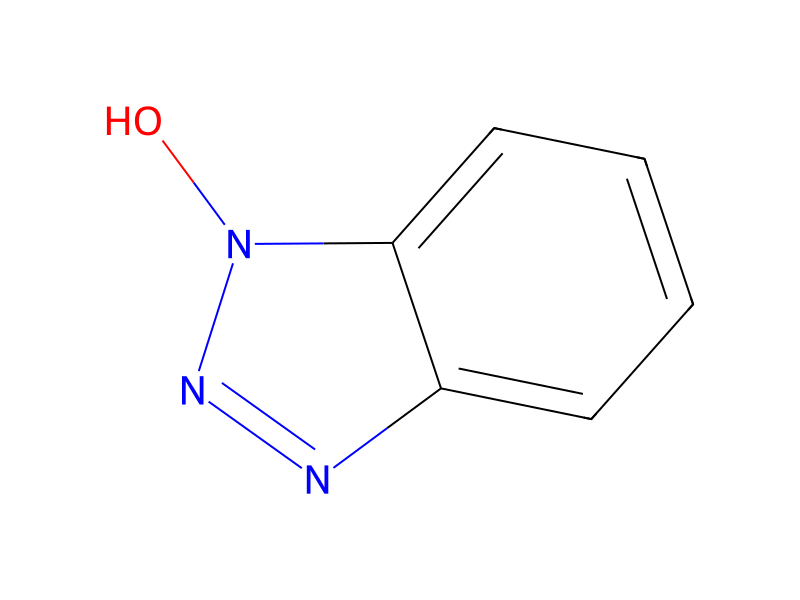
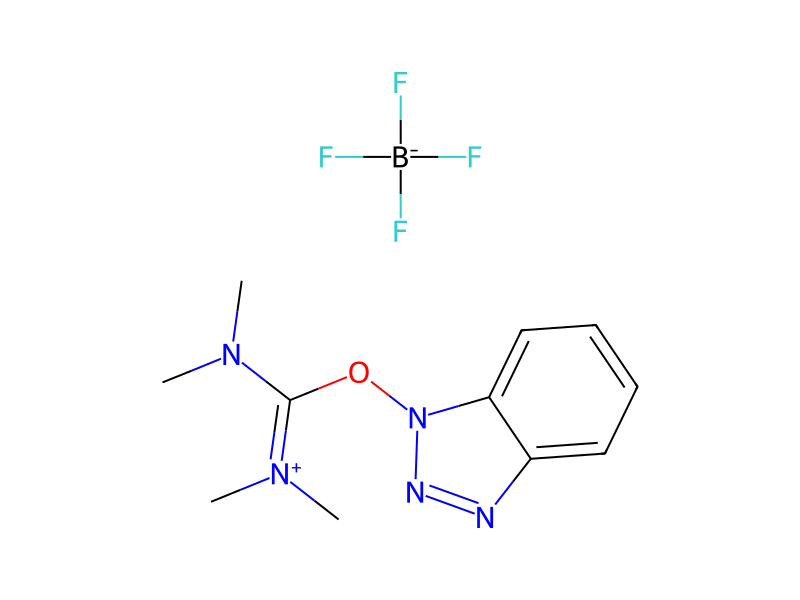
[Br:1][C:2]1[CH:3]=[C:4]([O:16][CH3:17])[CH:5]=[C:6]2[C:11]=1[NH:10][C:9]([C:12]([OH:14])=O)=[CH:8][C:7]2=[O:15].CN(C(ON1N=NC2C=CC=CC1=2)=[N+](C)C)C.[B-](F)(F)(F)F.C1C=CC2N(O)N=NC=2C=1.[O:50]1[CH2:55][CH2:54][N:53]([C:56]2[CH:62]=[CH:61][C:59]([NH2:60])=[CH:58][CH:57]=2)[CH2:52][CH2:51]1.C(N(C(C)C)CC)(C)C>CN(C)C=O>[N:53]1([C:56]2[CH:57]=[CH:58][C:59]([NH:60][C:12]([C:9]3[NH:10][C:11]4[C:6]([C:7](=[O:15])[CH:8]=3)=[CH:5][C:4]([O:16][CH3:17])=[CH:3][C:2]=4[Br:1])=[O:14])=[CH:61][CH:62]=2)[CH2:52][CH2:51][O:50][CH2:55][CH2:54]1To a yellow suspension of 8-bromo-6-methoxyoxo-1,4-dihydro-quinoline-2-carboxylic acid (Reference Example 27a) (3.446 g, 11.56 mmol), TBTU (9.039 g, 28.15 mmol), and HOBt (3.757 g, 27.8 mmol) in 100 mL dimethylformamide was added 4-morpholinoaniline (2.733 g, 15.3 mmol) and diisopropylethyl amine (8.2 mL, 50.2 mmol). The resulting marroon solution was stirred at room temperature under nitrogen for 16 hours during which time the reaction became greenish brown and formed a large amount of precipitate. The reaction mixture was filtered and the solids washed with dimethylformamide, water, and methanol; Drying under high vacuum afforded the desired product as a yellow solid (3.09 g, 58%). 1H NMR (300 MHz, DMSO, d6) δ 12.13 (s, 1 H, NH), 10.18 (s, 1 H, C(O)NH), 7.90 (d, 1 H, Jm=2.7 Hz, ArH5), 7.68 (d, 2 H, Jo=9.0 Hz, ArH2′ & H6′), 7.63 (s, 1 H, C═CH), 7.51 (d, 1 H, Jm=2.7 Hz, ArH7), 7.00 (d, 2 H, Jo=9.0 Hz, ArH3′ & H5′), 3.94 (s, 3 H, OCH3), 3.75 (t, 4 H, J=4.8 Hz, OCH2CH2N), 3.10 (t, 4 H, J=4.8 Hz, OCH2CH2N); Mass Spec.: calc. for [C21H20BrN3O4+H]+ Theor. m/z=458, 460; Obs.=458, 460.