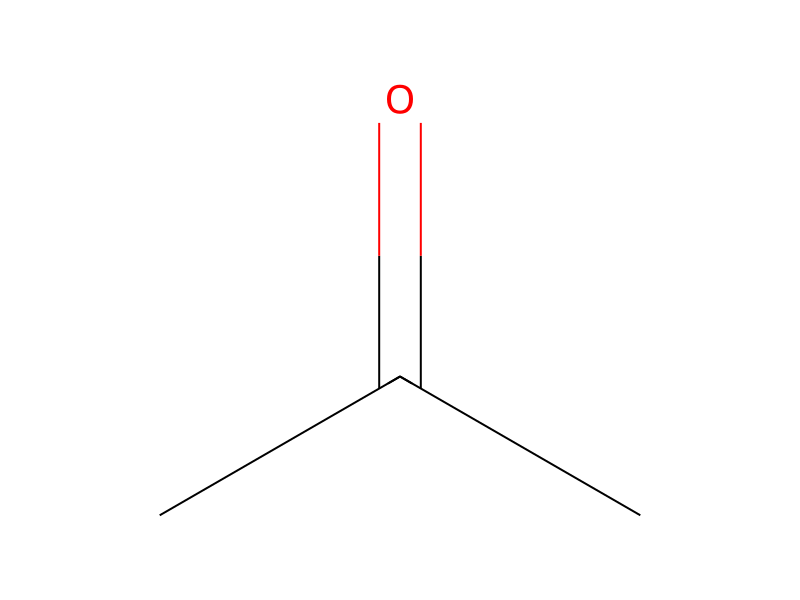
Synthesis of Compound 1 Indan-2-one (1.0 g, 7.6 mmol), ethylene glycol (0.43 mL, 7.6 mmol), and para-toluene sulphonic acid were refluxed in benzene (40 mL) using a Dean-Stark trap for 6 hours. The mixture was allowed to cool and was then diluted with ethyl acetate (100 ml) and washed with saturated sodium hydrogen carbonate solution (60 mL). The organic layer was separated off, and the aqueous layer was extracted further with ethyl acetate (2×50 mL). The combined organic fractions were washed with brine, dried (MgSO4), and the solvent was evaporated under reduced pressure. The residue was chromatographed (SiO2, heptane/ethyl acetate, 97:3) to give the acetal 1 (1.14 g, 85%) as a colorless oil; Rf(heptane/ethyl acetate, 8:2) 0.36; νmax(film)/cm−1 1483, 1331, 1291, 1105; δH (400 MHz; CDCl3): 7.19–7.14 (4H, m, Ph), 4.02 (4H, s, 2×CH2CO2, 3.18 (4H, s, 2×CH2O). Synthesis of Compound 2 Acetal 1 (0.5 g, 2.84 mmol) in ethanol (50 mL) was shaken over a catalytic amount of 5% rhodium on alumina under a hydrogen atmosphere (70 Psi, 50° C.) for 16 hours. The catalyst was filtered off, and the solvent was evaporated under reduced pressure to give the acetal 2 (0.51 g, 99%) as a colorless oil; νmax,.(film)/cm−1 2923, 1449, 1337, 1192, 1115, 1089; δH (400 MHz; CDCl3): 3.89–3.86 (4H, m, 2×CH2O), 2.10–2.00 (2H, m), 1.88 (2H, dd, J=13.9, 7.6), 1.81 (2H, dd, J=13.7, 7.0), 1.56–1.26 (6H, m). Synthesis of Compound 3 Acetal 2 (1.01 g, 5.54 mmol) was stirred in a mixture of 2N hydrochloric acid (10 mL) and acetone (10 mL) for 24 hours. After this time, tic showed complete consumption of the starting acetal. Saturated sodium carbonate solution (20 mL) was added, and the mixture was extracted with ether (3×25 mL). The combined ether fractions were washed with brine, dried (MgSO4), and the solvent was evaporated under reduced pressure. The residue was chromatographed (SiO2, pentane/ether, 95:5) to give the ketone 3 (0.75 g, 97%) as a colorless oil; Rf (heptane/ethyl acetate, 8:2) 0.42; νmax(film)/cm−1 1743 (C═O); δH (400 MHz; CDCl3): 2.37–2.28 (2H, m), 2.20 (2H, dd, J=18.5, 7.5), 2.12 (2H, dd, J=18.7, 6.3), 1.65–1.24 (10H, m). Synthesis of Compound 4 Triethyl phosphonoacetate (1.13 mL, 5.70 mmol) was added dropwise to a stirring suspension of sodium hydride (0.22 g of a 60% dispersion in oil, 5.43 mmol) in THF (15 mL) at 0° C. under argon. After 20 minutes, ketone 3 (0.75 g, 5.43 mmol) in THF (6 mL) was added dropwise. The mixture was allowed to warm to room temperature and stirred for 16 hours. Water (5 mL) was added, and the mixture was extracted with ether (15 mL×3). The combined organic fractions were washed with brine and dried (MgSO4). The solvent was evaporated under reduced pressure. The residue was chromatographed (SiO2, heptane/ethyl acetate, 95:5) to give the ester 4 (0.81 g, 72%) as a colorless oil; Rf(heptane/ethyl acetate, 8:2) 0.66; νmax(film)/cm−1 1715 (C═O), 1652 (C═C); δH (400 MHz; CDCl3): 5.80 (1H, quint, J=2.2, CHCO2Et), 4.15 (2H, q, J=7.1, CO2CH2Me), 2.79 (1H, dd, J=19.5, 8.1), 2.69 (1H, ddt, J=19.8, 7.3, 2.3), 2.47 (1H, dd, J=17.3, 7.2), 2.34 (1H, ddt, J=17.3, 5.6, 1.8), 2.14 (1H, m), 2.02 (1H, m), 1.60–1.22 (8H, m); m/z (ES+) 209 (M+H, 57%), 455 (2M+K, 67). Synthesis of Compounds 5 and 6 Ester 4 (0.45 g, 2.16 mmol), nitromethane (0.24 mL, 4.31 mmol), and tetra-butylammonium fluoride (3.10 mmol of a 1 M solution in THF, 3.10 mmol) were heated to 65° C. in THF for 4 hours. The mixture was allowed to cool, diluted with ethyl acetate (20 mL), and acidified with dilute hydrochloric acid (15 mL). The organic layer was separated off, and the aqueous layer was further extracted with ethyl acetate (2×15 mL). The combined organic fractions were washed with brine, dried (MgSO4), and the solvent was evaporated under reduced pressure. The residue was chromatographed (SiO2, heptane/ethyl acetate, 98:2) to give a 9:1 ratio of nitro-esters 5 and 6 (0.35 g, 60%) as a yellow oil; Rf (heptane/ethyl acetate, 9:1) 0.28; νmax(film)/cm−1 1732 (C═O), 1547 (NO2), 1375 (NO2); major isomer 5: δH (400 MHz; CDCl3): 4.61 (2H, s, CH2NO2), 4.15 (2H, q, J=7.2, OCH2Me), 2.70 (2H, s, CH2CO2Et), 2.06 (2H, m), 1.81 (2H, dd, J=13.9, 7.1), 1.56 (2H, dd, J=13.1, 6.8), 1.51–1.22 (8H, m) 1.28 (3H, t, J=7.2). Synthesis of Compounds 7 and 8