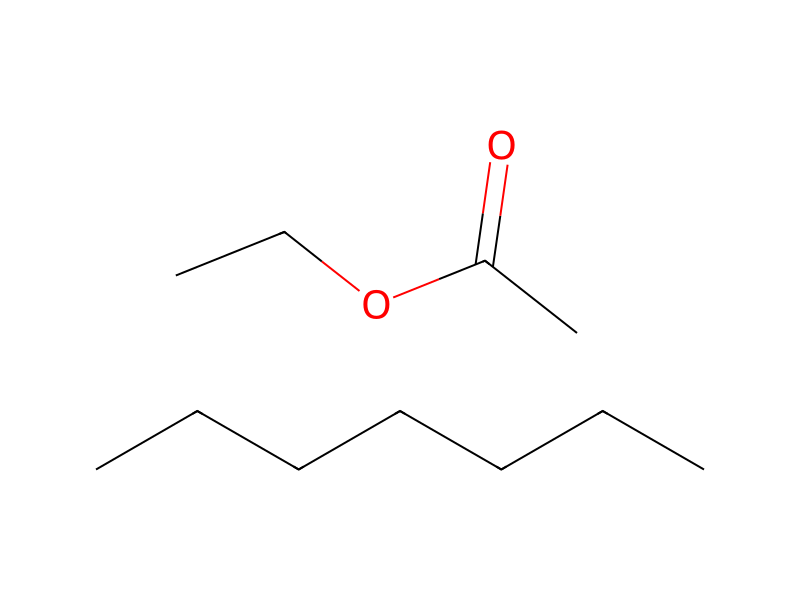
Synthesis of Compound 1 n-Butyllithium (5.1 mL of a 2.5 M solution in hexanes, 12.75 mmol) was added dropwise to a stirring mixture of nitromethane (0.34 mL, 6.3 mmol) in THF (20 mL) and HMPA (2 mL) at −78° C. under argon. The mixture was allowed to warm to −60° C. and stirred for 1 hour. The mixture was cooled to −78° C. and 3 (0.79 g, 5.73 mmol) was added. The mixture was allowed to warm to −60° C. and stirred for a further 2 hours. The mixture was quenched by addition of saturated ammonium chloride solution (5 mL). After warming to room temperature, dilute hydrochloric acid (10 mL) and ether (30 mL) were added. The organic layer was separated, and the aqueous layer was further extracted with ether (2×25 mL). The combined organic fractions were washed with brine, dried (MgSO4), and the solvent was evaporated under reduced pressure. The residue was chromatographed (SiO2, heptane/ethyl acetate, 95:5) to give the nitro-alcohol 1 (0.50 g, 43%) as a white solid; Rf (heptane/ethyl acetate, 9:1) 0.14; νmax(CH2Cl2)/cm−1 3424 (OH), 1548 (NO2), 1379 (NO2); δH (400 MHz; CDCl3): 4.45 (2H, s, CH2NO2), 3.26 (1H, s, OH), 2.04–1.95 (2H, m), 1.85–1.80 (4H, m), 1.64–1.24 (8H, m). Synthesis of Compound 2 A mixture of 1 (0.50 g, 2.49 mmol) and concentrated sulphuric acid (1 drop) was heated to 50° C. in acetic anhydride (1 mL) for 5 minutes. The mixture was allowed to cool and then partitioned between ether (100 mL) and water (50 mL). The ether layer was washed with brine, dried (MgSO4), and the solvent was evaporated under reduced pressure to give the nitro-acetate 2 (0.49 g, 82%) as a colorless oil; Rf(heptane/ethyl acetate, 9:1) 0.44; νmax(film)/cm−1 1739 (C═O), 1551 (NO2), 1375 (NO2); δH (400 MHz; CDCl3): 4.88 (2H, s, CH2NO2), 2.38–2.00 (8H, m), 2.07 (3H, s, MeCO), 1.62–1.32 (6H, m). Synthesis of Compound 3 Potassium methoxide (0.15 g, 2.04 mmol) in methanol (3 mL) was added dropwise to a stirring solution of 2 (0.49 g, 2.04 mmol) in methanol (5 mL) at 0° C. After 10 minutes, the mixture was partitioned between ether (100 mL) and water (50 mL). The ether layer was washed with brine, dried (MgSO4) and the solvent was evaporated under reduced pressure. The residue was chromatographed (SiO2, pentane/ether, 98:2) to give the nitro-alkene 3 (0.21 g, 57%) as a pale yellow oil; Rf (heptane/ethyl acetate, 8:2) 0.54; νmax(film)/cm−1 1643 (C═C), 1509 (NO2), 1342 (NO2); δH (400 MHz; CDCl3): 7.12 (1H, quint, J=2.0, CHNO2), 3.01 (1H, ddt, J=20.5, 8.0, 2.1), 2.90 (1H, ddt, J=20.5, 7.3, 2.1), 2.54 (1H, ddt, J=17.8, 7.1, 2.0), 2.43 (1H, ddt, J17.7, 5.6, 1.9), 2.21 (1H, m), 2.12 (1H, m), 1.60–1:24 (8H, m). Synthesis of Compound 4 Ethyl acetate (0.12 mL, 1.22 mmol) in THF (2 mL) was added dropwise to a stirring solution of lithium bis(trimethylsilyl)amide (1.22 mL of a 1 M solution in THF, 1.22 mmol) at −78° C. under argon. After 20 minutes, 3 (0.21 g, 1.16 mmol) in THF (1 mL) was added, and the mixture was stirred for 2 hours. The mixture was quenched by addition of saturated ammonium chloride solution (3 mL) and allowed to warm to room temperature. The mixture was diluted with ether (20 mL) and dilute hydrochloric acid (15 mL) was added. The organic layer was separated, and the aqueous layer was further extracted with ether (2×10 mL). The combined organic fractions were washed with brine, dried (MgSO4), and the solvent was evaporated under reduced pressure. The residue was chromatographed (SiO2, heptane/ethyl acetate, 99:1) to give the nitro-ester 4 (0.13 g, 41%) as a colorless liquid; Rf(heptane/ethyl acetate, 9:1) 0.32; νmax(film)/cm−1 1731 (C═O), 1547 (NO2), 1375 (NO2); δH (400 MHz; CDCl3): 4.73 (2H, s, CH2NO2), 4.14 (2H, q, J=7.1, CO2CH2Me), 2.58 (2H, s, CH2CO2Et), 2.07 (2H, m), 1.71–1.66 (4H, m), 1.60–1.24 (8H, m), 1.26 (3H, t, J=7.2, CO2CH2Me); m/z (ES+) 270 (M+H, 100%). Synthesis of Compound 5 4 (0.122 g, 0.45 mmol) in methanol (40 mL) was shaken over a catalytic amount of nickel sponge catalyst under a hydrogen atmosphere (60 Psi, 30° C.) for 6 hours. The mixture was filtered and the solvent was evaporated under reduced pressure to give amino-ester 5 (0.084 g, 96%) as a white solid; νmax(film)/cm−1 3228 (NH), 1665 (C═O); δH (400 MHz; CDCl3): 5.49 (1H, br s, NH), 3.34 (2H, s, CH2NH), 2.25 (2H, s, CH2CO), 2.10–1.98 (2H, m),1.77 (2H, dd, J=13.2, 7.1), 1.65 (2H, dd, J=13.2, 6.8), 1.62–1.20 (8H, m).