홈MCP워크벤치Skills
홈워크벤치알림마이페이지
llms.txt · MCP 가이드개인정보처리방침 · 이용약관 · 지원v1.8.3
  1. 홈
  2. /반응

Sodium Bicarbonate → t-butyl[4-(9-hydroxy-2-methyl-9-trifluoromethyl-9H-fluoren-4-yl)-pyrazol-1-yl]-acetate

HRID 1799042
인쇄

반응식

HRID 1799042 반응식
CC1(C)C(C)(C)OB([C:9]2[CH:10]=[N:11][N:12]([CH2:14][C:15]([O:17][C:18]([CH3:21])([CH3:20])[CH3:19])=[O:16])[CH:13]=2)O1.Cl[C:24]1[C:36]2[C:35]3[C:30](=[CH:31][CH:32]=[CH:33][CH:34]=3)[C:29]([C:38]([F:41])([F:40])[F:39])([OH:37])[C:28]=2[CH:27]=[C:26]([CH3:42])[CH:25]=1.C(=O)([O-])O.[Na+].C1(P(C2CCCCC2)C2C=CC=CC=2C2C(OC)=CC=CC=2OC)CCCCC1>C1(C)C=CC=CC=1.O.C([O-])(=O)C.[Pd+2].C([O-])(=O)C.O>[C:18]([O:17][C:15](=[O:16])[CH2:14][N:12]1[CH:13]=[C:9]([C:24]2[C:36]3[C:35]4[C:30](=[CH:31][CH:32]=[CH:33][CH:34]=4)[C:29]([OH:37])([C:38]([F:40])([F:41])[F:39])[C:28]=3[CH:27]=[C:26]([CH3:42])[CH:25]=2)[CH:10]=[N:11]1)([CH3:19])([CH3:20])[CH3:21]
참가 물질반응 조건실험 절차후처리출처 및 근거반응 노트

참가 물질

8

반응물 4

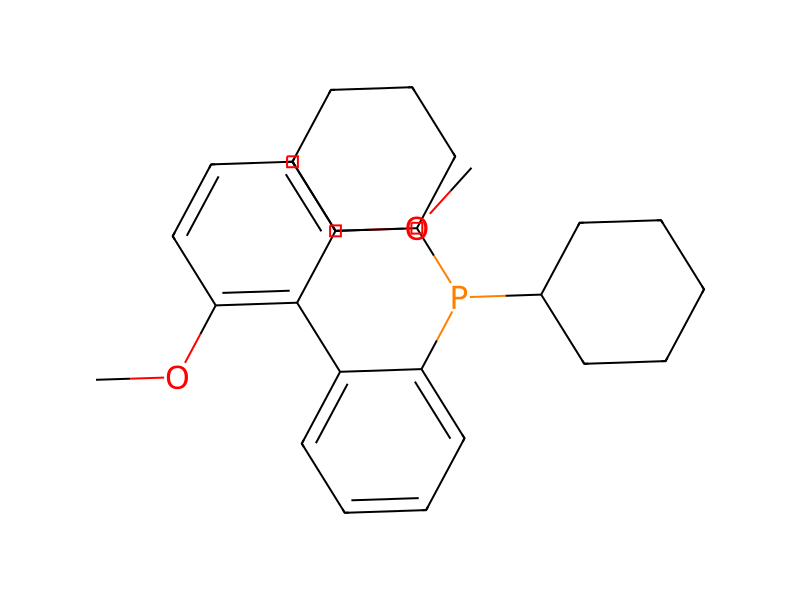
HCID 516892Sodium BicarbonateHCID 112698722-Dicyclohexylphosphino-2',6'-dimethoxybiphenylHCID 59216326tert-Butyl 2-(4-(4,4,5,5-tetramethyl-1,3,2-dioxaborolan-2-yl)-1H-pyrazol-1-yl)acetateHCID 59492563(+)-4-chloro-2-methyl-9-trifluoromethyl-9H-fluoren-9-ol

생성물 1

HCID 59492691t-butyl[4-(9-hydroxy-2-methyl-9-trifluoromethyl-9H-fluoren-4-yl)-pyrazol-1-yl]-acetate
수율 59.8%

시약·촉매·용매 3

HCID 167845palladium(II) acetate촉매HCID 962Water용매HCID 22272177Toluene water용매

반응 조건

온도
110 °C

실험 절차

To a suspension of t-butyl [4-(4,4,5,5-tetramethyl-[1,3,2]dioxaborolan-2-yl)-pyrazol-1-yl]-acetate (24.8 g), (+)-4-chloro-2-methyl-9-trifluoromethyl-9H-fluoren-9-ol (20.0 g), and sodium hydrogen carbonate (11.3 g) in toluene/water (200 ml/60 ml) were added palladium acetate (750 mg) and 2-dicyclohexylphosphino-2′,6′-dimethoxybiphenyl (2.75 g) at room temperature and the mixture was stirred at 110° C. for 2 hr. To the reaction mixture were added water (80 ml) and activated carbon (2.0 g) at room temperature and the mixture was stirred for 1 hr. The mixture was filtered through celite, and the solid was washed with tetrahydrofuran (100 ml). The filtrate was partitioned and the aqueous layer was extracted with ethyl acetate (100 ml). The combined organic layer was successively washed twice with water (100 ml) and once with saturated brine (100 ml), anhydrous sodium sulfate and silica gel (40 g) were added, and the mixture was stirred overnight. The mixture was filtered, and the filtrate was concentrated under reduced pressure. The obtained residue was treated with n-hexane/ethyl acetate (2/1, 120 ml) solution, and the resulting slurry was filtered to give the title compound (17.8 g).

후처리

  1. stirringthe mixture was stirred for 1 hr
  2. filtrationThe mixture was filtered through celite
  3. washthe solid was washed with tetrahydrofuran (100 ml)
  4. customThe filtrate was partitioned
  5. extractionthe aqueous layer was extracted with ethyl acetate (100 ml)
  6. washThe combined organic layer was successively washed twice with water (100 ml) and once with saturated brine (100 ml), anhydrous sodium sulfate and silica gel (40 g)
  7. additionwere added
  8. stirringthe mixture was stirred overnight
  9. filtrationThe mixture was filtered
  10. concentrationthe filtrate was concentrated under reduced pressure
  11. additionThe obtained residue was treated with n-hexane/ethyl acetate (2/1, 120 ml) solution
  12. filtrationthe resulting slurry was filtered

출처 및 근거

ORD 기록
ord-d8380874d8d549e4be48716c8245c418
출처 데이터셋
uspto-grants-2013_01
DOI
10.6084/m9.figshare.5104873.v1
특허 번호
US08343994B2

반응 노트

이 페이지에서참가 물질반응 조건실험 절차후처리출처 및 근거반응 노트