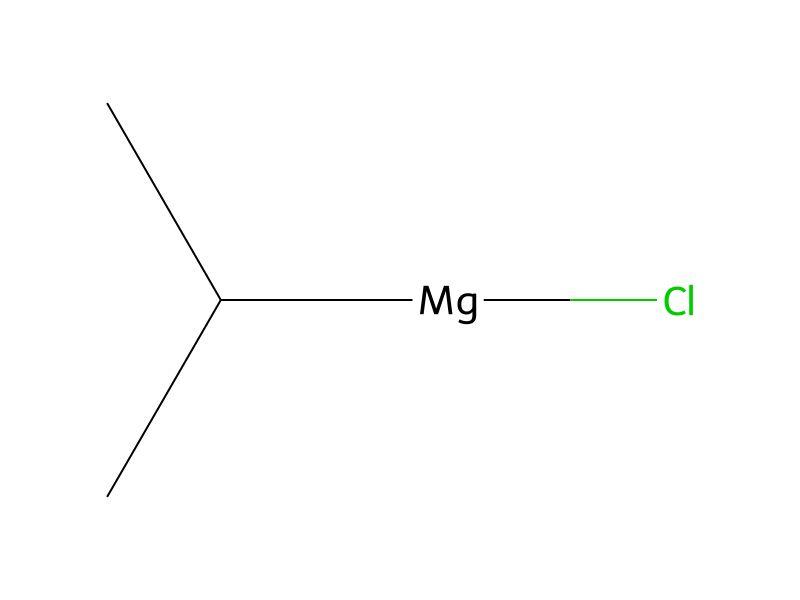
0.042 g (0.99 mmol) of anhydrous lithium chloride was put in a flask, and vacuum dried with heating the flask using a heat gun, followed by carrying out argon substitution and returning the temperature to room temperature. Thereto were added 0.483 g (1.00 mmol) of 1-bromo-2,5-dihexyloxy-4-iodobenzene and 0.0448 g (0.350 mmol) of naphthalene as an internal standard material, and the flask was again subjected to argon substitution. 5 mL of dried THF was added thereto, and 0.5 mL (1.0 mmol) of a solution of isopropylmagnesium chloride in THF (2.0 mol/l) was added, followed by stirring for 1 hour at 0° C. to Grignardize the 1-bromo-2,5-dihexyloxy-4-iodobenzene. Thereafter, 0.0105 g (0.0199 mmol, 2.0 mol %) of Ni(dppe)Cl2 suspended in 5 mL of THF was added, followed by stirring at room temperature for 30 minutes. In another egg-plant type flask were put 0.373 g (1.00 mmol) of 2,5-dibromo-3-hexylthiophene, 0.0329 g (0.257 mmol) of naphthalene, 5 mL of dried THF and 0.5 mL (1.0 mmol) of a solution of isopropylmagnesium chloride in THF (2.0 mol/l), and they were stirred at 0° C. for 1 hour to Grignardize 2,5-dibromo-3-hexylthiophene. A THF solution thereof was added to the reaction mixture, followed by stirring at room temperature for 10 minutes. After completion of the reaction, 5M HCl was added, followed by extraction with chloroform, and the organic layer was washed with water and then dried with anhydrous magnesium sulfate. The solvent was distilled off under reduced pressure to obtain a block copolymer (Mn=16200, Mw/Mn=1.27) represented by the following formula. A block copolymer having a narrow molecular weight distribution was obtained by first polymerizing the Grignardized 2,5-dihexyloxy-4-iodobenzene greater in parameter of aromatic ring charge (−0.104), and then copolymerizing 2,5-dibromo-3-hexylthiophene (−0.116).