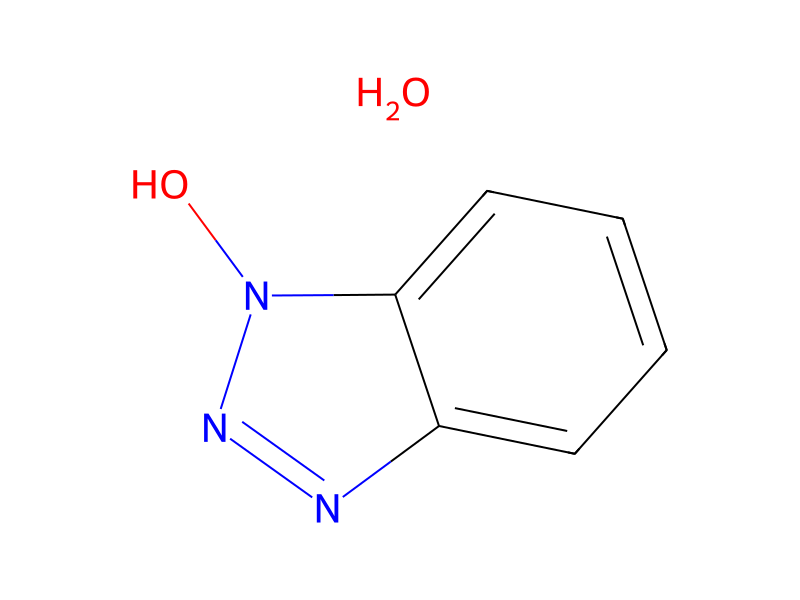
Cl.[Br:2][C:3]1[CH:4]=[C:5]([CH:8]=[CH:9][CH:10]=1)[CH2:6][NH2:7].C(N(CC)CC)C.[N:18]1[C:27]2[C:22](=[CH:23][N:24]=[CH:25][CH:26]=2)[CH:21]=[CH:20][C:19]=1[C:28](O)=[O:29].O.ON1C2C=CC=CC=2N=N1.Cl.CN(C)CCCN=C=NCC>CN(C=O)C.CCOC(C)=O>[Br:2][C:3]1[CH:4]=[C:5]([CH:8]=[CH:9][CH:10]=1)[CH2:6][NH:7][C:28]([C:19]1[CH:20]=[CH:21][C:22]2[C:27](=[CH:26][CH:25]=[N:24][CH:23]=2)[N:18]=1)=[O:29]To a stirring solution of 3-bromobenzylamine hydrochloride (77.5 mg, 0.345 mmol) in anhydrous DMF (5 ml) was added triethylamine (51.8 ul. 0.345 mmol), After 5 min, 2-[1,6]naphthyridinecarboxylic acid (40 mg, 0.229 mmol), 1-hydroxybenzotriazole hydrate (34.2 mg, 0.253 mmol) and 1-(3-dimethylamino-propyl)-3-ethylcarbodiimide hydrochloride (48.5 mg, 0.253 mmol) was sequentially added. The resulting mixture was allowed to stir at room temperature overnight and it was found to be clear. The solvent was removed under vacuum and the resulting residue was redissolved in CH2Cl2 (100 ml). The organic layer was washed with aqueous NaHCO3, dried over anhydrous MgSO4, and concentrated to give the crude mixture. Chromatography of the crude (Hex:EtOAc=1:1 to pure EtOAc) afforded desired product as white solid (64 mg, 81%): m.p. 112-113° C.
불러오는 중…