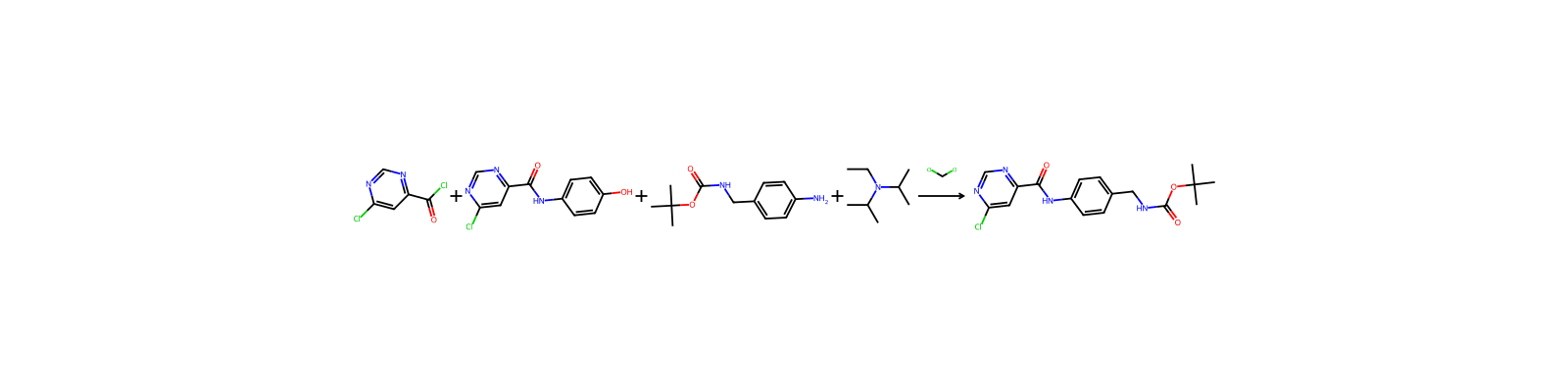
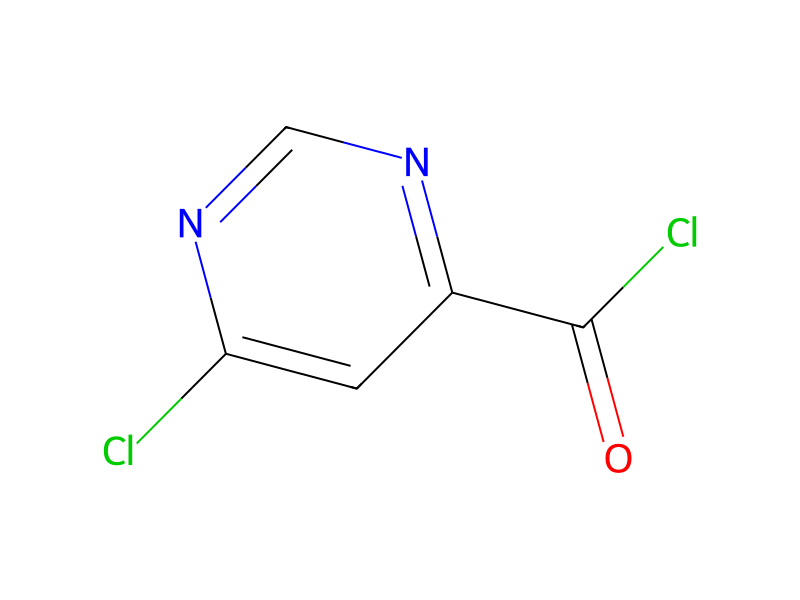
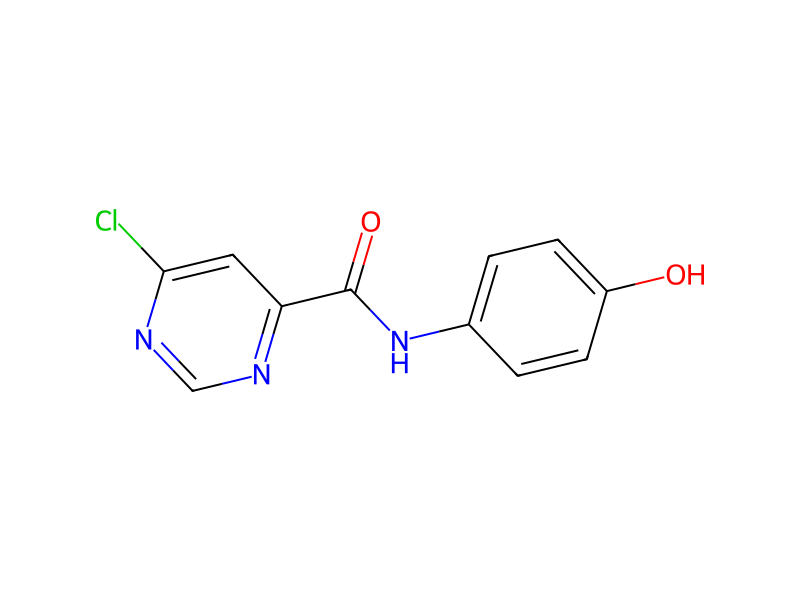
[Cl:1][C:2]1[N:7]=[CH:6][N:5]=[C:4]([C:8](Cl)=[O:9])[CH:3]=1.ClC1N=CN=C(C(NC2C=CC(O)=CC=2)=O)C=1.[C:28]([O:32][C:33](=[O:43])[NH:34][CH2:35][C:36]1[CH:41]=[CH:40][C:39]([NH2:42])=[CH:38][CH:37]=1)([CH3:31])([CH3:30])[CH3:29].CCN(C(C)C)C(C)C>C(Cl)Cl>[Cl:1][C:2]1[N:7]=[CH:6][N:5]=[C:4]([C:8]([NH:42][C:39]2[CH:40]=[CH:41][C:36]([CH2:35][NH:34][C:33](=[O:43])[O:32][C:28]([CH3:30])([CH3:31])[CH3:29])=[CH:37][CH:38]=2)=[O:9])[CH:3]=1To a cooled (0° C.) solution of 6-chloropyrimidine-4-carbonyl chloride in DCM (30 mL), obtained as described above for Intermediate 7, step 1 (1.43 g; 8.10 mmol) was added dropwise, during a period of 15 minutes, a solution of (4-amino-benzyl)-carbamic acid tert-butyl ester (Astatech, 1.50 g; 6.75 mmol) and DIEA (2.33 ml; 13.5 mmol) in DCM (5 mL). At the end of addition the reaction mixture was concentrated in vacuo, diluted with water and extracted with EtOAc. The resulting precipitate was filtered and dried under vacuum. The mother liquors were dried on MgSO4, concentrated under vacuum to give a residue, which was precipitated from cyclohexane. The two solids were combined to give the title compound as a brown solid.
불러오는 중…