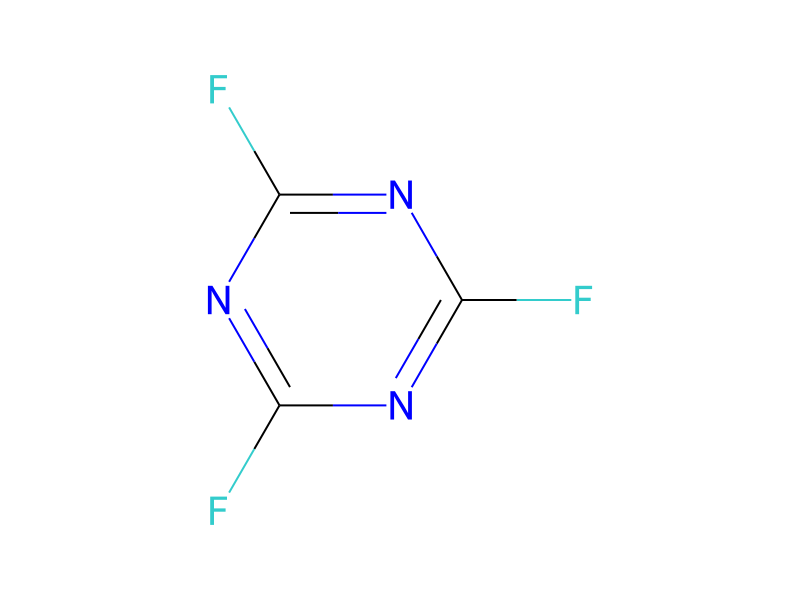
To a solution of 5-(pyridin-2-yl)-4-(trifluoromethyl)isoxazole-3-carboxylic acid (54.3 mg, 0.210 mmol) and pyridine (0.037 mL, 0.463 mmol) in dichloromethane (2 mL) was added cyanuric fluoride (0.021 mL, 0.252 mmol). The reaction mixture was stirred at room temperature for 2 hrs., diluted with dichloromethane (2 mL), and washed with ice water (1 mL). The aqueous layer was extracted with dichloromethane (2×1 mL), and the combined organic layers were washed with brine (1 mL) and dried over anhydrous sodium sulfate. Concentration under reduced pressure afforded 5-(pyridin-2-yl)-4-(trifluoromethyl)isoxazole-3-carbonyl fluoride (0.048 g, 0.185 mmol, 88% yield). The product had an HPLC retention. time=2.50 min. (The product reacted readily with methanol and a small portion was characterized as the methyl ester)—Column: YMC S5 COMBISCREEN® 4.6×50 mm (4 min.); Solvent A=10% MeOH, 90% H2O, 0.1% TFA; Solvent B=90% MeOH, 10% H2O, 0.1% TFA.