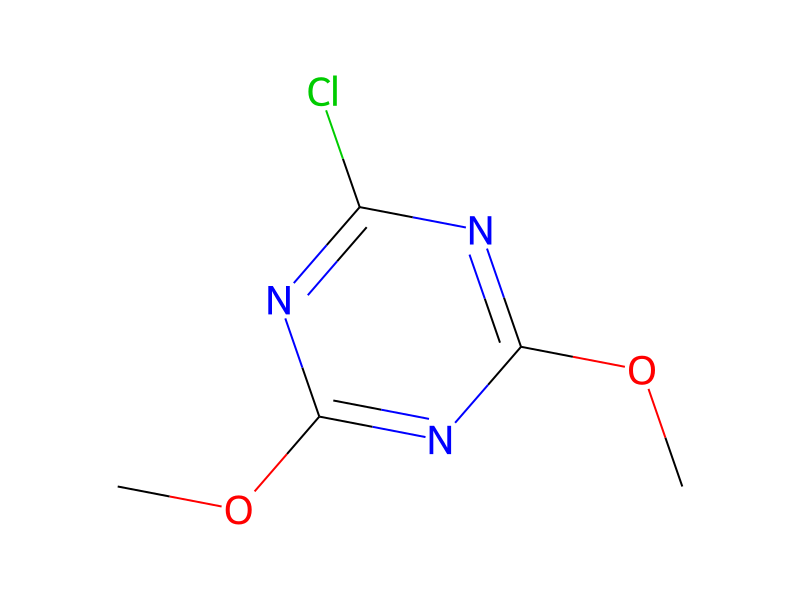
To a sample of 150 mg (0.47 mmol) of 5-[2-(2-amino-4-hydroxy-5,6,7,8-tetrahydropyrido[2,3-d]pyrimidin-6-yl)ethyl]thien-2-ylcarboxylic acid in a three-necked round bottomed flask under an atmosphere of nitrogen were added 3.6 mL anhydrous dimethylformamide and 0.11 mL (0.99 mmol) of N-methylmorpholine. The reaction mixture was stirred and 90 mg (0.51 mmol) of 2-chloro-4,6-dimethoxy-1,3,5-triazine were added at once. The reaction mixture was stirred at room temperature for 0.5 hours and 162 mg (1.25 mmol) of 3-carbomethoxypyrrolidine were added in 1.0 mL of dimethylformamide. After stirring at room temperature for another 3.5 hours, the reaction was concentrated in vacuo and the residue was chromatographed on silica gel with 2-8% CH3OH/CHCl3 to give 78 mg (40%) of methyl 1-{5-[2-(2-amino-4-hydroxy-5,6,7,8-tetrahydropyrido[2,3-d]pyrimidin-6-yl)ethyl]thien-2-ylcarbonyl}pyrrolidine-3-carboxylate as a white solid. Mass Spectrum (FAB+): M+1=432; IR (KBr, cm-1): 643, 734, 768, 809, 1219, 1336, 1417, 1464, 1601, 1684, 1736, 2854, 2924, 3390; UV (C2H5 OH): λmax =222 (ε=21034), 279 (ε=19777).