반응식

[NH:1]1[C:9]2[C:4](=[CH:5][CH:6]=[CH:7][CH:8]=2)[C:3]([CH2:10][CH2:11][CH2:12][C:13]([OH:15])=[O:14])=[CH:2]1.C(=O)([O-])[O-].[K+].[K+].[CH2:22](Br)[C:23]1[CH:28]=[CH:27][CH:26]=[CH:25][CH:24]=1.Cl>CN(C)C=O>[NH:1]1[C:9]2[C:4](=[CH:5][CH:6]=[CH:7][CH:8]=2)[C:3]([CH2:10][CH2:11][CH2:12][C:13]([O:15][CH2:22][C:23]2[CH:28]=[CH:27][CH:26]=[CH:25][CH:24]=2)=[O:14])=[CH:2]1참가 물질
6


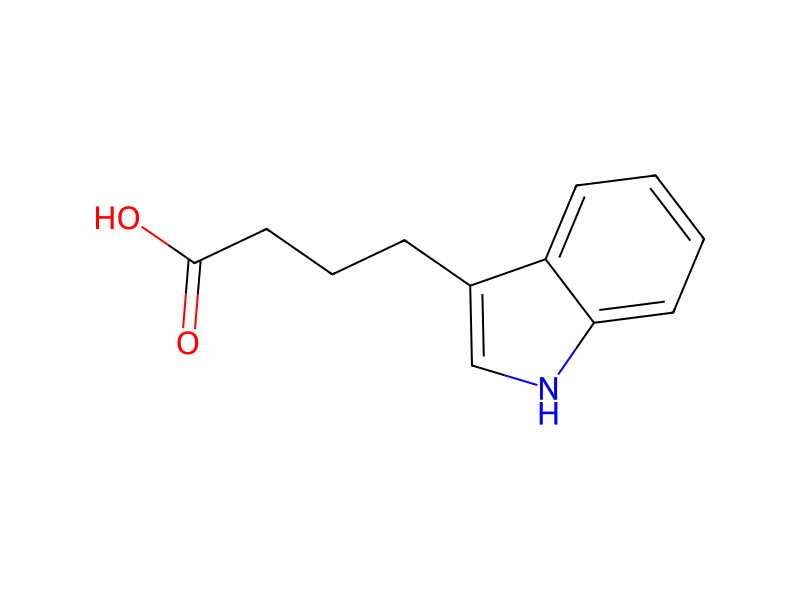



실험 절차
To a solution of 3-indolebutyric acid (25 g) and potassium carbonate (20 g) in dimethylformamide (150 ml) was added benzylbromide (21 g) at room temperature. After stirring for 4 hours, the mixture was poured into ice and diluted hydrochloric acid (300 ml). The organic layer was extracted with ethyl acetate (150 ml), and the extract was washed with water (150 ml×3) and dried over magnesium sulfate. After the solvent was removed in vacuo, the residue was crystallized from n-hexane to give a solid of benzyl 4-(3-indolyl)butyrate (33.9 g).
후처리
- extractionThe organic layer was extracted with ethyl acetate (150 ml)
- washthe extract was washed with water (150 ml×3)
- dry with materialdried over magnesium sulfate
- customAfter the solvent was removed in vacuo
- customthe residue was crystallized from n-hexane
출처 및 근거
- ORD 기록
- ord-0a00b4a574234698b32465914e367558
- 출처 데이터셋
- uspto-grants-1994_02
- 특허 번호
- US05283251
연결된 노트
불러오는 중…