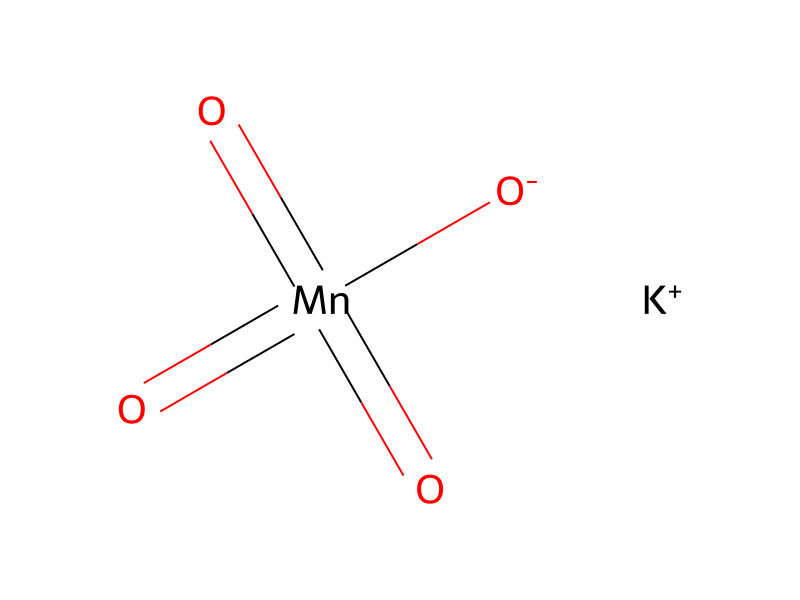
10 g (0.067 mol) of 5,5-dimethyl-1,3,2-dioxathiane 2-oxide (prepared in accordance with Example 1), 70 ml of methylene chloride, 0.76 g (0.0033 mol) of benzyltriethylammonium chloride and 70 ml of water are placed in a 350 ml four-necked flask which is provided with a stirrer and a thermometer. 7.5 g (0.0475 mol) of KMnO4 are added portion-wise at 5°-10° C. and while stirring vigorously. After the addition the reaction mixture is stirred at room temperature for a further 30 minutes and suction filtered. The organic phase is separated. The residue is washed well on the suction filter with 20 ml of methylene chloride and the aqueous phase is again extracted with this new filtrate. The combined organic phases are extracted with 1 g of NaHSO3 in 20 ml of water and washed with a small amount of water. After drying over Na2SO4 and evaporation there are obtained 10.2 g of 5,5-dimethyl-1,3,2-dioxathiane 2,2-dioxide as a white powder with a m.p. of 80°-82° C.