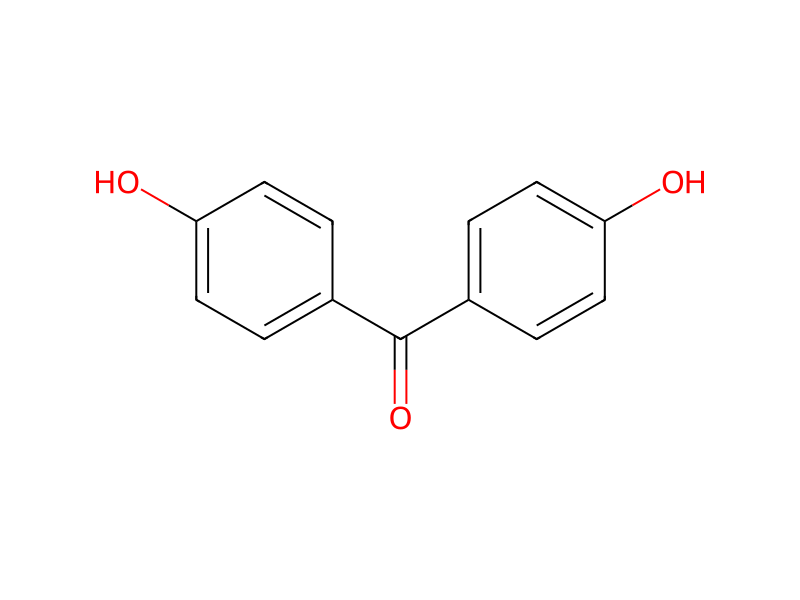
To a solution of 4,4′-dihydroxybenzophenone (5.0 g, 23.34 mmol) in anhydrous DMF (150 mL) at 0° C. was added sodium hydride (60% in mineral oil, 2.1 g, 51.35 mmol), in two portions. After stirring for 20 min at which no more evolution of hydrogen was observed, benzyl bromide (8.96 g, 51.35 mmol) was added. The resulting yellow suspension was then stirred under an atmosphere of nitrogen at 100° C. for 1 h. Upon cooling to room temperature, water (500 mL) was added to the suspension and the precipitate that formed was filtered and washed exhaustively with water. After air-drying overnight at room temperature, the white solid (10.1 g) that collected was recrystallised from hot toluene to give LWO02007A as white flaky plate crystals (8.92 g, 22.61 mmol, 96.9%); m.p. 188-190° C.