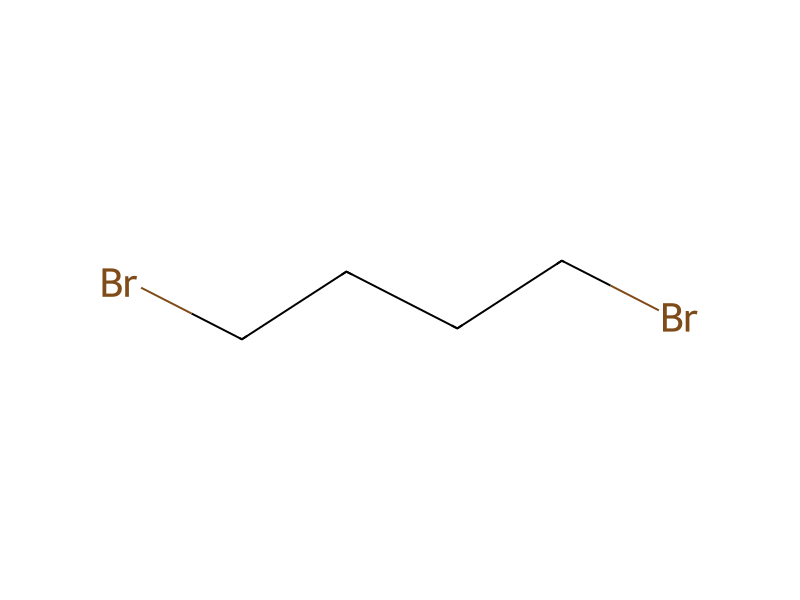
1,4-Dibromobutane → HCID 1204325, 화합물
반응식

[C:1]1([S:7]([CH2:10][C:11]#[N:12])(=[O:9])=[O:8])[CH:6]=[CH:5][CH:4]=[CH:3][CH:2]=1.Br[CH2:14][CH2:15][CH2:16][CH2:17]Br>[Cl-].C([N+](CC)(CC)CC)C1C=CC=CC=1.O>[C:1]1([S:7]([C:10]2([C:11]#[N:12])[CH2:17][CH2:16][CH2:15][CH2:14]2)(=[O:8])=[O:9])[CH:2]=[CH:3][CH:4]=[CH:5][CH:6]=1참가 물질
5



실험 절차
629 mg (2.8 mmol) of benzyltriethylammonium chloride is added to 5 g (27.6 mmol) of benzenesulfonylacetonitrile and 6.55 g (30.3 mmol) of 1,4-dibromobutane in 50 ml of a 50% aqueous soda solution. The reaction mixture is stirred at room temperature for 3 h. It is then diluted with water and extracted with ethyl acetate. The organic phases are combined and washed with water. They are dried over magnesium sulfate, filtered and the solvents are evaporated. The residue is purified on silica gel (heptane/ethyl acetate, 50/50, v/v). 6.35 g of 1-benzenesulfonyl-cyclopentanecarbonitrile is obtained in the form of a beige powder. (Yield=98%).