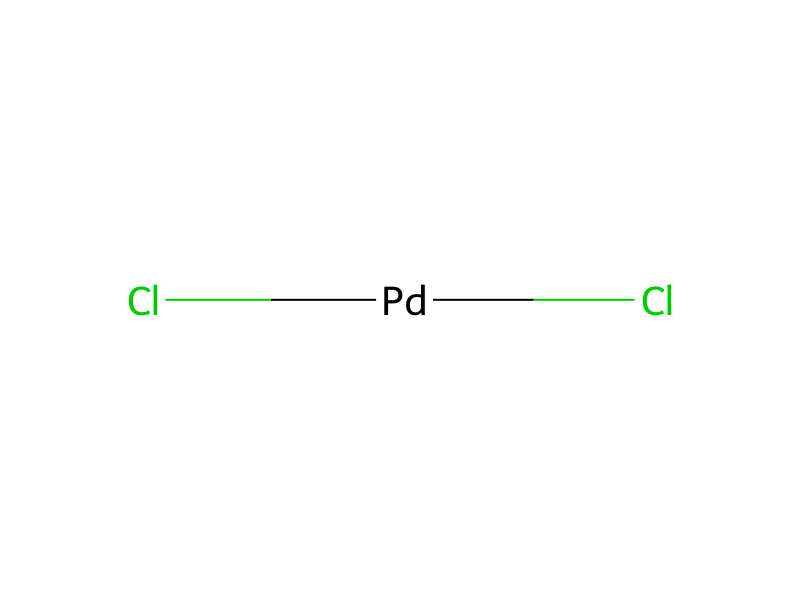
A 50 mL round bottom flask, equipped with a magnetic stirrer and gas inlet, was charged with 0.8 mg (0.005 eq) of palladium chloride, 2.3 mg (0.01 eq) of triphenylphosphine, 1.6 mg of copper (1) iodide, 0.19 g of methyl 4-bromothien-2-ylcarboxylate (obtained by oxidation of 4-bromothien-2-ylaldehyde followed by esterification), 0.43 g of triethylamine, and 0.06 g of 3-but-yn-1-ol in 20 mL of acetonitrile under a nitrogen atmosphere. The reaction mixture was heated at reflux with stirring under a nitrogen atmosphere for 18 hours. After cooling to room temperature, volatiles were removed under reduced pressure and the residue was partitioned between chloroform and water. The organic extract was washed with water (2×), brine, dried (sodium sulfate), filtered and concentrated in vacuo. The residue was purified by flash chromatography eluting with 2:1 hexane/ethyl acetate. Fractions homogeneous by thin layer chromatography for the major component were combined and concentrated under reduced pressure to give 0.12 g (66.7%) of methyl 4-(4-hydroxybut-yn-1-yl)thien-2-ylcarboxylate as a yellow oil; IR (KBr, cm-1): 3025 3021, 3015, 1713, 1446, 1293, 1261, 1231, 1228, 1225, 1222, 1214, 1192, 1080, 1053; UV (Ethanol):λmax =294 nm (epsilon=3680), 228 nm (epsilon=26,900); 1H NMR (CDCl3, 300 MHz) delta 7.72 (s, 1H), 7.53 (s, 1H), 3.87 (s, 3H), 3.79 (t, J=6.2 Hz, 2H), 2.65 (t, J=6.3 Hz, 2H), 1.87 (bs, 1H); MASS: M+ =210 (EICEC).