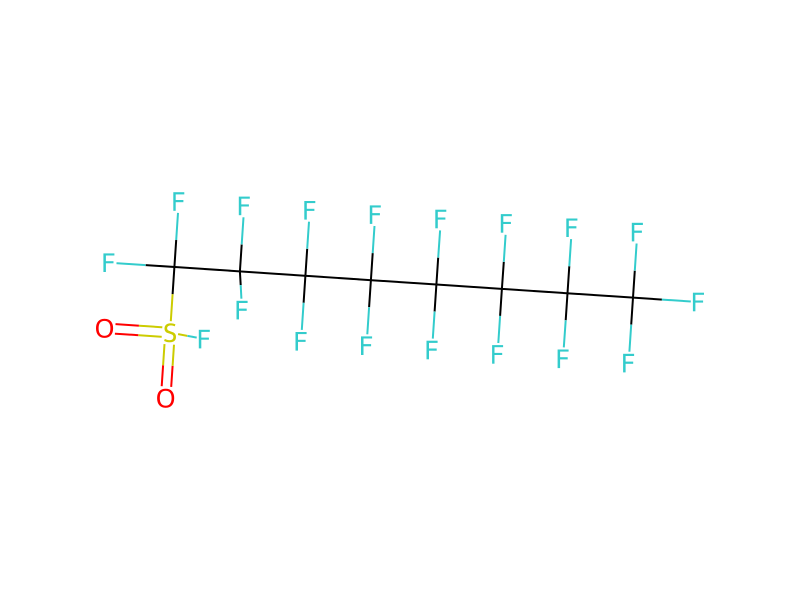
Process B: (3R,4R)-3-Azidomethyl-1-benzyloxycarbonyl-4-hydroxypyrrolidine (1.79 g) was dissolved in toluene (56 mL). While this solution was chilled in an ice water bath, 1,8-diazabicyclo[5.4.0]undec-7-ene (2.03 mL) was added, followed by dropwise addition of perfluoro-1-octanesulfonyl fluoride (2.80 mL) and stirring for 1 hour. The insoluble material in the reaction mixture was filtered and washed with toluene. The filtrate and the washings were combined and concentrated under reduced pressure. The resulting residue was purified by silica gel column chromatography (eluant: hexane: ethyl acetate=2:1) to give (3R,4S)-3-azidomethyl-1-benzyloxycarbonyl-4-fluoropyrrolidine as a pale brown syrup (1.58 g). This compound was identical to the compound obtained by Process A.