반응식

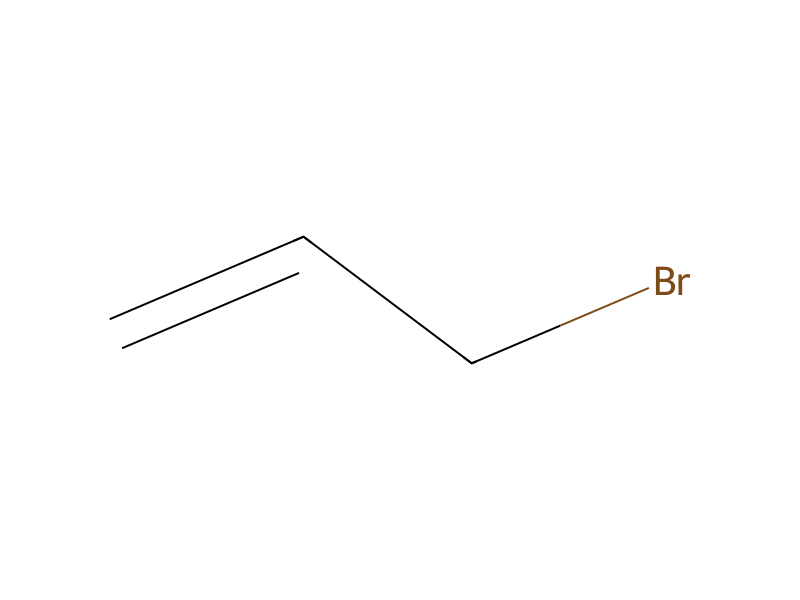
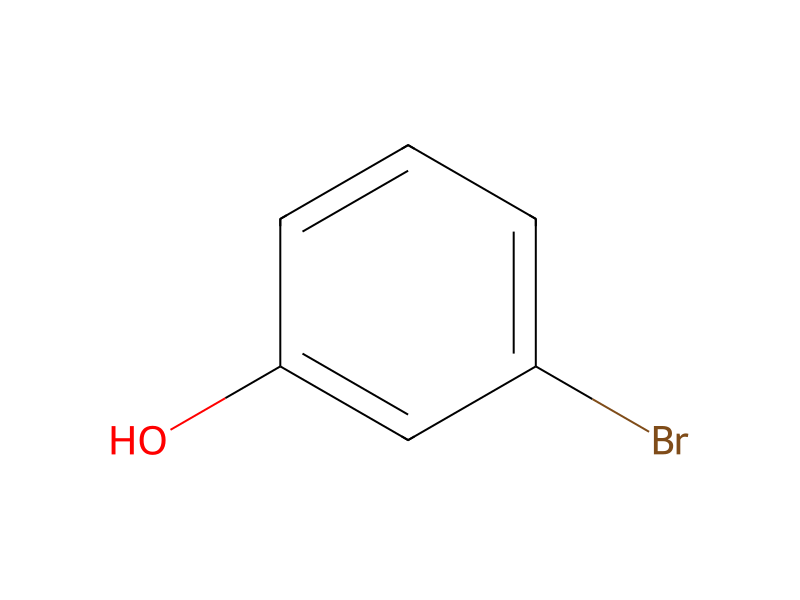
O=O.[Br:3][C:4]1[CH:13]=[CH:12][CH:11]=[C:10]2[C:5]=1[CH2:6][C:7](=O)[CH2:8][O:9]2.BrC1C=C(O)C=CC=1.C(Br)C=C.C(=O)([O-])[O-].[K+].[K+]>>[Br:3][C:4]1[CH:5]=[C:10]([O:9][CH2:8][CH:7]=[CH2:6])[CH:11]=[CH:12][CH:13]=1참가 물질




실험 절차
The compounds of this invention in which X is oxygen are available by reductive amination and bromo replacement as in the foregoing, but using 5-bromo-3-chromanone. The latter can be produced by a sequence of reactions beginning with m-bromophenol. Briefly, m-bromophenol is treated with allyl bromide in the presence of potassium carbonate to produce allyl 3-bromophenyl ether. The ether is converted to 2-allyl-3-bromophenol upon heating it in the presence of N,N-dimethylaniline. The phenol, upon reaction with ethyl chloroacetate, is converted to the ethyl ester of 2-allyl-3-(carboxymethoxy)bromobenzene. Upon oxidation using ozone followed by reductive work up, the allyl group is converted to a formylmethyl substituent which is then further oxidized using Jones' Reagent to the carboxymethyl substituent, the resulting product being the ethyl ester of (2-carboxymethyl-3-bromo)phenoxyacetic acid. The partial ester is converted to the diethyl ester using ethanol and gaseous hydrogen chloride. In the presence of potassium t-butoxide, the diester is cyclized to a mixture of 4-ethoxycarbonyl-5-bromo-3-chromanone and 2-ethoxycarbonyl-5-bromo-3-chromanone. Upon heating in the presence of acid, the latter is converted to 5-bromo-3-chromanone.
후처리
- customThe latter can be produced by a sequence of reactions
출처 및 근거
- ORD 기록
- ord-931483e209444975875c132ca91968a2
- 출처 데이터셋
- uspto-grants-1995_06
- 특허 번호
- US05426229
연결된 노트
불러오는 중…