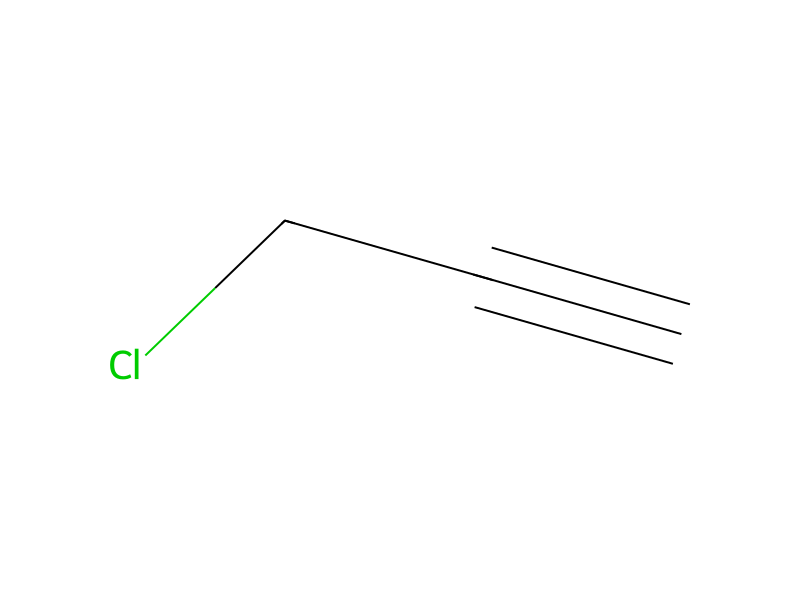
To a cooled (ice/water bath) suspension of sodium hydride (60% dispersion in mineral oil; 15 mg, 0.38 mmol) in DMA (1 mL) was carefully added a solution of 10-chloro-6-methyl-2,6,9,11-tetrazabicyclo[5.4.0]undeca-7,9,11-trien-5-one (Intermediate 100; 65 mg, 0.31 mmol) in DMA (1.5 mL). The reaction mixture was allowed to stir, under nitrogen, on an ice bath for 1 hour prior to addition of propargyl chloride (34 mg, 0.47 mmol). The reaction mixture was left to stir at ambient temperature overnight and then quenched by addition of saturated aqueous ammonium chloride solution (0.5 mL) and stirred for 15 minutes. The resultant mixture was partitioned between DCM (10 mL) and water (10 mL). The organic phase was separated by filtration through PTFE filter cup. The aqueous phase was re-extracted with DCM (5 mL) and the combined organic solutions evaporated to dryness to yield the title compound as a beige coloured solid (52 mg, 67%)