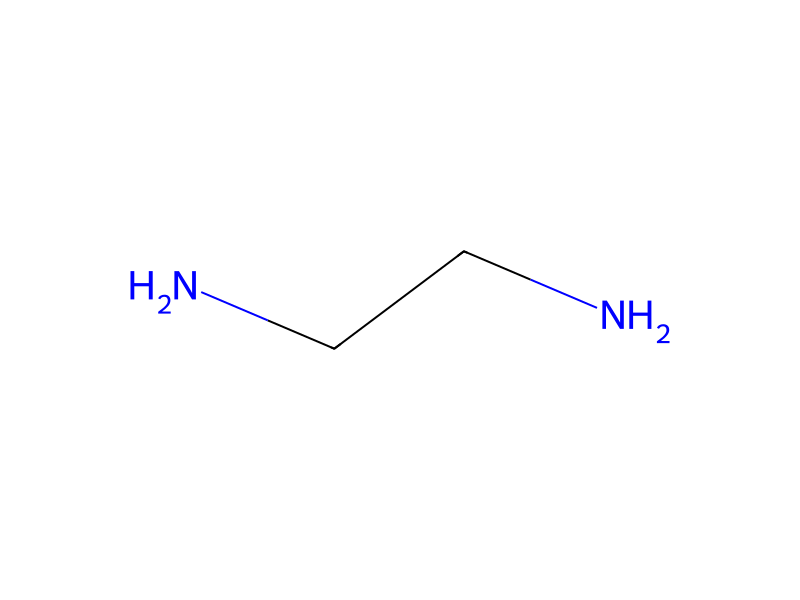
Ethylenediamine → N-(2-Aminoethyl)-1,3-benzodioxole-5-carboxamide
HRID 2255110
반응식

[CH2:1]1[O:13][C:12]2[CH:11]=[CH:10][C:5]([C:6]([O:8]C)=O)=[CH:4][C:3]=2[O:2]1.[CH2:14]([NH2:17])[CH2:15][NH2:16]>>[NH2:16][CH2:15][CH2:14][NH:17][C:6]([C:5]1[CH:10]=[CH:11][C:12]2[O:13][CH2:1][O:2][C:3]=2[CH:4]=1)=[O:8]참가 물질
3


실험 절차
7 g (0.039 mol) of methyl 3,4-methylenedioxybenzoate and 8.5 ml (0.126 mol) of ethylenediamine are heated to 100° (bath temperature) for 2.5 hours. After cooling, the excess ethylenediamine is removed in a high vacuum. The residue is acidified with dilute hydrochloric acid and extracted with chloroform. The aqueous phase is made alkaline with sodium hydroxide solution and then extracted several times with chloroform. After evaporating the solvent and recrystallizing the residue from chloroform/hexane, there are obtained 3.4 g of N-(2-aminoethyl)-1,3-benzdioxol-5-carboxamide, m.p. 120°-123°. The hydrochloride melts at 210°-213°.
후처리
- temperatureAfter cooling