Ethanol → 4-fluoro-1-(beta-D-glucopyranosyl)indoline
HRID 2263456
반응식

[F:1][C:2]1[CH:10]=[CH:9][CH:8]=[C:7]2[C:3]=1[CH2:4][CH2:5][NH:6]2.[O:11]=[CH:12][C@@H:13]([C@H:15]([C@@H:17]([C@@H:19]([CH2:21][OH:22])[OH:20])[OH:18])[OH:16])O.C(O)C>O>[F:1][C:2]1[CH:10]=[CH:9][CH:8]=[C:7]2[C:3]=1[CH2:4][CH2:5][N:6]2[C@@H:21]1[O:22][C@H:13]([CH2:12][OH:11])[C@@H:15]([OH:16])[C@H:17]([OH:18])[C@H:19]1[OH:20]참가 물질
5

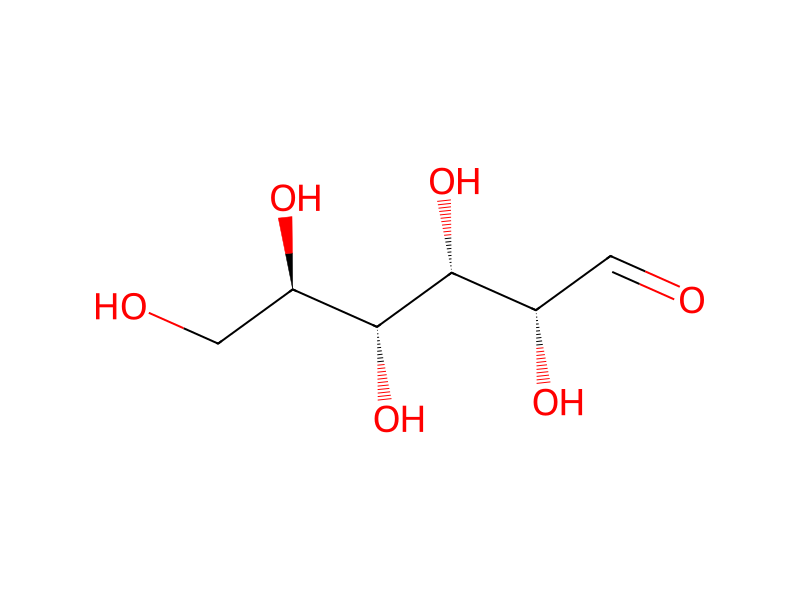



실험 절차
A mixture of 4-fluoroindoline (185 mg) and D-glucose (267 mg) in H2O (0.74 ml)-ethyl alcohol (9 ml) was refluxed under argon atmosphere for 24 hours. The solvent was evaporated under reduced pressure to give crude 4-fluoro-1-(β-D-glucopyranosyl)indoline, which was used in the subsequent step without further purification. (2) The above compound was suspended in chloroform (8 ml), and thereto were added successively pyridine (0.873 ml), acetic anhydride (1.02 ml) and 4-(dimethylamino)pyridine (a catalytic amount). After being stirred at room temperature for 21 hours, the reaction solvent was evaporated under reduced pressure. The residue was dissolved in ethyl acetate, and the solution was washed with a 10% aqueous copper (II) sulfate solution twice and a saturated aqueous sodium hydrogen carbonate solution, and dried over magnesium sulfate. The insoluble materials were filtered off, and the filtrate was evaporated under reduced pressure. The residue was purified by silica gel column chromatography (hexane:ethyl acetate=90:10-60:40) to give 4-fluoro-1-(2,3,4,6-tetra-O-acetyl-β-D-glucopyranosyl)indoline (365 mg) as colorless amorphous. APCI-Mass m/Z 468 (M+H). 1H-NMR (DMSO-d6) δ 1.93 (s, 3H), 1.96 (s, 3H), 1.97 (s, 3H), 2.00 (s, 3H), 2.83 (ddd, J=15.5, 10.5 and 10.3 Hz, 1H), 2.99-3.05 (m, 1H), 3.49-3.57 (m, 2H), 3.95-3.99 (m, 1H), 4.07-4.11 (m, 2H), 4.95 (t, J=9.5 Hz, 1H), 5.15 (t, J=9.4 Hz, 1H), 5.42 (t, J=9.6 Hz, 1H), 5.49 (d, J=9.3 Hz, 1H), 6.48 (t, J=8.6 Hz, 1H), 6.60 (d, J=8.0 Hz, 1H), 7.05-7.10 (m, 1H). (3) The above compound (348 mg) was dissolved in 1,4-dioxane (14 ml), and thereto was added 2,3-dichloro-5,6-dicyano-1,4-benzoquinone (306 mg). After being stirred at room temperature for 33 hours, thereto was added a saturated aqueous sodium hydrogen carbonate solution (20 ml), and the organic solvent was evaporated under reduced pressure. The residue was extracted with ethyl acetate twice, and the combined organic layer was washed with brine, dried over magnesium sulfate and treated with activated carbon. The insoluble materials were filtered off, and the filtrate was evaporated under reduced pressure. The residue was purified by silica gel column chromatography (hexane:ethyl acetate=90:10-60:40) and recrystallization from ethyl alcohol to give 4-fluoro-1-(2,3,4,6-tetra-O-acetyl-β-D-glucopyranosyl)indole (313 mg) as colorless crystals. mp 132-135° C. APCI-Mass m/Z 483 (M+NH4). 1H-NMR (DMSO-d6) δ 1.64 (s, 3H), 1.97 (s, 3H), 1.99 (s, 3H), 2.04 (s, 3H), 4.10 (ABX, J=12.4, 2.7 Hz, 1H), 4.14 (ABX, J=12.4, 5.2 Hz, 1H), 4.31 (ddd, J=10.0, 5.2 and 2.7 Hz, 1H), 5.25 (t, J=9.7 Hz, 1H), 5.53 (t, J=9.5 Hz, 1H), 5.61 (t, J=9.3 Hz, 1H), 6.22 (d, J=9.0 Hz, 1H), 6.58 (d, J=3.4 Hz, 1H), 6.88 (dd, J=10.8, 7.9 Hz, 1H), 7.19 (td, J=8.1, 5.3 Hz, 1H), 7.51 (d, J=8.5 Hz, 1H), 7.53 (d, J=3.4 Hz, 1H). (4) The above compound (3.50 g) and N,N-dimethylformamide (3.49 ml) were dissolved in 1,2-dichloroethane (70 ml), and thereto was added dropwise phosphorus (III) oxychloride (2.10 ml). The mixture was stirred at 70° C. for 1 hour, and thereto was added water (100 ml) at 0° C. The resultant mixture was extracted with ethyl acetate (200 ml) twice, and the combined organic layer was washed with brine (40 ml) and dried over magnesium sulfate. The insoluble materials were filtered off, and the filtrate was evaporated under reduced pressure. The residue was purified by silica gel column chromatography (hexane:ethyl acetate=90:10-50:50) and recrystallization from ethyl alcohol (20 ml) to give 4-fluoro-1-(2,3,4,6-tetra-O-acetyl-β-D-glucopyranosyl)-indole-3-carboxaldehyde (2.93 g) as colorless crystals. mp 190-192° C. APCI-Mass m/Z 511 (M+NH4). 1H-NMR (DMSO-d6) δ 1.64 (s, 3H), 1.98 (s, 3H), 2.00 (s, 3H), 2.05 (s, 3H), 4.12 (A part of ABX, J=12.4, 2.5 Hz, 1H), 4.17 (B part of ABX, J=12.4, 5.5 Hz, 1H), 4.33 (ddd, J=10.0, 5.5 and 2.5 Hz, 1H), 5.32 (t, J=9.8 Hz, 1H), 5.56 (t, J=9.6 Hz, 1H), 5.66 (t, J=9.3 Hz, 1H), 6.36 (d, J=9.0 Hz, 1H), 7.11 (dd, J=10.6, 8.0 Hz, 1H), 7.38 (td, J=8.1, 5.1 Hz, 1H), 7.65 (d, J=8.3 Hz, 1H), 8.53 (s, 1H), 10.0 (d, J=2.9 Hz, 1H). (5) To a mixture of magnesium turnings (664 mg) and 1,2-dibromoethane (one drop) in tetrahydrofuran (40 ml) was added dropwise a solution of 1-bromo-4-cyclopropylbenzene (see WO 96/07657) (5.21 g) in tetrahydrofuran (12 ml) over 25 minutes under being stirred vigorously, and the mixture was vigorously stirred for 30 minutes at room temperature. The resultant mixture was then dropwise added to a solution of the above 4-fluoro-1-(2,3,4,6-tetra-O-acetyl-β-D-glucopyranosyl)indole-3-carboxaldehyde (4.35 g) in tetrahydrofuran (130 ml) over 15 minutes at −78° C. under argon atmosphere. The mixture was stirred at same temperature for 30 minutes, and thereto was added a saturated aqueous ammonium chloride solution (200 ml). The resultant mixture was extracted with ethyl acetate (150 ml) twice, and the combined organic layer was dried over magnesium sulfate. The insoluble materials were filtered off, and the filtrate was evaporated under reduced pressure to give crude 4-cyclopropylphenyl 4-fluoro-1-(2,3,4,6-tetra-O-acetyl-β-D-glucopyranosyl)indol-3-yl methanol, which was used in the subsequent step without further purification. (6) To a stirred solution of the above compound and triethylsilane (2.11 ml) in dichloromethane (44 ml)—acetonitrile (87 ml) was added boron trifluoride•diethyl ether complex (1.34 ml) at 0° C. under argon atmosphere. The mixture was stirred at same temperature for 20 minutes, and thereto was added a saturated aqueous sodium hydrogen carbonate solution (200 ml). The organic solvent was evaporated under reduced pressure, and the residue was extracted with ethyl acetate (150 ml) twice. After being dried over magnesium sulfate, the insoluble materials were filtered off, and the filtrate was evaporated under reduced pressure. The residue was purified by silica gel column chromatography (hexane:ethyl acetate=90:10-50:50) and trituration with ethyl alcohol (40 ml) to give 3-(4-cyclopropylphenylmethyl)-4-fluoro-1-(2,3,4,6-tetra-O-acetyl-β-D-glucopyranosyl)indole (4.71 g) as colorless crystals. mp 190-192° C. APCI-Mass m/Z613 (M+NH4). 1H-NMR (DMSO-d6) δ 0.60 (ddd, J=6.6, 4.7 and 4.3 Hz, 2H), 0.88 (ddd, J=8.3, 6.3 and 4.0 Hz, 2H), 1.63 (s, 3H), 1.81-1.87 (m, 1H), 1.96 (s, 3H), 1.99 (s, 3H), 2.04 (s, 3H), 4.00 (s, 2H), 4.09 (A part of ABX, J=12.2, 2.4 Hz, 1H), 4.13 (B part of ABX, J=12.3, 5.5 Hz, 1H), 4.28 (ddd, J=10.0, 5.3 and 2.7 Hz, 1H), 5.23 (t, J=9.6 Hz, 1H), 5.49-5.56 (m, 2H), 6.15 (d, J=8.7 Hz, 1H), 6.77 (dd, J=11.0, 7.9 Hz, 1H), 6.95 (d, J=8.2 Hz, 2H), 7.05 (d, J=8.0 Hz, 2H), 7.14 (td, J=8.0, 5.1 Hz, 1H), 7.23 (s, 1H), 7.46 (d, J=8.3 Hz, 1H). (7) The above compound (4.67 g) was dissolved in methanol (47 ml)—tetrahydrofuran (93 ml), and thereto was added sodium methoxide (28% methanol solution, 1 drop). After being stirred at room temperature for 1 hour, the reaction solvent was evaporated under reduced pressure. The residue was purified by silica gel column chromatography (chloroform:methanol=99:1-90:10) to give the titled compound, 3-(4-cyclopropylphenylmethyl)-4-fluoro-1-(β-D-glucopyranosyl)indole (3.23 g) as colorless foam. This foam was crystallized from ethyl alcohol—H2O to give hemihydrate of the titled compound as colorless crystals. mp 110-112° C. APCI-Mass m/Z 445 (M+NH4), 428 (M+H). 1H-NMR (DMSO-d6) δ 0.60 (m, 2H), 0.88 (ddd, J=8.3, 6.3 and 4.1 Hz, 2H), 1.82-1.87 (m, 1H), 3.23 (td, J=9.0, 5.4 Hz, 1H), 3.39 (td, J=8.9, 5.1 Hz, 1H), 3.42-3.46 (m, 2H), 3.63-3.68 (m, 2H), 4.02 (s, 2H), 4.53 (t, J=5.6 Hz, 1H), 5.10 (d, J=5.3 Hz, 1H), 5.17 (d, J=5.0 Hz, 1H), 5.21 (d, J=5.9 Hz, 1H), 5.37 (d, J=9.2 Hz, 1H), 6.74 (dd, J=11.1, 7.9 Hz, 1H), 6.96 (d, J=8.2 Hz, 2H), 7.07 (td, J=8.1, 5.2 Hz, 1H), 7.13 (d, J=8.2 Hz, 2H), 7.21 (s, 1H), 7.35 (d, J=8.3 Hz, 1H). Anal. Calcd. for C24H26FNO5.0.5H2O: C, 66.04; H, 6.23; F, 4.35; N, 3.21. Found: C, 65.62; H, 6.27; F, 4.32; N, 3.11.