4,6-Difluoro-2,3-dihydro-1H-indole → 4,6-difluoro-1H-indole
반응식

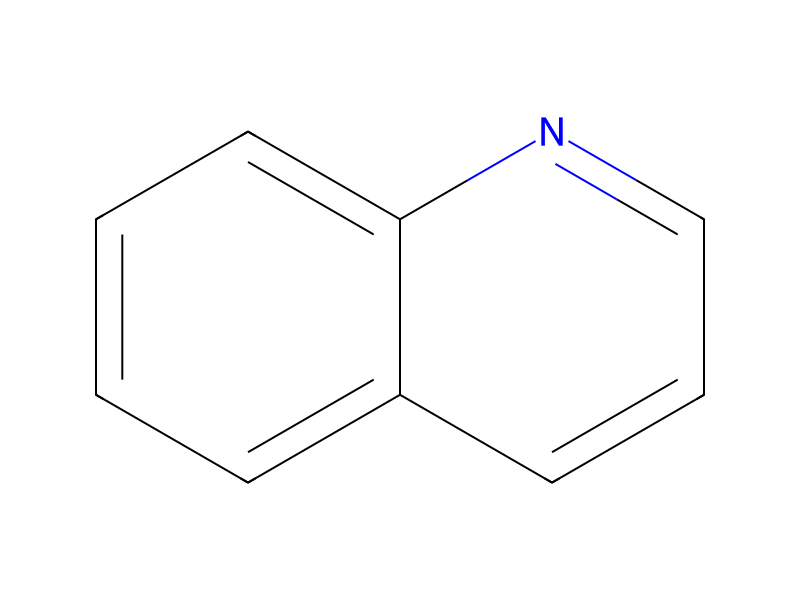
[F:1][C:2]1[CH:10]=[C:9]([F:11])[CH:8]=[C:7]2[C:3]=1[CH2:4][CH2:5][NH:6]2>N1C2C(=CC=CC=2)C=CC=1.[Cu]>[F:1][C:2]1[CH:10]=[C:9]([F:11])[CH:8]=[C:7]2[C:3]=1[CH:4]=[CH:5][NH:6]2참가 물질
4



반응 조건
- 온도
- 200 °C
실험 절차
A mixture of 3,5-difluorophenyl hydrazine hydrochloride (5.0 g) and ethyl pyruvate (4.6 ml) methyl alcohol (25 ml) was refluxed for 1 hour, and the solvent was evaporated under reduced pressure. The residual solid was triturated with hexane to give ethyl 2-(3,5-difluorophenyl hydrazino)propionate (4.65 g) as colorless crystals. mp 139-141° C. APCI-Mass m/Z 243 (M+H). (2) A suspension of the above compound (4.65 g) in toluene (47 ml) was added to polyphosphoric acid (23 g), and the mixture was refluxed for 3 hours under argon atmosphere. After being cooled to room temperature, thereto were added water and ethyl acetate, and the resultant mixture was stirred at room temperature. The insoluble materials were filtered off, and the filtrate was separated. The aqueous layer was extracted with ethyl acetate, and the combined organic layer was washed with successively water, a saturated aqueous sodium hydrogen carbonate solution and brine. After being dried over magnesium sulfate and treated with activated carbon, the insoluble materials were filtered off, and the filtrate was evaporated under reduced pressure. The residual solid was triturated with diisopropyl ether—hexane (1:1) to give ethyl 4,6-difluoroindole-2-carboxylate (3.48 g) as pale yellow crystals. mp 153-154° C. ESI-Mass m/Z 224 (M−H). (3) A mixture of the above compound (3.48 g) in a 4 N aqueous sodium hydroxide solution (7.73 ml) and ethyl alcohol (35 ml) was refluxed for 15 minutes, and the organic solvent was evaporated under reduced pressure. Thereto was added water, and the mixture was washed with ethyl ether followed by being acidified with a 6 N aqueous hydrochloric acid solution. The resultant mixture was extracted with ethyl acetate, and the organic layer was washed with brine, dried over magnesium sulfate and treated with activated carbon. The insoluble materials were filtered off, and the filtrate was evaporated under reduced pressure to give crude 4,6-difluoro-indole-2-carboxylic acid (3.01 g) as a pale brown solid. mp 253-254 (dec.). ESI-Mass m/Z 196 (M−H). (4) A mixture of the above compound (3.0 g) and copper powder (2.9 g) in quinoline (30 ml) was stirred at 200° C. for 5 hours under argon atmosphere. After being cooled to room temperature, the insoluble materials were filtered off and washed with ethyl acetate (100 ml). The filtrate was washed with a 6 N aqueous hydrochloric acid solution twice and brine. The each aqueous layer was extracted with ethyl acetate, and the combined organic layer was dried over magnesium sulfate and treated with activated carbon. The insoluble materials were filtered off, and the filtrate was evaporated under reduced pressure. The residual oil was purified by silica gel column chromatography (hexane:ethyl acetate=10:1-6:1) to give 4,6-difluoroindole (2.60 g) as pale yellow oil. ESI-Mass m/Z 152 (M−H). (5) The above compound (2.33 g) was dissolved in 1,4-dioxane (30.4 ml), and thereto were added morpholine borane (6.15 g) and a 36% aqueous hydrochloric acid solution (2.64 ml) at room temperature. The mixture was refluxed for 2 hours, and then cooled to room temperature. Thereto was added a 6 N aqueous hydrochloric acid solution (12.2 ml), and the resultant mixture was refluxed for 15 minutes. The mixture was basified with a 10% aqueous sodium hydroxide solution at 0° C., and thereto was added water and extracted with ethyl acetate twice. The combined organic layer was washed with brine and dried over magnesium sulfate. The insoluble materials were filtered off, and the filtrate was evaporated under reduced pressure. The residual oil was purified by silica gel column chromatography (hexane:ethyl acetate=10:1-6:1) to give the titled compound, 4,6-difluoroindoline (2.05 g) as colorless oil. APCI-Mass m/Z 156 (M+H). 1H-NMR (DMSO-d6) δ 2.90 (t, J=8.6 Hz, 2H), 3.52 (td, J=7.5, 1.3 Hz, 2H), 6.08-6.14 (m, 2H), 6.17 (td, J=10.0, 2.1 Hz, 1H).