반응식

S(=O)(=O)(O)[OH:2].[CH2:6]([OH:11])[CH2:7][CH2:8][CH2:9][CH3:10].[C:12]1(=[N:18][OH:19])[CH2:17][CH2:16][CH2:15][CH2:14][CH2:13]1>S([O-])(OCCCCCCCCCCCC)(=O)=O.[Na+]>[C:12]1(=[N:18][OH:19])[CH2:17][CH2:16][CH2:15][CH2:14][CH2:13]1.[C:6]1(=[O:11])[CH2:12][CH2:10][CH2:9][CH2:8][CH2:7]1.[C:12]1(=[O:2])[NH:18][CH2:13][CH2:14][CH2:15][CH2:16][CH2:17]1참가 물질



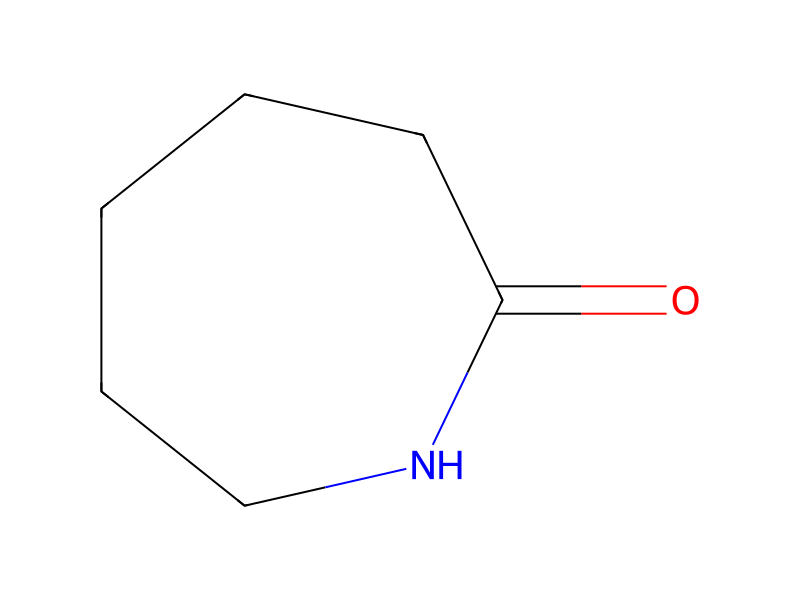


반응 조건
- 온도
- 25 °C
실험 절차
Take 200 ml of aqueous solution of 3.0N sulfuric acid in a round bottom flask. Dissolve in this solution 16 grams of sodium dodecyl sulfate (SDS) and 5.3 gm 1-pentanol by mild stirring. A microemulsion is thus formed. Keep the flask in a water bath maintained at temperature of 25° C. To this microemulsion, add 10.0 gm of cyclohexanone oxime and stir the mixture mildly for 2 hours. Remove the flask from the water bath and neutralize the solution using aqueous solution of ammonia. Filter the solution using Whatman No. 1 filter paper. Measure the amount of filtrate and the residue and extract the filtrate with 100 ml of benzene in steps of 50, 25, and 25 ml respectively. Analyze the benzene layer, the aqueous layer and the residue obtained as above by Gas Chromatography for the amount of cyclohexanone oxime, cyclohexanone and caprolactam.
후처리
- customA microemulsion is thus formed
- customRemove the flask from the water bath
- filtrationFilter the solution
- filtration1 filter paper
- extractionMeasure the amount of filtrate and the residue and extract the filtrate with 100 ml of benzene in steps of 50, 25, and 25 ml respectively
출처 및 근거
- ORD 기록
- ord-5e46c52f020e44479e549eb560fcecaf
- 출처 데이터셋
- uspto-grants-1997_01
- 특허 번호
- US05594137
연결된 노트
불러오는 중…