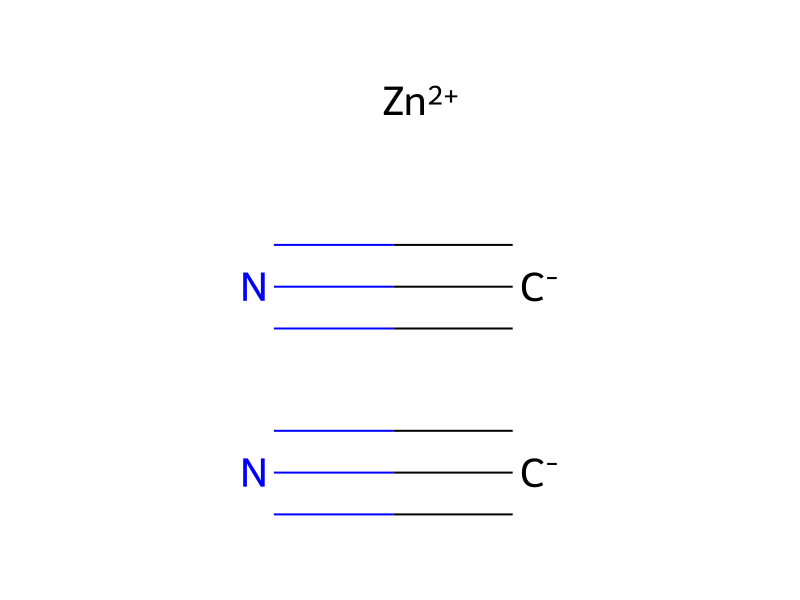
To a solution of 4-bromo-1H-pyrrolo[2,3-c]pyridine (1.0 g, 5.08 mmol) in NMP (20 mL) under an argon atmosphere was added Zn(CN)2 (1.19 g, 10.15 mmol) and Pd(PPh3)4 (0) (590 mg, 0.51 mmol). The mixture was heated at 100° C. for 18 h. The reaction mixture was partitioned between EtOAc (300 mL) and water (50 mL). The organic layer was washed with brine, dried (MgSO4), filtered and concentrated under reduced pressure. The residue was purified by SiO2 chromatography eluting with petroleum ether:EtOAc (1:1) to afford 618 mg (85.1%) of 1H-pyrrolo[2,3-c]pyridine-4-carbonitrile as yellow solid. MS (ESI): m/z=144.3 [M+1]+.