홈MCP워크벤치Skills
홈워크벤치알림마이페이지
llms.txt · MCP 가이드개인정보처리방침 · 이용약관 · 지원v1.8.3
  1. 홈
  2. /반응

Hydrochloric Acid → Triphenylene-2-carbaldehyde

HRID 2413510
인쇄

반응식

HRID 2413510 반응식
N#N.[CH:3]1[C:20]2[C:19]3[C:14](=[CH:15][CH:16]=[CH:17][CH:18]=3)[C:13]3[C:8](=[CH:9][CH:10]=[CH:11][CH:12]=3)[C:7]=2[CH:6]=[CH:5][CH:4]=1.Cl[Sn](Cl)(Cl)Cl.ClC[CH:28]([O:31]C(CCl)CCl)CCl.Cl>O.ClC1C=CC=CC=1Cl>[CH:6]1[C:7]2[C:8]3[C:13](=[CH:12][CH:11]=[CH:10][CH:9]=3)[C:14]3[C:19](=[CH:18][CH:17]=[CH:16][CH:15]=3)[C:20]=2[CH:3]=[CH:4][C:5]=1[CH:28]=[O:31]
참가 물질실험 절차후처리출처 및 근거반응 노트

참가 물질

8

반응물 5

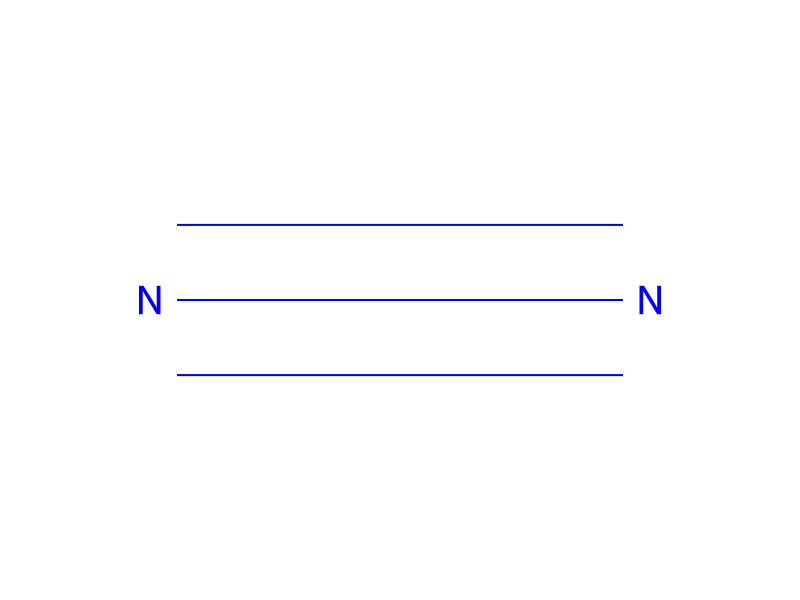
HCID 313Hydrochloric AcidHCID 947NitrogenHCID 9170TriphenyleneHCID 24287Tin tetrachlorideHCID 93323Bis(1,3-dichloroisopropyl ether)

생성물 1

HCID 13375435Triphenylene-2-carbaldehyde

시약·촉매·용매 2

HCID 962
Water
용매
HCID 72391,2-Dichlorobenzene용매

실험 절차

A 1 L 3-neck flask fitted with overhead mechanical stirrer, thermometer, condenser, and N2 line was charged with triphenylene (Aldrich Chemical Co., Milwaukee, WI, 53201, 30 g, 0.131 mol) and o-dichlorobenzene (150 mL). The liquid was warmed until all the large chunks of solid dissolved (80°) and then cooled quickly to give finely divided crystals. After further cooling with a salt-ice bath to 5°, SnCl4 (Aldrich, 98%, 58 g, 0.223 mol, 26 mL), was added in one portion to the mixture. No temperature change occurred. The pot temperature was kept below 5°, and 1,1-dichloromethylmethylether (Aldrich, 25.6 g, 0.223 mol, 20 mL) was added dropwise over 1 h. The resulting suspension was warmed slowly to 40° over 2 h and further stirred for 16 h. Considerable HCl gas evolution occurred during the warming and the early part of the reaction at 40°. The reaction mixture was then cooled to 10° and hydrolysed by careful addition of 1 L of cold H2O. After 4 h the layers were separated and the organic layer filtered, dried with anhydrous Na2SO4 (Mallinckrodt Co., 2nd and Mallinckrodt St., St. Louis, MO, 63147, 100 g) and filtered again. The solvent was removed to give a crude yellow oil which was purified by preparative HPLC using PhCH3 as the eluting solvent. The fractions containing the aldehyde were combined and the solvent removed to give an oil which solidified (8.31 g, 25%). This material was used without further purification. Recrystallization from CH2Cl2 /CH3OH gave pure 2-triphenylenecarbaldehyde mp 160°-161.5°, (C,H).


후처리

  1. customA 1 L 3-neck flask fitted with overhead mechanical stirrer
  2. temperatureThe liquid was warmed until all the large chunks of solid
  3. dissolutiondissolved (80°)
  4. temperaturecooled quickly
  5. customto give finely divided crystals
  6. temperatureAfter further cooling with a salt-ice bath to 5°
  7. customwas kept below 5°
  8. temperatureThe resulting suspension was warmed slowly to 40° over 2 h
  9. customthe early part of the reaction at 40°
  10. customAfter 4 h the layers were separated
  11. filtrationthe organic layer filtered
  12. dry with materialdried with anhydrous Na2SO4 (Mallinckrodt Co., 2nd and Mallinckrodt St., St. Louis, MO, 63147, 100 g)
  13. filtrationfiltered again
  14. customThe solvent was removed
  15. customto give a crude yellow oil which
  16. customwas purified by preparative HPLC
  17. additionThe fractions containing the aldehyde
  18. customthe solvent removed
  19. customto give an oil which
  20. customThis material was used without further purification
  21. customRecrystallization from CH2Cl2 /CH3OH

출처 및 근거

ORD 기록
ord-752978a6ade24b0fa0fdb627c3426bcd
출처 데이터셋
uspto-grants-1988_01
DOI
10.6084/m9.figshare.5104873.v1
특허 번호
US04717729

반응 노트

이 페이지에서참가 물질실험 절차후처리출처 및 근거반응 노트