홈MCP워크벤치Skills
홈워크벤치알림마이페이지
llms.txt · MCP 가이드개인정보처리방침 · 이용약관 · 지원v1.8.3
  1. 홈
  2. /반응

Ammonium Chloride → 1,1-Dicyclopropyl-3-(trimethylsilyl)prop-2-yn-1-ol

HRID 2422491
인쇄

반응식

HRID 2422491 반응식
[CH3:1][Si:2]([C:5]#[CH:6])([CH3:4])[CH3:3].C([Li])CCC.[CH:12]1([C:15]([CH:17]2[CH2:19][CH2:18]2)=[O:16])[CH2:14][CH2:13]1.[Cl-].[NH4+]>C1COCC1>[CH:12]1([C:15]([CH:17]2[CH2:19][CH2:18]2)([OH:16])[C:6]#[C:5][Si:2]([CH3:4])([CH3:3])[CH3:1])[CH2:14][CH2:13]1
참가 물질실험 절차후처리출처 및 근거반응 노트

참가 물질

6

반응물 4

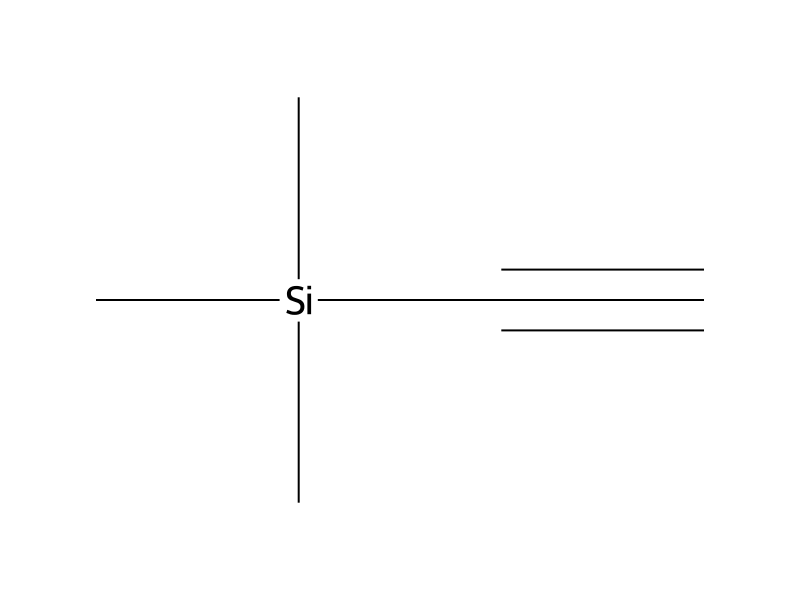
HCID 25517Ammonium ChlorideHCID 66111TrimethylsilylacetyleneHCID 70721Dicyclopropyl ketoneHCID 178418339Butyllithium

생성물 1

HCID 597749111,1-Dicyclopropyl-3-(trimethylsilyl)prop-2-yn-1-ol

시약·촉매·용매 1

HCID 8028Tetrahydrofuran용매

실험 절차

To a solution of trimethylsilylacetylene (5 mL, 35.4 mmol) in THF (100 mL) cooled at −78° C., a 1.6M n-butyllithium in hexanes (22.1 mL, 35.4 mmol) was added dropwise. The solution was stirred for 30 min before dicyclopropyl ketone (4.06 mL, 35.4 mmol) was added. The temperature was then slowly raised to room temperature and the reaction was stirred overnight. The reaction was then poured into a saturated ammonium chloride solution and the aqueous layer was extracted twice with ethyl acetate. The combined organic layers were washed with brine, dried over MgSO4, filtered and concentrated under reduced pressure. The crude residue obtained was used as such for the next step. 1H NMR (400 MHz, acetone-d6): 4.14 (s, 1H), 1.22-1.10 (m, 2H), 0.65-0.55 (m, 2H), 0.50-0.30 (m, 6H), 0.14 (s, 9H).


후처리

  1. additionwas added
  2. extractionthe aqueous layer was extracted twice with ethyl acetate
  3. washThe combined organic layers were washed with brine
  4. dry with materialdried over MgSO4
  5. filtrationfiltered
  6. concentrationconcentrated under reduced pressure

출처 및 근거

ORD 기록
ord-48d48d802693427e9b738fcccb8491e9
출처 데이터셋
uspto-grants-2011_06
DOI
10.6084/m9.figshare.5104873.v1
특허 번호
US07960409B2

반응 노트

이 페이지에서참가 물질실험 절차후처리출처 및 근거반응 노트