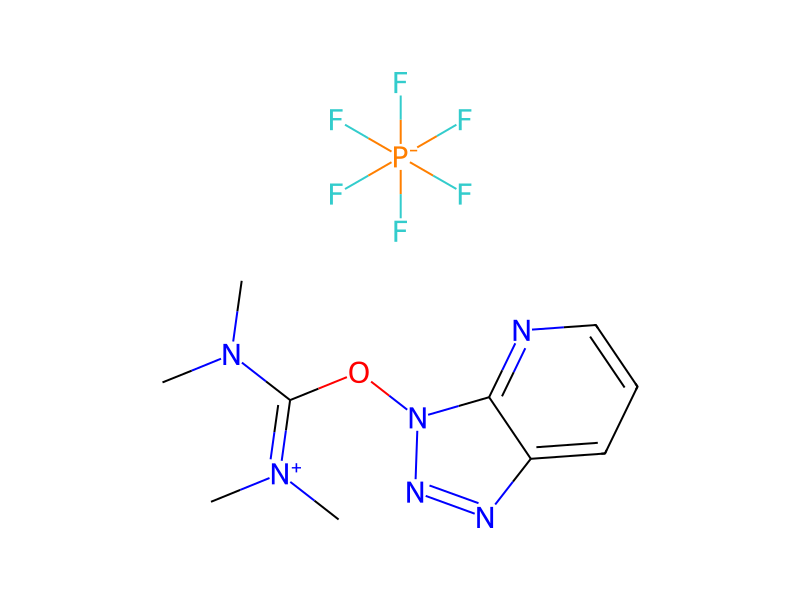
[Cl:1][C:2]1[CH:3]=[C:4]([CH:8]=[CH:9][N:10]=1)[C:5]([OH:7])=O.CN(C(ON1N=NC2C=CC=NC1=2)=[N+](C)C)C.F[P-](F)(F)(F)(F)F.C(N(C(C)C)CC)(C)C.[I:44][C:45]1[CH:46]=[C:47]([CH:49]=[CH:50][C:51]=1[CH3:52])[NH2:48]>CN(C)C=O>[Cl:1][C:2]1[CH:3]=[C:4]([CH:8]=[CH:9][N:10]=1)[C:5]([NH:48][C:47]1[CH:49]=[CH:50][C:51]([CH3:52])=[C:45]([I:44])[CH:46]=1)=[O:7]2-Chloroisonicotinic acid (3.3 g, 21 mmol), HATU (8.75 g, 23 mmol), diisopropylethyl amine (10.9 ml, 63 mmol) and 3-iodo-4-methylaniline (5.00 g, 21 mmol) in dimethylformamide (50 ml) were heated under nitrogen for 16 hours. The reaction was cooled, solvent removed in vacuo and the residue taken up in dichloromethane (150 ml). The organic solution was washed with water (3×100 ml) and brine (100 ml), dried over magnesium sulfate, filtered and solvent removed in vacuo. The residue was purified by column chromatography (40:60 ethyl acetate:cyclohexane) to give 2-chloro-N-(3-iodo-4-methylphenyl)-isonicotinamide as a white solid (7.00 g, 18.8 mmol).
불러오는 중…