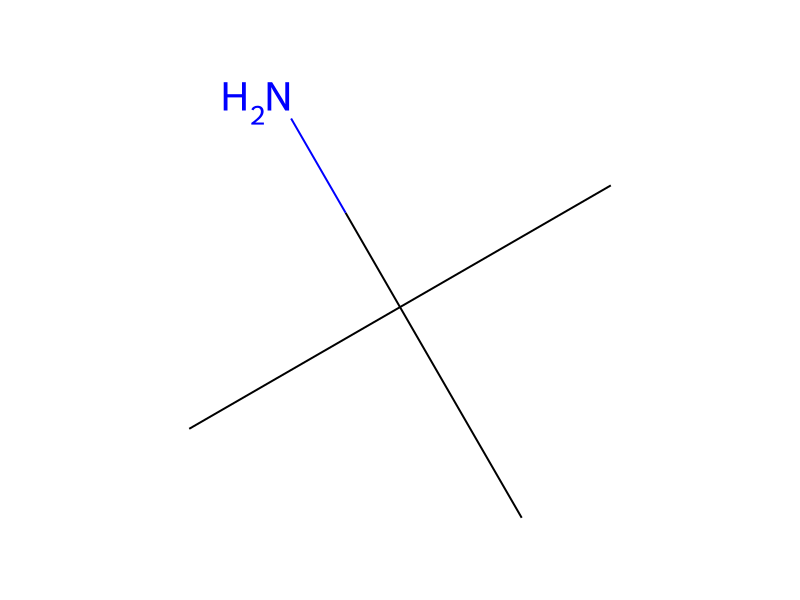
Tert-Butylamine → 4-[3-(tert-Butylamino)-2-hydroxypropoxy]benzaldehyde
반응식

[O:1]1[CH2:13][CH:2]1[CH2:3][O:4][C:5]1[CH:12]=[CH:11][C:8]([CH:9]=[O:10])=[CH:7][CH:6]=1.[C:14]([NH2:18])([CH3:17])([CH3:16])[CH3:15]>Cl>[C:14]([NH:18][CH2:13][CH:2]([OH:1])[CH2:3][O:4][C:5]1[CH:12]=[CH:11][C:8]([CH:9]=[O:10])=[CH:7][CH:6]=1)([CH3:17])([CH3:16])[CH3:15]참가 물질
4



실험 절차
To 4-(2,3-epoxypropoxy)benzaldehyde (20 g.) is added tert. butylamine (50 ml.) and the resulting solution is refluxed 17 hours. The excess tert. butylamine is removed by heating at atmospheric pressure to yield a solid residue. To this residue is added 6 N hydrochloric acid (200 ml.) and the resulting mixture is heated 5 hours on a steam bath. The solution is cooled and concentrated to 100 ml. on a steam bath under reduced pressure (20 mm. Hg.). The concentrated solution is made basic to pH 10 with saturated aqueous sodium carbonate and extracted with chloroform. The chloroform extract is concentrated to a solid which after recrystallization from acetonitrile yields 18 g. of 4-(3-tert.butylamino-2-hydroxypropxy)benzaldehyde, m.p. 123°-125.5° C.