홈MCP워크벤치Skills
홈워크벤치알림마이페이지
llms.txt · MCP 가이드개인정보처리방침 · 이용약관 · 지원v1.8.0
  1. 홈
  2. /반응

Potassium Carbonate → 6-fluoro-5-(2'-hydroxybiphenyl-4-yl)-1H-indole-3-carbaldehyde

HRID 338500
노트
인쇄 미리보기

반응식

HRID 338500 반응식
CC1(C)C(C)(C)OB([C:9]2[CH:14]=[CH:13][C:12]([C:15]3[C:16]([OH:21])=[CH:17][CH:18]=[CH:19][CH:20]=3)=[CH:11][CH:10]=2)O1.Br[C:24]1[CH:25]=[C:26]2[C:30](=[CH:31][C:32]=1[F:33])[NH:29][CH:28]=[C:27]2[CH:34]=[O:35].C(=O)([O-])[O-].[K+].[K+].S([O-])(O)(=O)=O.[Na+]>C(OCC)(=O)C.C1C=CC(P(C2C=CC=CC=2)[C-]2C=CC=C2)=CC=1.C1C=CC(P(C2C=CC=CC=2)[C-]2C=CC=C2)=CC=1.Cl[Pd]Cl.[Fe+2].CCO.C1COCC1.C1(C)C=CC=CC=1>[F:33][C:32]1[CH:31]=[C:30]2[C:26]([C:27]([CH:34]=[O:35])=[CH:28][NH:29]2)=[CH:25][C:24]=1[C:9]1[CH:10]=[CH:11][C:12]([C:15]2[CH:20]=[CH:19][CH:18]=[CH:17][C:16]=2[OH:21])=[CH:13][CH:14]=1
참가 물질반응 조건실험 절차후처리출처 및 근거반응 노트

참가 물질

10

반응물 4

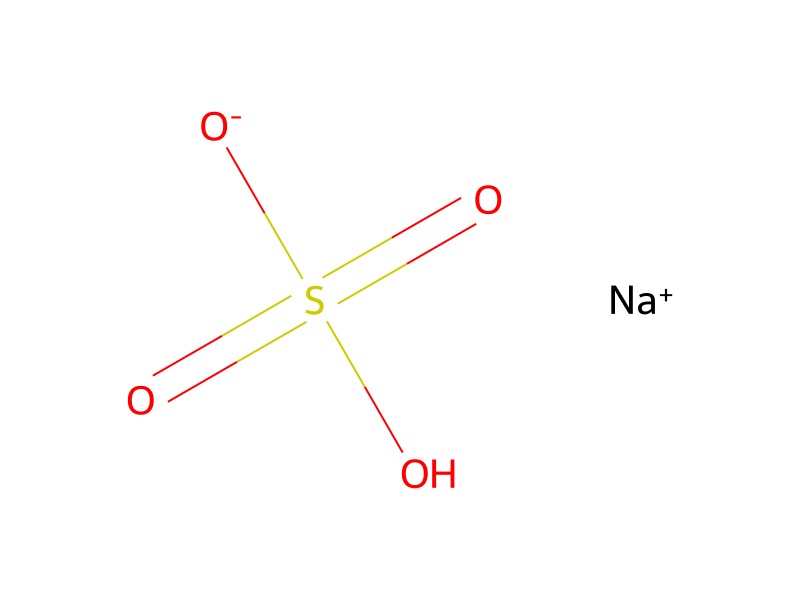
HCID 11430Potassium CarbonateHCID 516919Sodium BisulfateHCID 592678134'-(4,4,5,5-Tetramethyl-1,3,2-dioxaborolan-2-yl)-[1,1'-biphenyl]-2-olHCID 735543615-Bromo-6-fluoro-1H-indole-3-carbaldehyde

생성물 1

HCID 866988376-fluoro-5-(2'-hydroxybiphenyl-4-yl)-1H-indole-3-carbaldehyde수율 24.1%

시약·촉매·용매 5

HCID 44119782Bis(cyclopenta-1,4-dien-1-yl(diphenyl)phosphane);dichloropalladium;iron(2+)촉매
HCID 702Ethanol용매
HCID 1140Toluene용매
HCID 8028Tetrahydrofuran용매
HCID 8857Ethyl Acetate용매

반응 조건

온도
115 °C

실험 절차

A glass tube was charged with 4′-(4,4,5,5-tetramethyl-1,3,2-dioxaborolan-2-yl)-[1,1′-biphenyl]-2-ol (73.5 mg, 0.25 mmol),5-bromo-6-fluoro-1H-indole-3-carbaldehyde (60 mg, 0.25 mmol), toluene (1.2 mL), THF (0.6 mL), EtOH (0.6 mL), and 2.0M potassium carbonate solution (0.6 mL, 1.2 mmol). Nitrogen was then bubbled through the mixture for 5 minutes then [1,1′-bis(diphenylphosphino)ferrocene]dichloropalladium(II) (21.5 mg, 0.025 mmol) was added. The tube was sealed and heated to 115° C. for 2 hours. The reaction was cooled to room temperature, opened, and neutralized with 1.0M sodium hydrogensulfate then diluted with ethyl acetate. The layers were separated and the aqueous extracted with ethyl acetate (x2). The combined organic layers were dried over sodium sulfate, filtered, and concentrated in vacuo. The residue was dissolved in methylene chloride and methanol, silica was added, and the solvent removed in vacuo. The dry-loaded silica gel was then subjected to flash column chromatography (20% to 100% ethyl acetate/heptane) to provide the title compound as a white solid (20 mg, 24%). MS (ES+) 332.3 (M+H). 1H NMR (500 MHz, DMSO-d6) δ ppm 12.24 (br. s, 1H) 9.96 (s, 1H) 9.59 (s, 1H) 8.36 (s, 1H) 8.19 (d, 1H) 7.67 (d, 2H) 7.58 (d, 2H) 7.46 (d, 1H) 7.33 (d, 1H) 7.18 (t, 1H) 6.97 (d, 1H) 6.91 (t, 1H).

후처리

  1. customNitrogen was then bubbled through the mixture for 5 minutes
  2. customThe tube was sealed
  3. temperatureThe reaction was cooled to room temperature
  4. customThe layers were separated
  5. extractionthe aqueous extracted with ethyl acetate (x2)
  6. dry with materialThe combined organic layers were dried over sodium sulfate
  7. filtrationfiltered
  8. concentrationconcentrated in vacuo
  9. dissolutionThe residue was dissolved in methylene chloride
  10. additionmethanol, silica was added
  11. customthe solvent removed in vacuo

출처 및 근거

ORD 기록
ord-0dd9312e6eff4dccbc7260c383f98e18
출처 데이터셋
uspto-grants-2014_11
DOI
10.6084/m9.figshare.5104873.v1
특허 번호
US08889730B2

반응 노트

불러오는 중…

이 페이지에서참가 물질반응 조건실험 절차후처리출처 및 근거반응 노트