홈MCP워크벤치Skills
홈워크벤치알림마이페이지
llms.txt · MCP 가이드개인정보처리방침 · 이용약관 · 지원v1.8.3
  1. 홈
  2. /반응

Imidazole → 2-(t-Butoxycarbonylamino)-3-(t-butyldiphenylsiloxy)propanol

HRID 352867
인쇄

반응식

HRID 352867 반응식
N1C=CN=C1.CO[C:8](=[O:20])[C@H:9]([CH2:18][OH:19])[NH:10][C:11]([O:13][C:14]([CH3:17])([CH3:16])[CH3:15])=[O:12].[Si:21](Cl)([C:34]([CH3:37])([CH3:36])[CH3:35])([C:28]1[CH:33]=[CH:32][CH:31]=[CH:30][CH:29]=1)[C:22]1[CH:27]=[CH:26][CH:25]=[CH:24][CH:23]=1.C(OCC)(=O)C>CN(C)C=O.O1CCCC1.O>[C:14]([O:13][C:11]([NH:10][CH:9]([CH2:8][O:20][Si:21]([C:34]([CH3:37])([CH3:36])[CH3:35])([C:28]1[CH:29]=[CH:30][CH:31]=[CH:32][CH:33]=1)[C:22]1[CH:27]=[CH:26][CH:25]=[CH:24][CH:23]=1)[CH2:18][OH:19])=[O:12])([CH3:15])([CH3:16])[CH3:17]
참가 물질실험 절차후처리출처 및 근거반응 노트

참가 물질

8

반응물 4

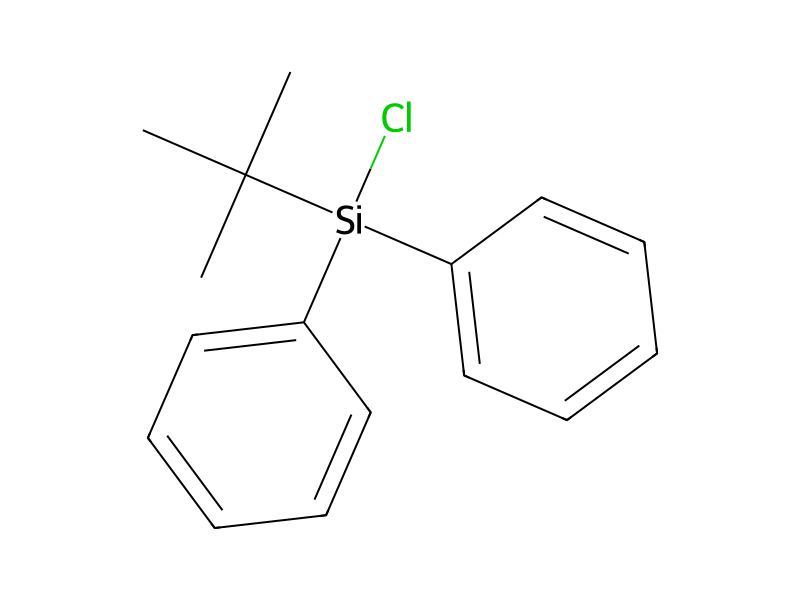
HCID 795ImidazoleHCID 8857Ethyl AcetateHCID 94078tert-ButyldiphenylchlorosilaneHCID 7019177N-Boc-L-serine methyl ester

생성물 1

HCID 227105032-(t-Butoxycarbonylamino)-3-(t-butyldiphenylsiloxy)propanol

시약·촉매·용매 3

HCID 962Water
용매
HCID 6228Dimethylformamide용매
HCID 8028Tetrahydrofuran용매

실험 절차

At room temperature, imidazole (6.43 g) was added to a solution of N-(t-butoxycarbonyl)-L-serine methyl ester (13.8 g) in N,N-dimethylformamide (140 ml), followed by the addition of t-butyldiphenylsilyl chloride (19.7 ml) at 0° C. The resulting mixture was stirred at room temperature for 39 hours. Ethyl acetate (200 ml) and water (600 ml) were added to the reaction mixture to cause separation. The water layer was extracted with ethyl acetate (100 ml). The organic layers were combined, washed with saturated aqueous NaCl solution (100 ml), dried over anhydrous sodium sulfate and concentrated under reduced pressure. The residue thus obtained was dissolved in tetrahydrofuran (100 ml) and methanol (100 ml) without purification, followed by the addition of sodium borohydride (7.20 g) in portions at 0° C. After stirring at 0° C. for 2 hours and then at room temperature for 1 hour, ethyl acetate (100 ml), an aqueous saturated solution of ammonium chloride (300 ml) and water (300 ml) were added to the reaction mixture to cause separation. The water layer was extracted with ethyl acetate (100 ml). The organic layers were combined, dried over anhydrous sodium sulfate and concentrated under reduced pressure. The residue thus obtained was purified by chromatography on a silica gel column (500 g of silica gel, hexane:ethyl acetate=10:1˜1:1), whereby the title compound (24.9 g) was obtained as a white solid.


후처리

  1. customseparation
  2. extractionThe water layer was extracted with ethyl acetate (100 ml)
  3. washwashed with saturated aqueous NaCl solution (100 ml)
  4. dry with materialdried over anhydrous sodium sulfate
  5. concentrationconcentrated under reduced pressure
  6. customThe residue thus obtained
  7. custommethanol (100 ml) without purification
  8. additionfollowed by the addition of sodium borohydride (7.20 g) in portions at 0° C
  9. stirringAfter stirring at 0° C. for 2 hours
  10. waitat room temperature for 1 hour
  11. additionethyl acetate (100 ml), an aqueous saturated solution of ammonium chloride (300 ml) and water (300 ml) were added to the reaction mixture
  12. customseparation
  13. extractionThe water layer was extracted with ethyl acetate (100 ml)
  14. dry with materialdried over anhydrous sodium sulfate
  15. concentrationconcentrated under reduced pressure
  16. customThe residue thus obtained
  17. customwas purified by chromatography on a silica gel column (500 g of silica gel, hexane:ethyl acetate=10:1˜1:1), whereby the title compound (24.9 g)
  18. customwas obtained as a white solid

출처 및 근거

ORD 기록
ord-d3b887741abe416e96692e58c47ff923
출처 데이터셋
uspto-grants-2004_06
DOI
10.6084/m9.figshare.5104873.v1
특허 번호
US06747023B1

반응 노트

이 페이지에서참가 물질실험 절차후처리출처 및 근거반응 노트