3-Bromoaniline → 1-(t-Butyldimethylsiloxy)-4-(3-amino-phenyl)-3-butyne
반응식

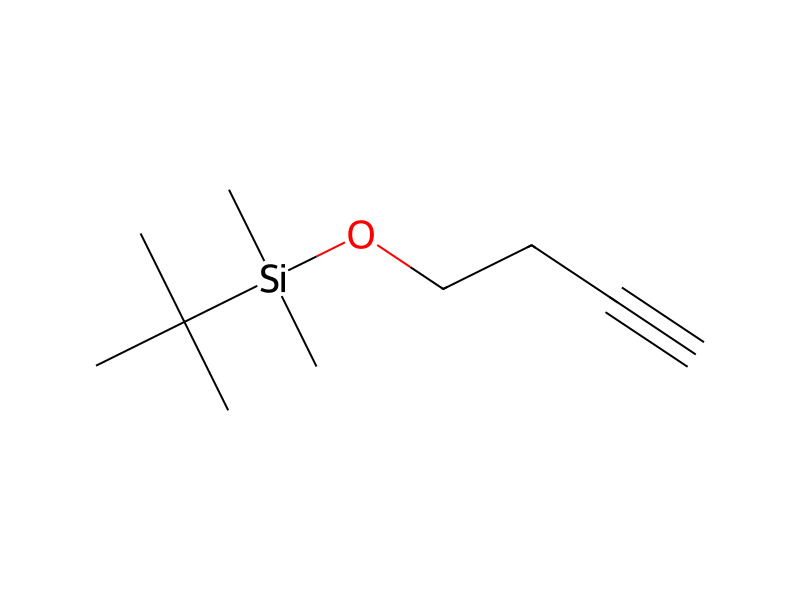
[Si:1]([O:8][CH2:9][CH2:10][C:11]#[CH:12])([C:4]([CH3:7])([CH3:6])[CH3:5])([CH3:3])[CH3:2].Br[C:14]1[CH:15]=[C:16]([CH:18]=[CH:19][CH:20]=1)[NH2:17]>C(N)CCC.C1C=CC([P]([Pd]([P](C2C=CC=CC=2)(C2C=CC=CC=2)C2C=CC=CC=2)([P](C2C=CC=CC=2)(C2C=CC=CC=2)C2C=CC=CC=2)[P](C2C=CC=CC=2)(C2C=CC=CC=2)C2C=CC=CC=2)(C2C=CC=CC=2)C2C=CC=CC=2)=CC=1>[O:8]([CH2:9][CH2:10][C:11]#[C:12][C:14]1[CH:20]=[CH:19][CH:18]=[C:16]([NH2:17])[CH:15]=1)[Si:1]([C:4]([CH3:5])([CH3:6])[CH3:7])([CH3:3])[CH3:2]참가 물질
5




실험 절차
A mixture of 1-(t-butyldimethylsilyloxy)-3-butyne (10 mmol) and m-bromoaniline (10 mmol) in n-butylamine (50 mL) under a nitrogen atmosphere is treated with tetrakis(triphenylphosphine)palladium (0) (0.17 g) and then heated to reflux for 18 hr. After removing the solvent in vacuo, the residue is dissolved in CH2Cl2 and washed with saturated NaHCO3. The combined organic solution is dried over magnesium sulfate, filtered and evaporated to give the above described silyl protected adduct.