Pyridine → 19-t-Butyldimethylsiloxy-4-androstene-3,17-dione
반응식
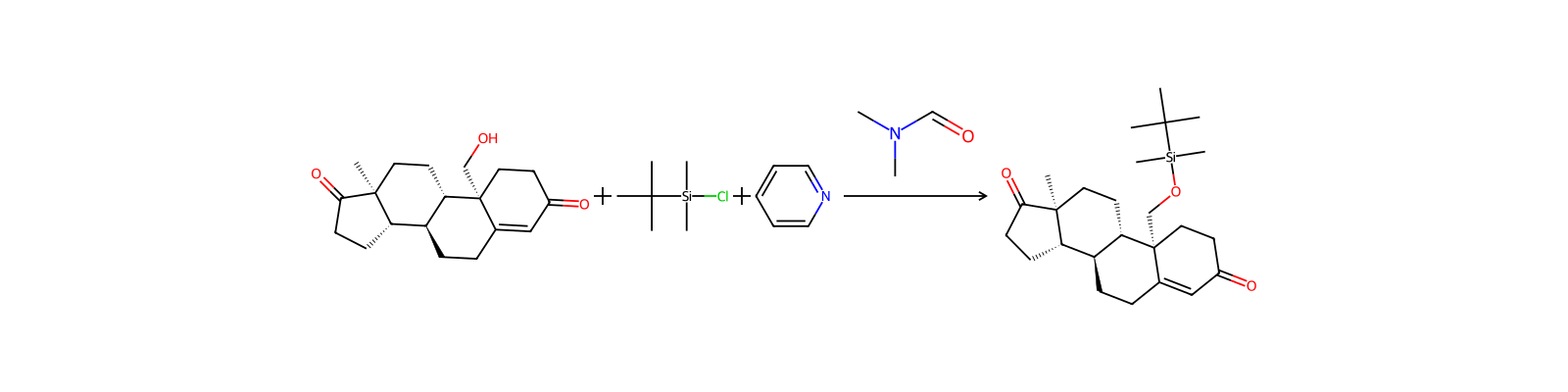
[OH:1][CH2:2][C@@:3]12[C@@H:20]3[C@H:11]([C@H:12]4[C@@:16]([CH2:18][CH2:19]3)([CH3:17])[C:15](=[O:21])[CH2:14][CH2:13]4)[CH2:10][CH2:9][C:8]1=[CH:7][C:6](=[O:22])[CH2:5][CH2:4]2.[Si:23](Cl)([C:26]([CH3:29])([CH3:28])[CH3:27])([CH3:25])[CH3:24].N1C=CC=CC=1>CN(C)C=O>[O:1]([CH2:2][C@@:3]12[C@@H:20]3[C@H:11]([C@H:12]4[C@@:16]([CH2:18][CH2:19]3)([CH3:17])[C:15](=[O:21])[CH2:14][CH2:13]4)[CH2:10][CH2:9][C:8]1=[CH:7][C:6](=[O:22])[CH2:5][CH2:4]2)[Si:23]([C:26]([CH3:29])([CH3:28])[CH3:27])([CH3:25])[CH3:24]참가 물질
5


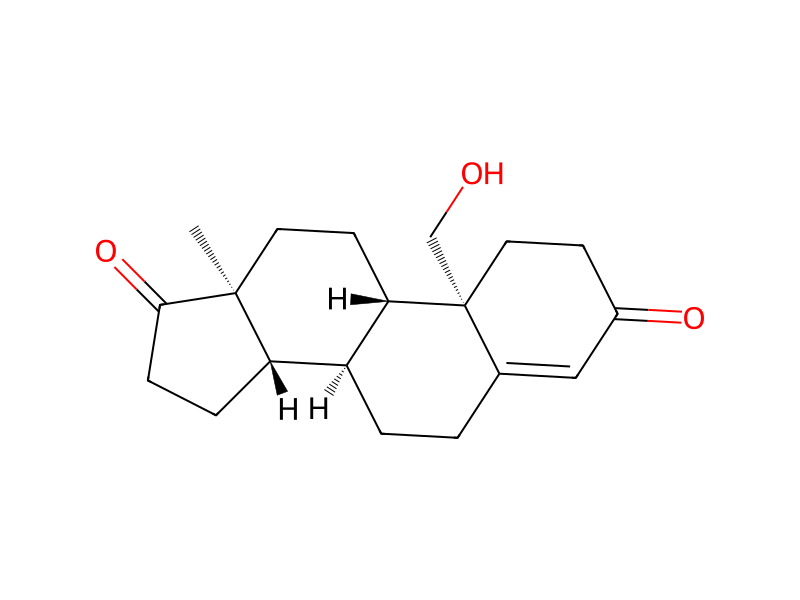


실험 절차
19-Hydroxy-4-androstene-3,17-dione, t-butyldimethylsilylchloride and pyridine are mixed in dry dimethylformamide and heated on a steam bath overnight. The reaction mixture is poured onto water and stirred well for 15 minutes. The resulting solid is filtered and dissolved in methylenechloride, dried over magnesium sulfate and the solvent removed. The residue is crystallized from an acetone-hexane solution to yield 19-t-butyldimethylsiloxy-4-androstene-3,17-dione.