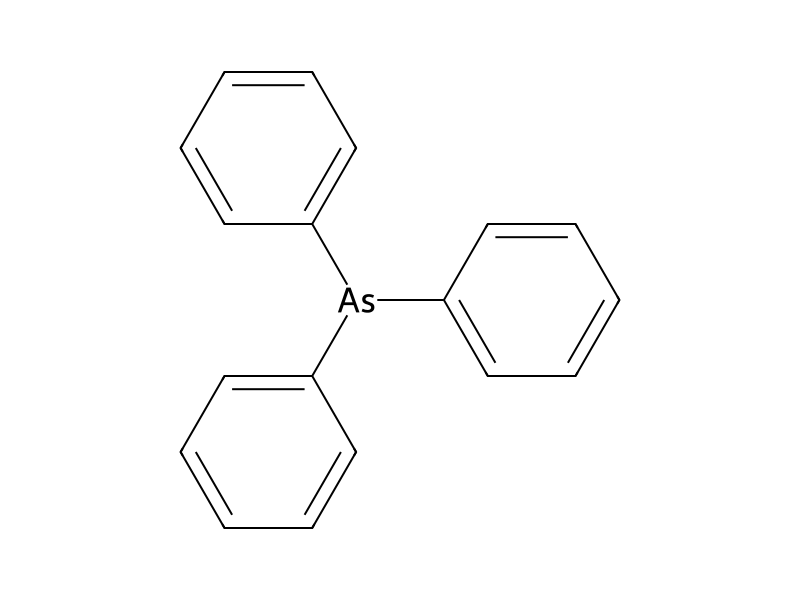
[CH3:1][O:2][C:3]([C:5]1[NH:6][C:7](Br)=[CH:8][CH:9]=1)=[O:4].[C:11]1(B(O)O)[C:20]2[C:15](=[CH:16][CH:17]=[CH:18][CH:19]=2)[CH:14]=[CH:13][CH:12]=1.C(=O)([O-])[O-].[Na+].[Na+].C1([As](C2C=CC=CC=2)C2C=CC=CC=2)C=CC=CC=1>CN(C=O)C>[CH3:1][O:2][C:3]([C:5]1[NH:6][C:7]([C:19]2[C:20]3[C:15](=[CH:14][CH:13]=[CH:12][CH:11]=3)[CH:16]=[CH:17][CH:18]=2)=[CH:8][CH:9]=1)=[O:4]Argon gas was bubbled 15 min through a solution of 5-bromo-1H-pyrrole-2-carboxylic acid methyl ester (10.0 mmol, 2.04 g), 1-naphthylboronic acid (30.0 mmol, 5.16 g), 2M aqueous sodium carbonate (20 ml), and DMF (150 ml). The mixture was then treated with tris(dibenzylidienacetone)dipalladium (0) (0.50 mmol, 0.46 g), and triphenylarsine (2.0 mmol, 0.61 g), then heated to reflux under argon for 12 h. The mixture was partitioned between ethyl acetate (500 ml) and water (150 ml). The organics were filtered through celite, washed with brine (3×50 ml), then concentrated under reduced pressure and the residue was purified by silica gel chromatography to provide 2.05 g (81%) of 5-naphthalen-1-yl-1H-pyrrole-2-carboxylic acid methyl ester. 1H NMR (CDCl3) δ9.37 (1H, s), 8.22-8.17 (1H, m), 8.16-7.89 (2H, m), 7.59-7.50 (4H, m), 7.88 (1H, dd, J=3.9, 2.7), 6.22 (1H, dd, J=3.8. 2.6), 3.88 (3H, s).