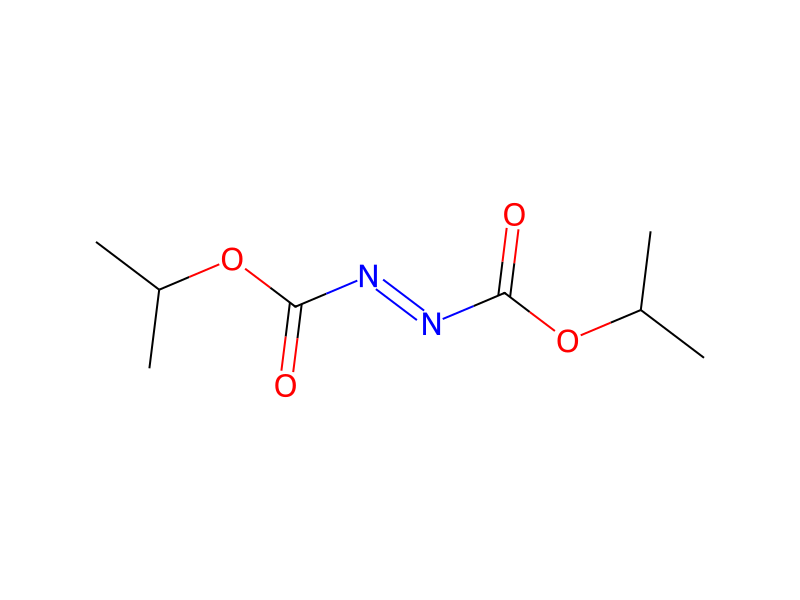
DIAD (23.88 mmol, 1.3 eq.) was added dropwise with stirring to a solution of cis-3-hydroxyproline methyl ester# (18.36 mmol, 1 eq.) and triphenylphosphine (22.9 mmol, 1.25 eq.) in THF (100 mL) at 0° C. Then a solution of diphenylphosphoryl azide (22.9 mmol, 1.25 eq.) in THF (20 ml) was added. The reaction was slowly warmed to rt and stirred for 16 h. The solvent was then removed under vacuum, and the residue triturated with cold ether to remove triphenylphosphine oxide. Upon filtration, the filtrate was concentrated and subjected to column chromatography (SiO2, gradient 15%-20% ethyl acetate/hexanes) to give the desired trans-3-azido-proline compound.